Junko Tabei: First Woman to Summit Mount Everest
1975 · Mount Everest, Nepal
Junko Tabei becomes the first woman to reach the summit of Mount Everest.
May 29, 1953
Edmund Hillary of New Zealand and Tenzing Norgay, a Sherpa of Nepal, became the first climbers confirmed to have reached the summit of Mount Everest.
Mount Everest, Nepal | British Mount Everest Expedition
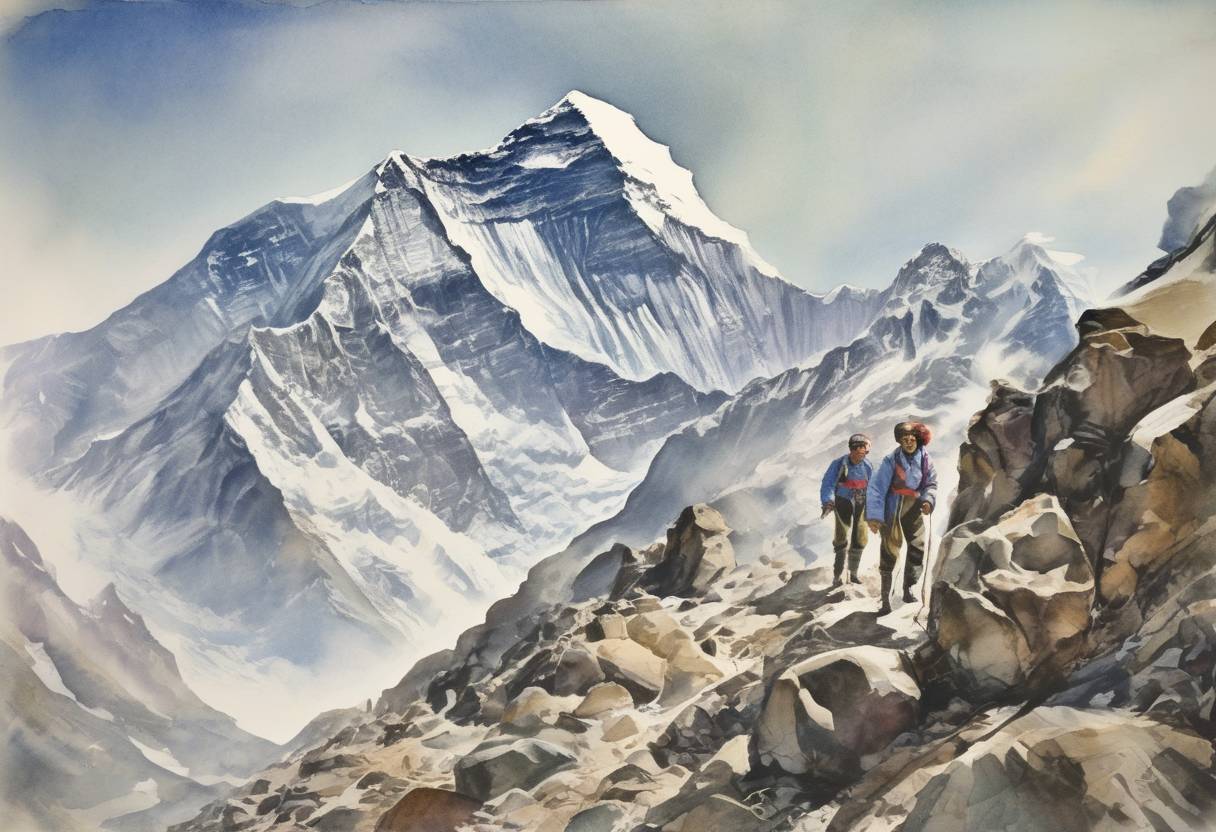
On May 29, 1953, Edmund Hillary of New Zealand and Tenzing Norgay, a Sherpa of Nepal, became the first climbers confirmed to have reached the summit of Mount Everest, the highest point on Earth at 29,032 feet (8,848 meters). This historic achievement marked a significant milestone in the history of mountaineering and human exploration.
Mount Everest, known as “Sagarmatha” in Nepali and “Chomolungma” in Tibetan, had long been a subject of fascination and challenge for climbers worldwide. Several expeditions had attempted to reach its summit before 1953, but none had succeeded. The British had been particularly persistent, with multiple attempts dating back to the early 1920s.
The successful ascent was part of a British expedition led by Colonel John Hunt. The team was well-prepared, having learned from previous expeditions’ experiences. They employed a strategy of establishing a series of camps at progressively higher altitudes, which allowed climbers to acclimatize to the thin air and harsh conditions.
Edmund Hillary: A beekeeper from Auckland, New Zealand, Hillary was an experienced climber known for his strength and determination. His practical skills and leadership qualities made him an invaluable member of the team.
Tenzing Norgay: A Sherpa of Nepal, Norgay was one of the most experienced high-altitude climbers in the world. His deep knowledge of the Himalayas and his climbing expertise were crucial to the expedition’s success.
On May 28, Hillary and Norgay set out from the South Col, the final camp before the summit. They faced extreme cold, high winds, and the ever-present danger of avalanches. The duo navigated the treacherous terrain, including the now-famous Hillary Step, a nearly vertical rock face just below the summit.
At 11:30 a.m. on May 29, 1953, Hillary and Norgay reached the summit of Mount Everest. They spent about 15 minutes at the top, taking photographs and burying a small cross and some sweets as offerings. The two men then began their descent, returning safely to their camp.
The news of their successful ascent reached the world on June 2, 1953, coinciding with the coronation of Queen Elizabeth II. The achievement was celebrated globally and marked a significant triumph in the “golden age” of mountaineering.
Recognition: Edmund Hillary was knighted by Queen Elizabeth II, becoming Sir Edmund Hillary. Tenzing Norgay received the George Medal from the British government and was celebrated as a hero in Nepal and India.
Legacy: The ascent of Everest by Hillary and Norgay inspired countless climbers and adventurers. It demonstrated the potential of human endurance and cooperation across cultures. Their achievement remains a symbol of exploration and the spirit of adventure.
The successful ascent of Mount Everest by Edmund Hillary and Tenzing Norgay stands as a testament to human determination and the enduring allure of the world’s highest peaks.
Source: en.wikipedia.org