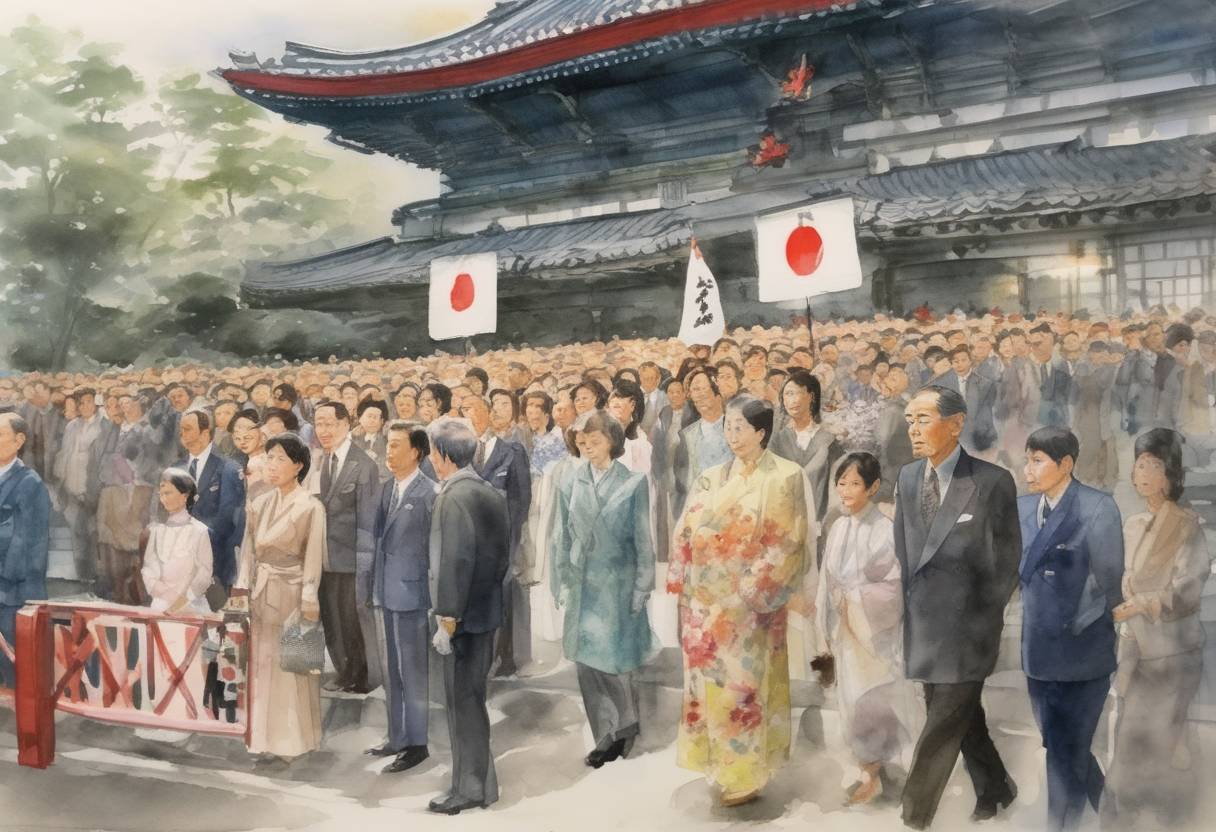
The Passing of Emperor Hirohito and the Transition from the Shōwa to the Heisei Era
On January 7, 1989, Emperor Hirohito of Japan passed away at the age of 87, marking the end of the Shōwa era and the beginning of a significant transition in Japanese history. His death led to the accession of his son, Akihito, who became the 125th Emperor of Japan, ushering in the Heisei era.
Emperor Hirohito and the Shōwa Era
- Reign: Emperor Hirohito, posthumously known as Emperor Shōwa, reigned from December 25, 1926, until his death in 1989. His era, the Shōwa period, is one of the longest in Japanese history, spanning over 62 years.
- Historical Context: The Shōwa era encompassed significant events, including Japan’s militarization, its involvement in World War II, and the subsequent post-war recovery and economic boom. Hirohito’s role during WWII has been a subject of extensive debate, with discussions focusing on his level of involvement in Japan’s wartime activities.
- Post-War Japan: After Japan’s defeat in 1945, Hirohito remained on the throne but was transformed from a divine sovereign into a constitutional monarch under the new post-war constitution, which took effect in 1947. This period saw Japan’s rapid industrialization and emergence as a global economic power.
The Transition to the Heisei Era
- Accession of Akihito: Upon Hirohito’s death, his son Akihito ascended the throne, marking the beginning of the Heisei era. The term “Heisei” means “achieving peace,” reflecting a desire for stability and harmony in the post-war world.
- Significance of the Transition: The transition from the Shōwa to the Heisei era symbolized a generational shift and a move towards a more modern and internationally engaged Japan. Akihito’s reign focused on reconciliation and outreach, both domestically and internationally.
Aftermath and Historical Significance
- Legacy of Hirohito: Emperor Hirohito’s legacy is complex, as it encompasses both the militaristic and imperial ambitions of pre-war Japan and the peaceful, prosperous nation that emerged after the war.
- Heisei Era Developments: The Heisei era witnessed significant events, including Japan’s economic challenges in the 1990s, natural disasters, and evolving international relations. Akihito’s reign was marked by efforts to address historical grievances and promote peace.
The transition from the Shōwa to the Heisei era was a pivotal moment in Japanese history, reflecting both the continuity of the imperial institution and the evolving nature of Japan’s role in the world.