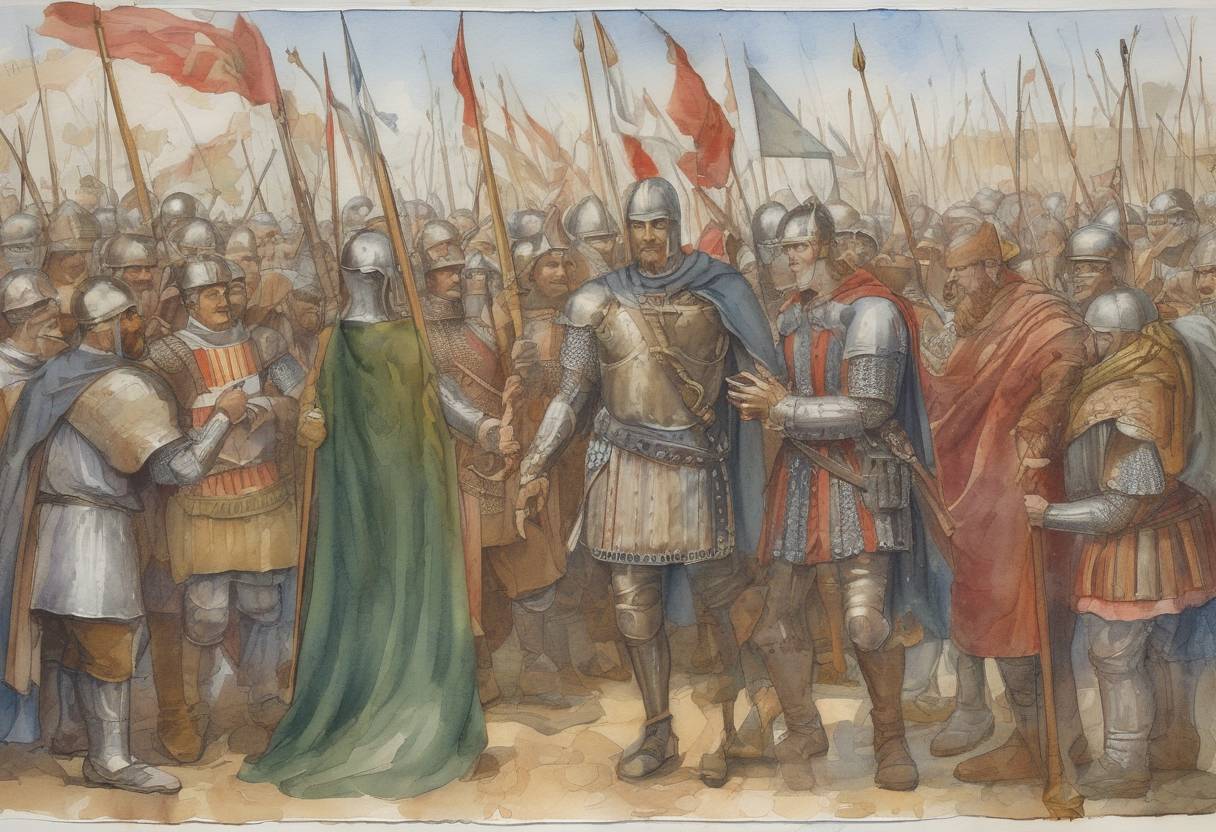
The Edict of Pistres: A Defensive Measure Against Viking Raids
On July 25, 864, Charles the Bald, King of West Francia, issued the Edict of Pistres, a significant legislative measure aimed at fortifying the kingdom against the persistent threat of Viking incursions. This edict was a response to the increasing frequency and severity of Viking raids that had plagued the Frankish territories throughout the 9th century.
Historical Context
During the 9th century, the Viking Age was at its height, with Norse seafarers conducting raids across Europe. The Frankish Empire, once unified under Charlemagne, had been divided among his grandsons, leading to the formation of West Francia, East Francia, and Middle Francia. This fragmentation weakened the Frankish defenses, making them more vulnerable to external threats.
Charles the Bald, ruling over West Francia, faced the daunting task of protecting his realm from these relentless Viking attacks. The raids not only threatened the security of his kingdom but also disrupted trade and agriculture, leading to economic instability.
Key Provisions of the Edict
The Edict of Pistres was a comprehensive set of measures designed to bolster the kingdom’s defenses. Key provisions included:
Fortification of Towns: The edict mandated the construction and reinforcement of fortifications around towns and cities. This was intended to provide safe havens for the population and deter Viking raiders.
Creation of a Standing Army: Charles the Bald ordered the establishment of a permanent military force. This was a shift from the traditional reliance on feudal levies, which were often slow to mobilize and insufficiently trained.
Development of a Naval Force: Recognizing the Vikings’ mastery of naval warfare, the edict called for the creation of a fleet of ships to patrol the rivers and coasts, aiming to intercept and repel Viking longships.
Regulation of Trade and Movement: The edict included measures to regulate trade and the movement of goods, aiming to prevent the Vikings from exploiting local resources.
Aftermath and Historical Significance
The Edict of Pistres marked a turning point in the Frankish response to Viking threats. By emphasizing the need for fortified defenses and a professional military, Charles the Bald laid the groundwork for more effective resistance against the Norsemen. While the Viking raids continued, the measures introduced by the edict helped mitigate their impact and contributed to the eventual stabilization of the region.
The edict also reflected broader trends in medieval European governance, where rulers increasingly sought to centralize authority and develop more sophisticated administrative and military structures. This shift would have lasting implications for the development of medieval European states.
In summary, the Edict of Pistres was a critical response to the Viking threat, showcasing Charles the Bald’s efforts to adapt and strengthen his kingdom’s defenses in a time of crisis.