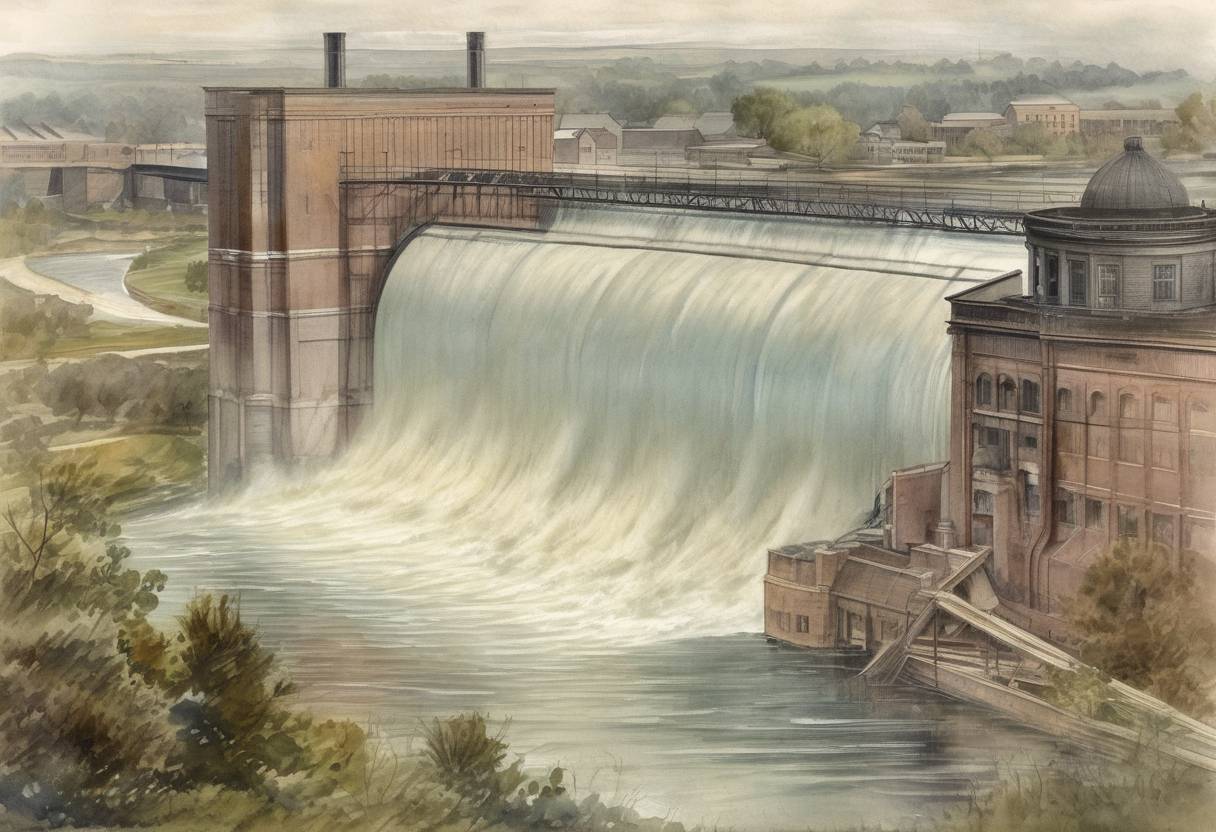
The World’s First Hydroelectric Power Plant: Appleton, Wisconsin
On September 30, 1882, the world’s first hydroelectric power plant began operation on the Fox River in Appleton, Wisconsin. This pioneering event marked a significant milestone in the history of energy production and the broader industrial revolution.
Background
The late 19th century was a period of rapid technological advancement, with electricity emerging as a transformative force. Thomas Edison had recently demonstrated the potential of electric lighting with the Pearl Street Station in New York City, which began operation in 1882 as well. However, the Pearl Street Station used coal-fired steam engines, whereas the Appleton plant harnessed the power of flowing water, making it the first to generate electricity using hydroelectric power.
H.J. Rogers: A local paper manufacturer, Rogers was inspired by Edison’s achievements and sought to bring electric power to Appleton. His vision was to use the Fox River’s water flow to generate electricity for his paper mill and other local businesses.
Elihu Thomson and Edwin J. Houston: These two inventors, associated with the Thomson-Houston Electric Company, were instrumental in designing the electrical systems used in the Appleton plant.
The Plant’s Operation
The Appleton hydroelectric plant utilized a water wheel to convert the kinetic energy of the Fox River into mechanical energy, which was then transformed into electrical energy using a dynamo. This setup provided a reliable and renewable source of power, which was initially used to light the Hearthstone House, Rogers’ paper mill, and a few other buildings in the area.
Significance and Impact
Innovation in Energy: The successful operation of the Appleton plant demonstrated the viability of hydroelectric power, paving the way for future developments in renewable energy sources.
Economic and Industrial Growth: The introduction of electric power in Appleton contributed to the economic growth of the region, facilitating industrial expansion and improving the quality of life for its residents.
Environmental Considerations: While the environmental impact of hydroelectric power was not a primary concern at the time, this event laid the groundwork for future discussions on sustainable and environmentally friendly energy sources.
Aftermath
The success of the Appleton hydroelectric plant inspired the construction of similar facilities across the United States and around the world. It marked the beginning of a shift towards renewable energy sources, which continues to be a critical focus in addressing global energy needs and environmental challenges today.
In summary, the operation of the world’s first hydroelectric power plant in Appleton, Wisconsin, on September 30, 1882, was a landmark event in the history of energy production, showcasing the potential of harnessing natural resources for sustainable power generation.