Burj Khalifa: The Tallest Man-Made Structure
2010 · Dubai, United Arab Emirates
Burj Khalifa, the tallest man-made structure in the world, officially opens in Dubai, United Arab Emirates.
January 5, 2010
The Burj Khalifa in Dubai, United Arab Emirates, officially opened as the tallest building in the world.
Dubai, United Arab Emirates | Emaar Properties
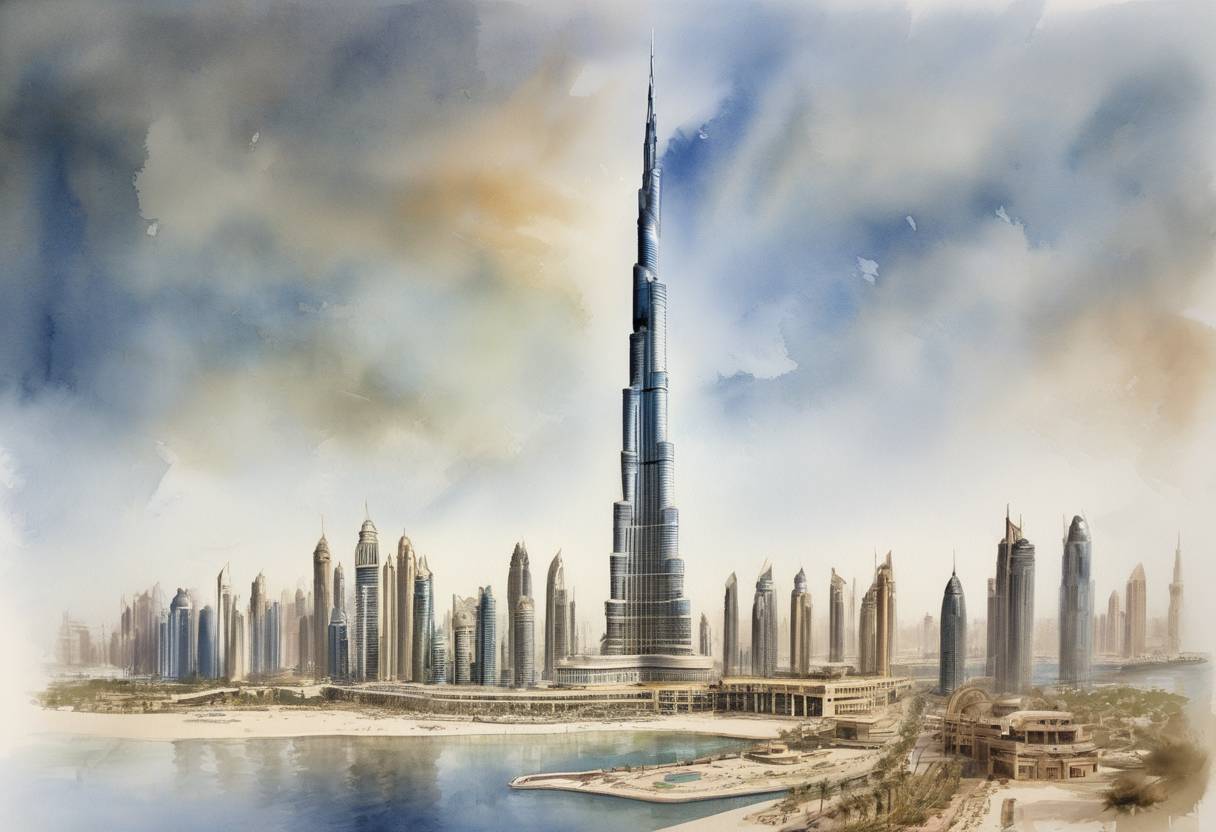
On January 5, 2010, the Burj Khalifa in Dubai, United Arab Emirates, was officially opened, marking a significant milestone in architectural and engineering history as the tallest building in the world.
The Burj Khalifa, originally known as the Burj Dubai, was designed by the architectural firm Skidmore, Owings & Merrill, with Adrian Smith as the chief architect and Bill Baker as the chief structural engineer. The construction of the building began in 2004, spearheaded by the developer Emaar Properties. The project was part of a broader initiative to diversify Dubai’s economy from oil to tourism and services.
The opening ceremony on January 5, 2010, was a grand affair attended by dignitaries, including Sheikh Mohammed bin Rashid Al Maktoum, the ruler of Dubai. The event featured a spectacular light and sound show, fireworks, and a multimedia presentation that highlighted the tower’s significance and the vision behind its creation.
Since its opening, the Burj Khalifa has maintained its status as the tallest building in the world, despite numerous ambitious projects worldwide. It continues to be a focal point of Dubai’s skyline and a testament to human ingenuity and ambition.
In summary, the opening of the Burj Khalifa on January 5, 2010, was a landmark event that not only redefined the possibilities of architectural design but also reinforced Dubai’s position as a global city of innovation and luxury.
Source: en.wikipedia.org