Creation of the United States Department of Energy
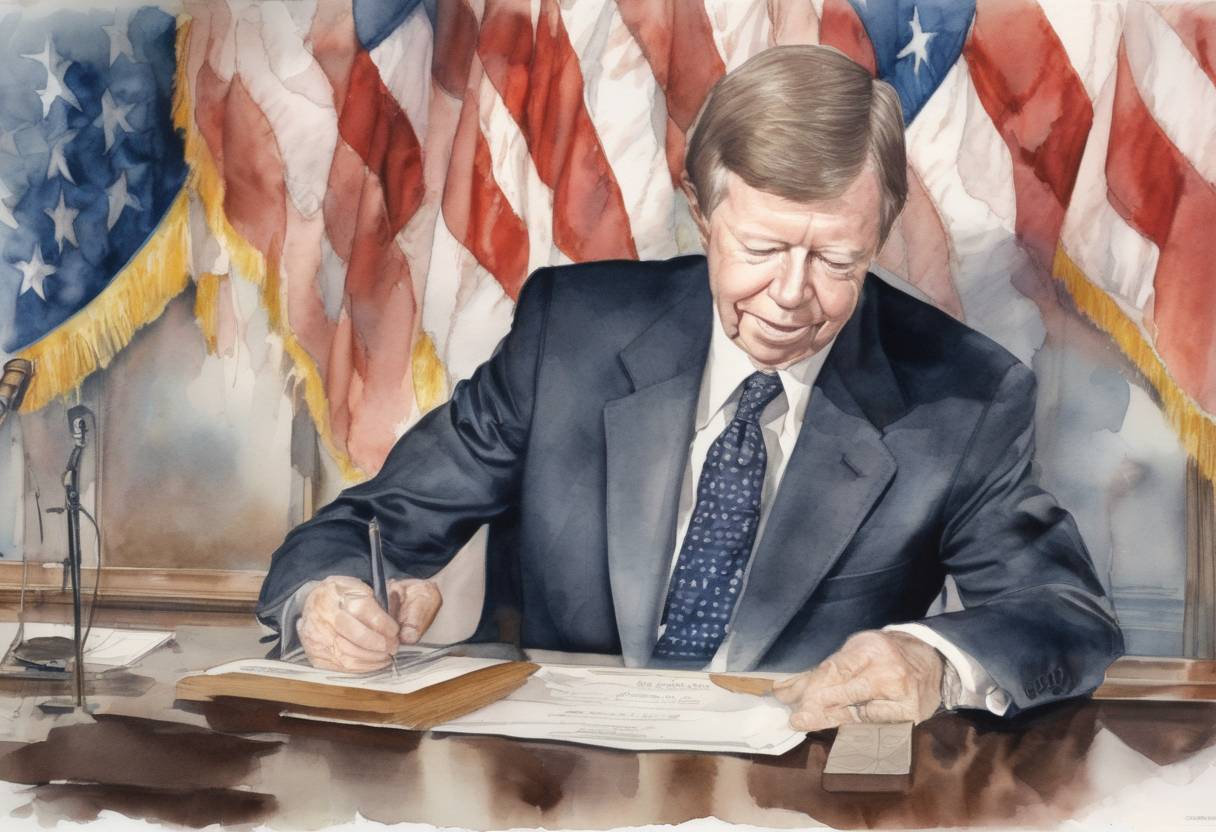
On August 4, 1977, U.S. President Jimmy Carter signed into law the Department of Energy Organization Act, which established the United States Department of Energy (DOE) as a cabinet-level department. This significant legislative move was a response to the energy crises of the 1970s and aimed to consolidate federal energy programs and ensure a coordinated national energy policy.
Context and Background
The 1970s were marked by significant energy challenges in the United States, including the 1973 oil embargo by the Organization of Arab Petroleum Exporting Countries (OAPEC), which led to fuel shortages and skyrocketing oil prices. These events underscored the vulnerability of the U.S. to foreign energy supplies and highlighted the need for a comprehensive energy strategy.
Prior to the creation of the DOE, energy responsibilities were dispersed across various federal agencies, leading to inefficiencies and a lack of cohesive policy direction. President Carter, who had campaigned on the promise of addressing energy issues, saw the establishment of the DOE as a critical step in achieving energy independence and security.
Key Provisions of the Legislation
The Department of Energy Organization Act consolidated over 30 energy-related programs from various federal agencies into a single department. The DOE was tasked with:
- Energy Policy Development: Formulating a national energy policy that would address both short-term and long-term energy needs.
- Nuclear Safety: Overseeing the nation’s nuclear weapons program, nuclear reactor production for the U.S. Navy, and energy-related research.
- Energy Conservation: Promoting energy conservation and the development of renewable energy sources.
- Research and Development: Supporting scientific research to advance energy technologies and improve energy efficiency.
Significance and Impact
The creation of the DOE marked a pivotal moment in U.S. energy policy, reflecting a shift towards a more centralized and strategic approach to managing the nation’s energy resources. It underscored the importance of energy security and the need for innovation in energy technologies.
In the years following its establishment, the DOE played a crucial role in advancing energy research, including the development of renewable energy sources and improvements in energy efficiency. It also became a key player in addressing environmental concerns related to energy production and consumption.
Aftermath and Legacy
The Department of Energy continues to be a vital component of the U.S. government’s efforts to address energy challenges. It has expanded its focus to include climate change mitigation and the transition to a clean energy economy. The DOE’s work in scientific research and technological innovation remains central to its mission, influencing energy policy and practices both domestically and globally.
Overall, the establishment of the DOE was a foundational step in shaping modern energy policy in the United States, reflecting the ongoing need to balance energy demands with environmental and security considerations.