The End of the Battle of Iwo Jima: March 16, 1945
1945 · Iwo Jima, Japan
The Battle of Iwo Jima ended as the island was declared secure by the United States military.
September 15, 1944
The United States Marines landed on Peleliu, beginning a brutal battle in the Pacific Theater of World War II, which lasted over two months.
Peleliu, Palau | United States Marine Corps
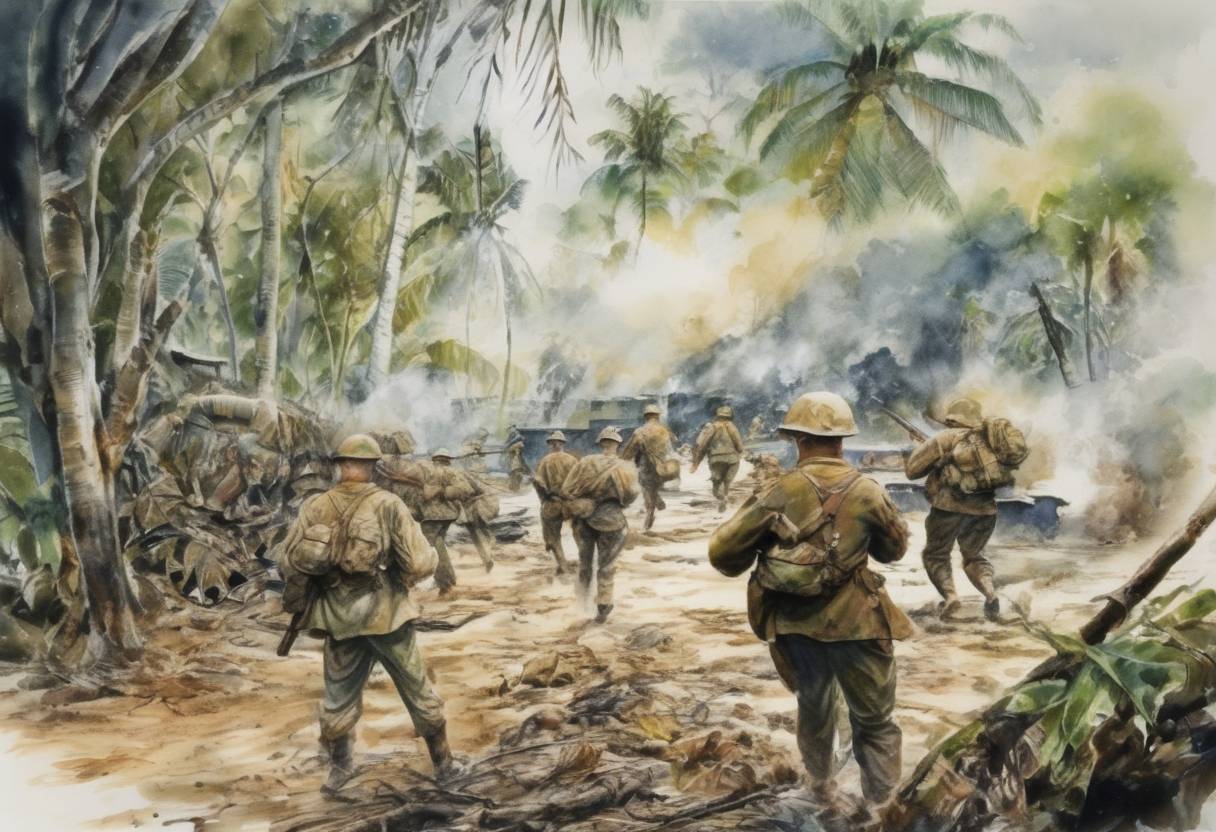
On September 15, 1944, the United States Marines launched an amphibious assault on the island of Peleliu, marking the beginning of one of the most intense and grueling battles in the Pacific Theater of World War II. This operation was part of the larger strategy to secure the Palau Islands and provide support for the upcoming invasion of the Philippines.
Strategic Importance: The capture of Peleliu was intended to neutralize Japanese airfields that could threaten Allied operations in the Philippines. The island’s strategic location made it a target for the U.S. military as they advanced across the Pacific.
Japanese Defenses: The Japanese had fortified Peleliu with a network of caves, bunkers, and underground positions, employing a strategy of attrition to inflict maximum casualties on the invading forces. Approximately 11,000 Japanese troops were stationed on the island, commanded by Colonel Kunio Nakagawa.
Landing Forces: The assault was led by the 1st Marine Division, commanded by Major General William H. Rupertus. The initial landing involved over 28,000 U.S. Marines and soldiers.
Initial Assault: The Marines faced fierce resistance as they landed on the beaches of Peleliu. The Japanese defenders utilized the island’s rugged terrain to their advantage, resulting in heavy casualties for the U.S. forces.
Terrain and Conditions: The battle was characterized by brutal fighting in extreme heat and difficult terrain. The coral ridges and dense jungle provided natural fortifications for the Japanese defenders.
Prolonged Engagement: Initially expected to last only a few days, the battle extended over two months due to the tenacity of the Japanese defense and the challenging conditions. The fighting was marked by intense close-quarters combat.
Casualties: The battle resulted in significant casualties on both sides. The U.S. forces suffered over 10,000 casualties, including more than 1,500 killed. Japanese forces were nearly annihilated, with only a few hundred soldiers surviving the battle.
Strategic Outcome: Although the island was eventually secured by U.S. forces, the high cost in lives and resources led to debates about the necessity of the operation. The airfields on Peleliu were not used as extensively as initially planned.
Legacy: The Battle of Peleliu is remembered for the extraordinary bravery and resilience of the Marines and soldiers who fought there. It highlighted the challenges of island warfare and the determination of Japanese forces to defend their positions.
Historical Reflection: The battle is often cited as an example of the harsh realities of the Pacific War and the strategic decisions that shaped the final stages of World War II.
The Battle of Peleliu remains a poignant chapter in the history of World War II, illustrating the complexities and human cost of the conflict in the Pacific.
Source: www.history.com