October 19, 1914

The First Battle of Ypres begins during World War I, marking the start of a series of battles in the Ypres Salient.


Ypres, Belgium | Allied Forces
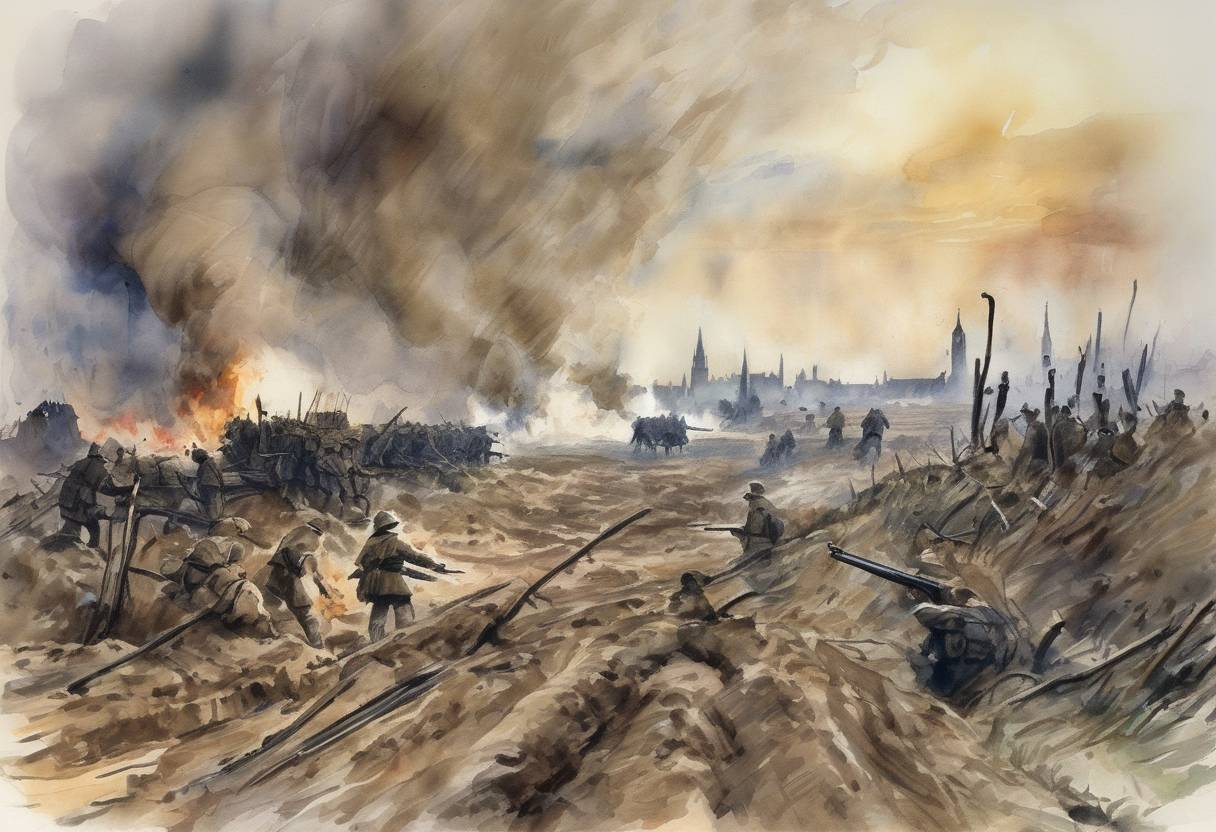
Watercolor painting based depiction of The First Battle of Ypres begins during World War I, marking the start of a series of battles in the Ypres Salient. (1914)

The First Battle of Ypres: October 19, 1914

The First Battle of Ypres, which began on October 19, 1914, was a significant early engagement in World War I, marking the start of a series of battles in the Ypres Salient, a strategically crucial region in Belgium. This battle was part of the larger “Race to the Sea,” a series of maneuvers by both the Allied and German forces to outflank each other and secure control over the northern front.

Context and Prelude

  • Strategic Importance: Ypres was a key location due to its position on the route to the Channel ports, which were vital for the British Expeditionary Force (BEF) to maintain supply lines and communication with Britain.
  • Race to the Sea: Following the Battle of the Aisne, both sides attempted to outmaneuver each other to the north, leading to a continuous line of trenches from the Swiss border to the North Sea.
  • Forces Involved: The battle involved the British Expeditionary Force, French troops, and the Belgian Army against the German Fourth and Sixth Armies.

Key Events

  • Initial Engagements: The battle commenced with German forces launching an offensive aimed at capturing Ypres and breaking through to the Channel ports.
  • Stalemate and Trench Warfare: As the battle progressed, both sides dug extensive trench systems, leading to a stalemate that characterized much of the Western Front.
  • Heavy Casualties: The battle was marked by intense fighting and heavy casualties on both sides, with the Allies suffering significant losses, including many experienced British soldiers.

Aftermath and Consequences

  • Ypres Salient: The battle established the Ypres Salient, a bulge in the front line that would be the site of several more battles throughout the war.
  • Strategic Stalemate: Despite the high cost, the Allies managed to hold Ypres, preventing the Germans from reaching the Channel ports.
  • Impact on Warfare: The battle underscored the brutal nature of trench warfare and foreshadowed the protracted and grueling conflict that would define World War I.

Broader Historical Significance

The First Battle of Ypres was a pivotal moment in World War I, illustrating the transition from mobile warfare to the entrenched positions that would dominate the Western Front. It highlighted the strategic importance of Ypres and set the stage for subsequent battles in the region, including the infamous Second and Third Battles of Ypres. The battle also demonstrated the high human cost of the war and the challenges of achieving a decisive breakthrough in trench warfare.