The Naval Battle of Guadalcanal: A Decisive Allied Victory
1942 · Guadalcanal, Solomon Islands
The Naval Battle of Guadalcanal ends in a decisive Allied victory during World War II, marking a turning point in the Pacific Theater.
March 2, 1943
The Battle of the Bismarck Sea began during World War II, resulting in a decisive Allied victory over Japanese forces.
Bismarck Sea, Papua New Guinea | Allied Forces
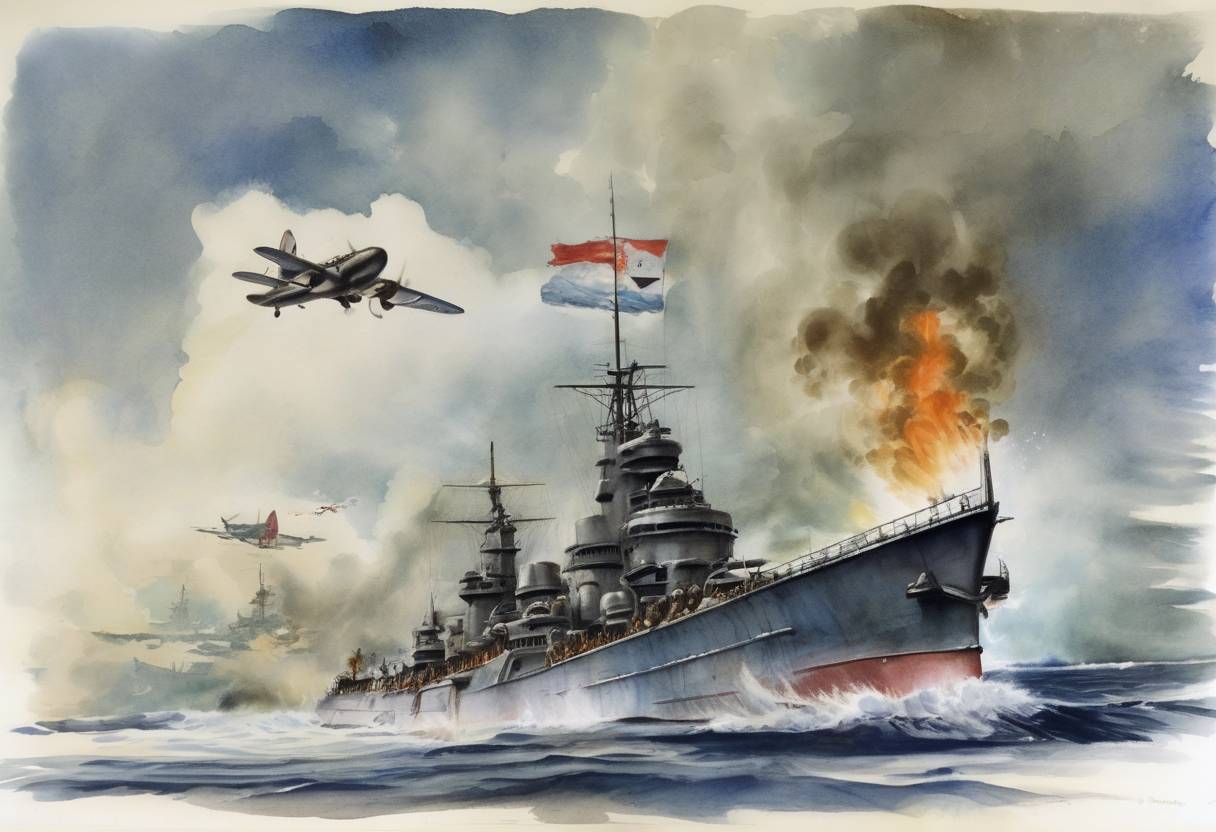
The Battle of the Bismarck Sea was a pivotal engagement during World War II, taking place from March 2 to March 4, 1943. This battle marked a significant Allied victory over Japanese forces in the Pacific Theater, showcasing the effectiveness of air power in naval warfare.
Strategic Importance: The battle occurred in the Southwest Pacific, where control of sea routes was crucial for the movement of troops and supplies. The Japanese aimed to reinforce their garrison at Lae, New Guinea, to strengthen their position in the region.
Japanese Convoy: The Japanese convoy, consisting of eight troop transports and eight destroyers, departed from Rabaul on February 28, 1943. It carried approximately 7,000 troops intended to reinforce their positions in New Guinea.
Allied Intelligence: Allied forces, under the command of General Douglas MacArthur, had intercepted Japanese communications and were aware of the convoy’s movements. This intelligence allowed the Allies to prepare a coordinated air assault.
Allied Forces: The Allies deployed a formidable array of aircraft from the Royal Australian Air Force (RAAF) and the United States Army Air Forces (USAAF). This included B-17 Flying Fortresses, B-25 Mitchells, and A-20 Havocs, among others.
Air Assault: On March 2, 1943, Allied aircraft launched a series of attacks on the Japanese convoy. The B-17s initiated the assault with high-altitude bombing, followed by low-level strafing and bombing runs by B-25s and A-20s.
Tactics: The Allies employed innovative tactics, such as skip bombing, where bombs were dropped at low altitudes to skip across the water and hit ships at the waterline, increasing their effectiveness.
Decisive Victory: By March 4, the Allies had sunk all eight Japanese transports and four of the eight destroyers. Approximately 3,000 Japanese troops were lost, significantly weakening Japanese capabilities in the region.
Impact on Japanese Strategy: The defeat forced Japan to reconsider its naval strategies, particularly the vulnerability of troop convoys to air attacks. It marked a turning point in the Pacific War, emphasizing the dominance of air power.
Allied Morale: The victory boosted Allied morale and demonstrated the effectiveness of coordinated intelligence and air power, setting a precedent for future operations in the Pacific.
The Battle of the Bismarck Sea underscored the strategic importance of air superiority and intelligence in modern warfare. It curtailed Japanese expansion efforts in the Pacific and contributed to the eventual Allied success in the region. The battle remains a classic example of the transition from traditional naval engagements to air-dominated warfare during World War II.
Source: en.wikipedia.org