Naomi Uemura: First Solo Expedition to the North Pole
1978 · North Pole, Arctic
Japan's Naomi Uemura became the first person to reach the North Pole alone.
April 6, 1909
American explorer Robert Peary allegedly reached the North Pole, though his claim has been subject to controversy.
North Pole, Arctic | Peary Arctic Club
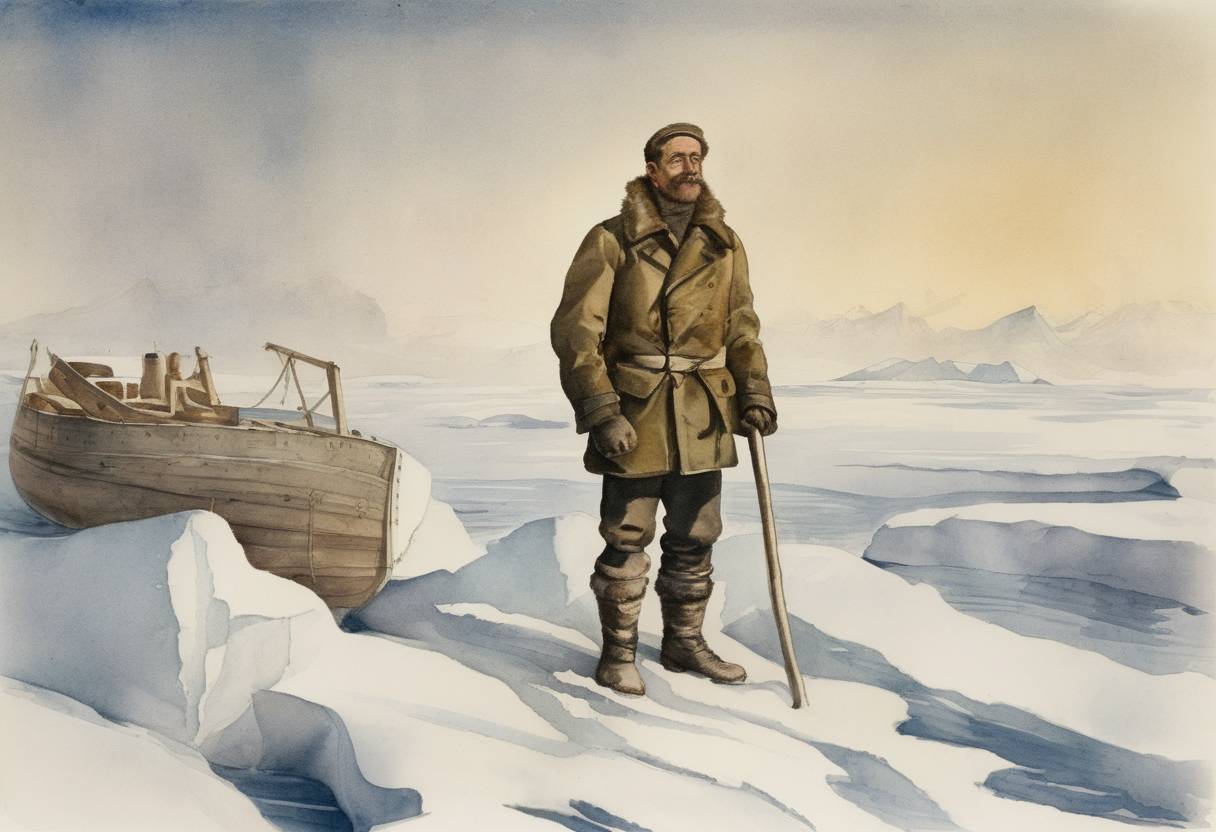
On April 6, 1909, American explorer Robert Peary claimed to have reached the geographic North Pole, a feat that was celebrated at the time as a monumental achievement in exploration. However, Peary’s claim has been the subject of significant controversy and debate over the years.
Robert Edwin Peary was a U.S. Navy officer and explorer who had made several expeditions to the Arctic prior to his 1909 journey. His ambition to reach the North Pole was driven by the era’s spirit of exploration and the prestige associated with being the first to achieve such a feat.
Peary’s 1909 expedition set out from Ellesmere Island in Canada, utilizing sledges and a team of Inuit guides and assistants, including the notable African American explorer Matthew Henson. The team faced extreme conditions, with temperatures plummeting and treacherous ice conditions.
Peary claimed to have reached the North Pole on April 6, 1909, after a grueling journey. He reported using celestial navigation to determine his position, a method that was standard at the time but prone to error under the harsh conditions of the Arctic.
Almost immediately, Peary’s claim was met with skepticism. Several factors contributed to the controversy:
Navigation Accuracy: Critics questioned the accuracy of Peary’s navigational methods and whether he had indeed reached the exact geographic North Pole.
Speed of Travel: The speed at which Peary claimed to have traveled in the final stages of his journey was considered unusually fast, leading some to doubt the veracity of his account.
Competing Claims: Frederick Cook, another American explorer, claimed to have reached the North Pole a year earlier in 1908. Cook’s claim was also disputed, and the rivalry between the two explorers fueled public and scientific debate.
Lack of Independent Verification: Peary’s expedition lacked independent verification, as no impartial observers accompanied him to confirm his position.
Despite the controversy, Peary was celebrated in the United States and received numerous accolades. The National Geographic Society and the U.S. Congress recognized his achievement, though the debate over his claim persisted.
In the years following, further analysis and exploration have cast doubt on Peary’s claim. Modern assessments suggest that he may have fallen short of the Pole, though he likely came closer than any previous explorer.
Peary’s expedition remains a significant chapter in the history of polar exploration, illustrating the challenges and uncertainties faced by early explorers. It also highlights the broader context of exploration during the early 20th century, a time when reaching the poles was seen as one of the last great geographical challenges.
While the true extent of Robert Peary’s achievement may never be fully resolved, his 1909 expedition to the North Pole remains a testament to human endurance and the spirit of exploration. The controversy surrounding his claim continues to be a topic of interest for historians and explorers alike.
Source: en.wikipedia.org