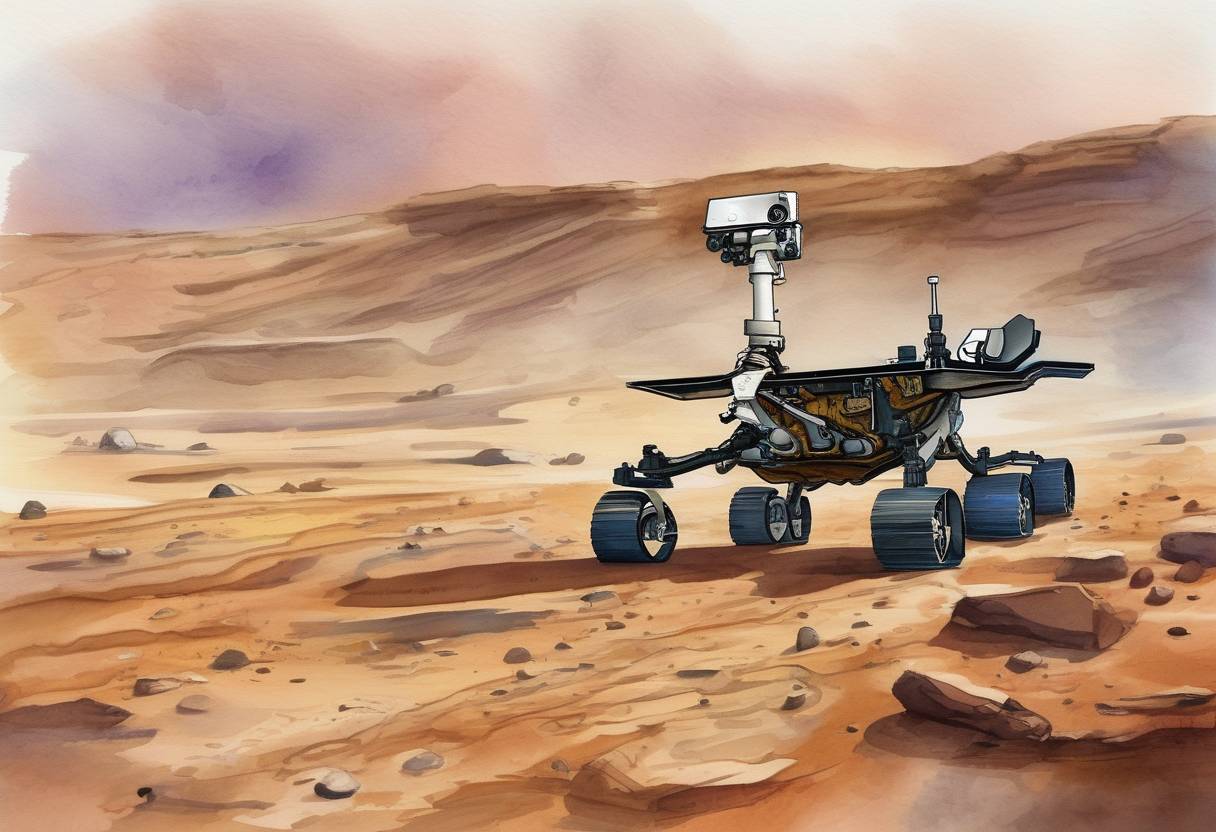
Discovery of Ancient Streambed on Mars by Curiosity Rover
On December 3, 2012, NASA’s Mars rover Curiosity made a groundbreaking discovery that provided compelling evidence of an ancient streambed on Mars, suggesting that water once flowed on the planet’s surface. This finding marked a significant milestone in the exploration of Mars and the search for past life on the Red Planet.
Context and Background
Curiosity, part of NASA’s Mars Science Laboratory mission, was launched on November 26, 2011, and successfully landed on Mars in Gale Crater on August 6, 2012. The primary goal of the mission was to explore the Martian climate and geology, assess whether the selected field site inside Gale Crater has ever offered environmental conditions favorable for microbial life, and investigate the role of water.
Key Discoveries
Evidence of Water Flow: Curiosity’s analysis of the Martian terrain revealed rounded pebbles and gravel conglomerates, which are indicative of sedimentary deposits formed by the action of water. The size and shape of these rocks suggested they were transported by a fast-moving stream, similar to those found on Earth.
Location: The discovery was made in an area known as “Hottah,” which is part of the Gale Crater. The presence of these sedimentary rocks provided direct evidence of sustained water flow in the past.
Scientific Analysis: The rover’s Mast Camera (Mastcam) and the Chemistry and Camera (ChemCam) instruments were crucial in analyzing the rock formations. The rounded pebbles were embedded in a layer of conglomerate rock, which typically forms in the presence of water.
Significance
Implications for Past Life: The discovery of an ancient streambed supports the hypothesis that Mars once had conditions suitable for life. The presence of liquid water is a key ingredient for life as we know it, and this finding bolstered the possibility that Mars could have supported microbial life in its ancient past.
Understanding Mars’ Geological History: This evidence contributed to the understanding of Mars’ geological history, indicating that the planet had a more dynamic and potentially habitable environment billions of years ago.
Future Exploration: The findings from Curiosity’s mission have informed subsequent Mars missions, including the Mars 2020 Perseverance rover, which continues to search for signs of past life and collect samples for potential return to Earth.
Conclusion
The discovery of an ancient streambed by the Curiosity rover on December 3, 2012, was a pivotal moment in Mars exploration. It provided concrete evidence of past water flow on Mars, enhancing our understanding of the planet’s history and its potential to have harbored life. This discovery continues to influence scientific research and exploration strategies as humanity seeks to unravel the mysteries of Mars.