Tajikistan's Declaration of Independence
1991 · Dushanbe, Tajikistan
Tajikistan declared its independence from the Soviet Union, becoming a sovereign nation.
August 31, 1991
Kyrgyzstan declares independence from the Soviet Union.
Bishkek, Kyrgyzstan | Kyrgyz Government
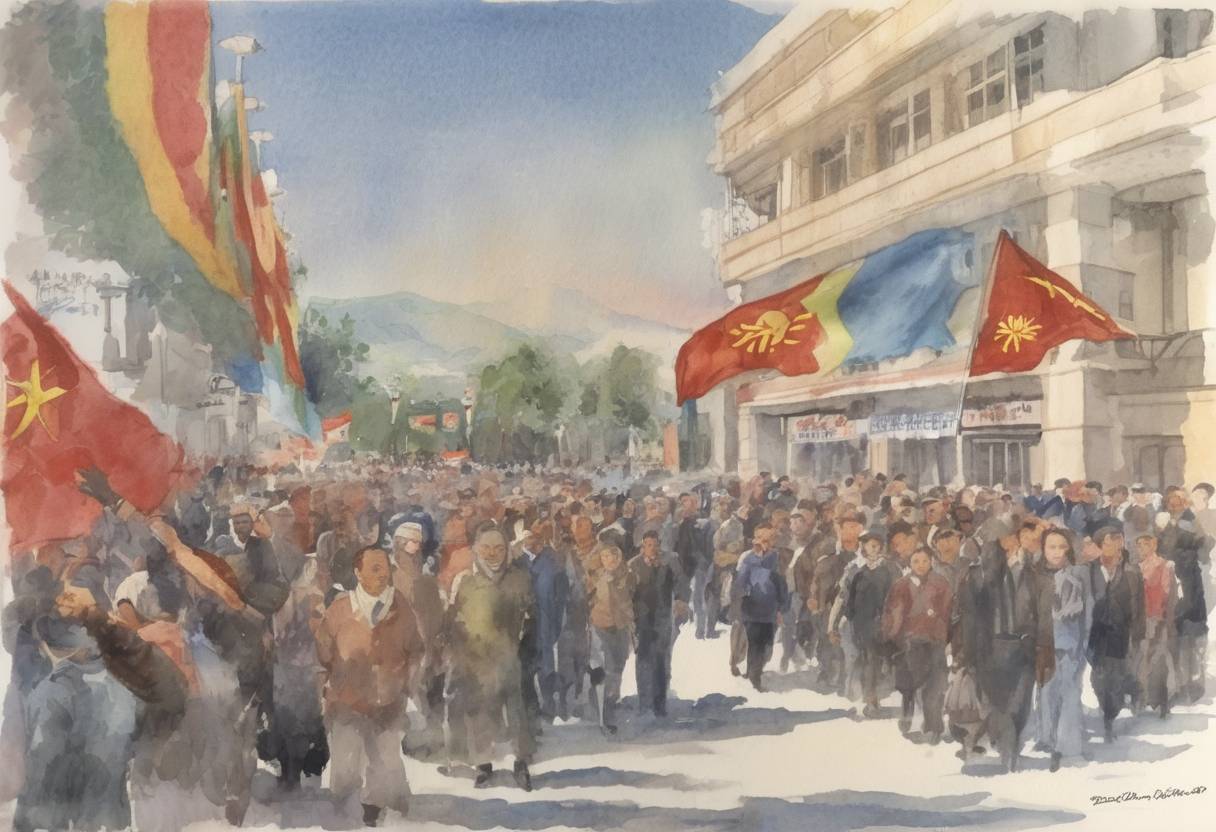
On August 31, 1991, Kyrgyzstan declared its independence from the Soviet Union, marking a significant moment in the dissolution of the USSR and the emergence of new sovereign states in Central Asia.
The late 1980s and early 1990s were a period of significant political upheaval in the Soviet Union. Mikhail Gorbachev’s policies of glasnost (openness) and perestroika (restructuring) had inadvertently accelerated demands for greater autonomy and independence among the Soviet republics. The weakening of central Soviet authority, combined with growing nationalistic movements, set the stage for the eventual breakup of the USSR.
Kyrgyzstan, then known as the Kyrgyz Soviet Socialist Republic, was part of this broader movement. The republic had been under Soviet control since 1919, and its people were increasingly eager to assert their national identity and political independence.
Declaration of Independence: On this day, the Supreme Soviet of the Kyrgyz SSR adopted a declaration of independence, officially severing ties with the Soviet Union. This move was part of a wave of declarations by other Soviet republics, as the central Soviet government continued to lose its grip on power.
Leadership: Askar Akayev, who had been elected as the first President of Kyrgyzstan earlier in 1990, played a crucial role in the transition. His leadership was instrumental in navigating the political landscape during this period of change.
Recognition and Transition: Following its declaration of independence, Kyrgyzstan was recognized by the international community as a sovereign state. It joined the Commonwealth of Independent States (CIS), a regional organization formed by former Soviet republics to facilitate cooperation and manage the post-Soviet transition.
Constitutional Development: Kyrgyzstan adopted its first constitution in 1993, establishing a framework for a democratic government and market economy. However, the transition was not without challenges, including political instability and economic difficulties.
Legacy: The declaration of independence marked the beginning of Kyrgyzstan’s journey as a nation-state. It has since navigated the complexities of building a national identity, fostering economic development, and establishing a stable political system.
Kyrgyzstan’s independence was part of the larger dissolution of the Soviet Union, which officially ceased to exist in December 1991. This period reshaped the geopolitical landscape of Eurasia, leading to the emergence of 15 independent republics and significant shifts in international relations.
The independence of Kyrgyzstan and other Central Asian republics also highlighted the diverse cultural and ethnic identities within the former Soviet Union, setting the stage for new national narratives and regional dynamics in the post-Soviet era.
Source: en.wikipedia.org