The Entry of Belisarius into Rome: April 22, 536
536 · Rome, Italy
The Byzantine general Belisarius enters Rome, marking a significant moment in the Gothic War as the Eastern Roman Empire seeks to reclaim the Italian Peninsula from the Ostrogoths.
December 9, 0536
Byzantine General Belisarius enters Rome unopposed, beginning the Gothic War's siege of Rome.
Rome, Italy | Byzantine Empire
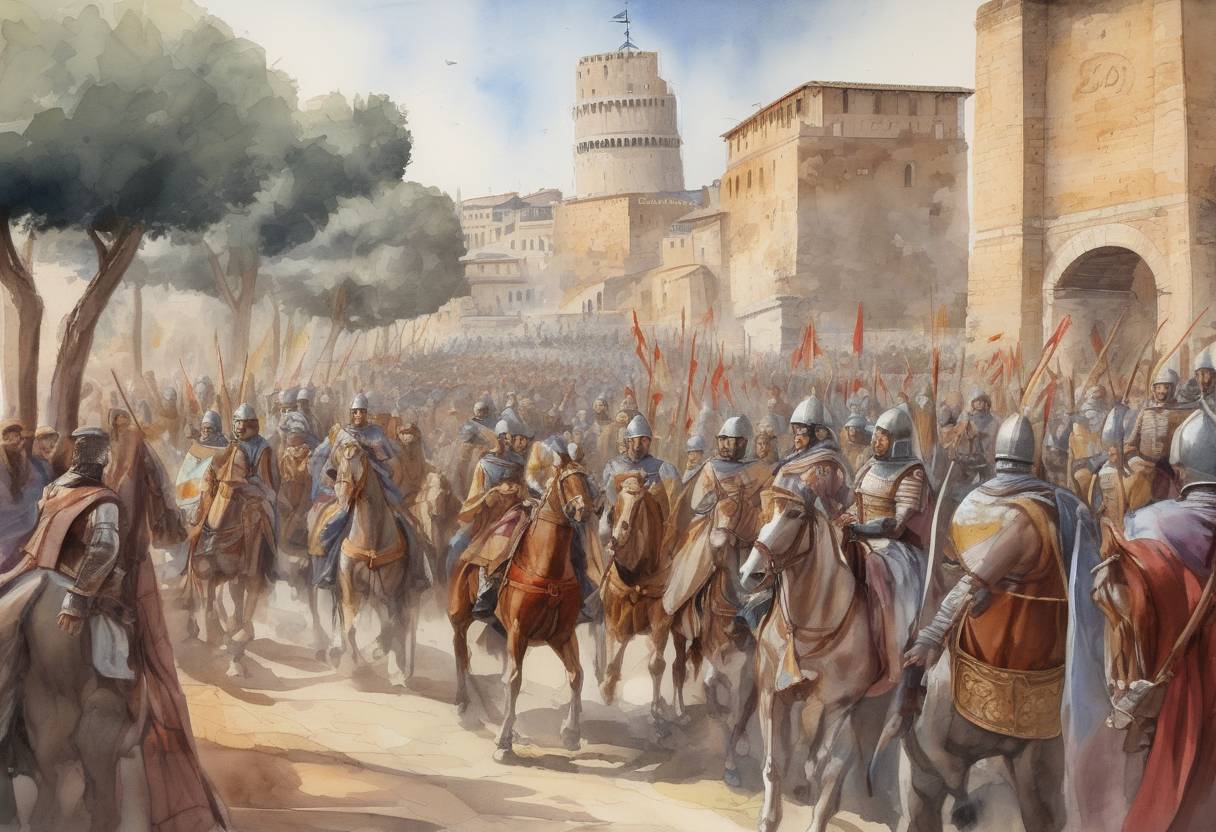
On December 9, 536, the renowned Byzantine general Belisarius entered the city of Rome unopposed, marking a significant event in the Gothic War (535–554). This moment was a pivotal point in the conflict between the Eastern Roman Empire, led by Emperor Justinian I, and the Ostrogothic Kingdom in Italy.
The Gothic War: Initiated by Justinian I, the Gothic War was part of his ambitious campaign to reconquer former Roman territories in the West. The war aimed to restore Roman control over Italy, which had been under Ostrogothic rule since the fall of the Western Roman Empire in 476.
Belisarius: A brilliant military strategist and one of Justinian’s most trusted generals, Belisarius had already achieved significant victories in the Vandalic War in North Africa. His success there bolstered his reputation and set the stage for his campaign in Italy.
The Ostrogoths: At the time, the Ostrogoths were led by King Theodahad, whose ineffective leadership and internal disputes weakened their hold over Italy. This instability provided an opportunity for Belisarius to advance.
Capture of Naples: Before reaching Rome, Belisarius captured Naples after a protracted siege, demonstrating his tactical prowess and further demoralizing the Ostrogothic forces.
Diplomatic Maneuvers: Belisarius engaged in diplomatic efforts to win the support of Roman citizens and local aristocracy, who were disillusioned with Ostrogothic rule. His promises of protection and restoration of Roman traditions gained him favor.
Withdrawal of Ostrogothic Forces: As Belisarius approached, the Ostrogothic garrison in Rome, recognizing their precarious position and lacking reinforcements, withdrew from the city, allowing Belisarius to enter without resistance.
Strategic Importance: Rome’s capture was not just symbolic but also strategic, as controlling the city provided a significant advantage in the ongoing conflict.
Defense Preparations: Once inside, Belisarius immediately set about strengthening Rome’s defenses, anticipating a counterattack by the Ostrogoths. He repaired walls, stockpiled supplies, and organized the city’s defense.
The Siege: The Ostrogoths, under their new king Vitiges, soon laid siege to Rome in early 537. The siege lasted for over a year, characterized by fierce battles and strategic maneuvers, but ultimately, Belisarius’s leadership and the resilience of his forces ensured the city’s defense.
Impact on the Gothic War: The successful defense of Rome was a major blow to the Ostrogoths and a significant victory for Justinian’s campaign to reclaim Italy.
Legacy of Belisarius: The events solidified Belisarius’s reputation as one of history’s great military commanders. His ability to hold Rome against overwhelming odds demonstrated his strategic genius and commitment to Justinian’s vision of a restored Roman Empire.
Long-term Consequences: Although the Gothic War continued for several more years, the capture and defense of Rome were crucial in weakening Ostrogothic power and facilitating the eventual Byzantine reconquest of Italy.
Belisarius’s entry into Rome on December 9, 536, remains a testament to his military acumen and the broader ambitions of the Byzantine Empire under Justinian I.
Source: en.wikipedia.org