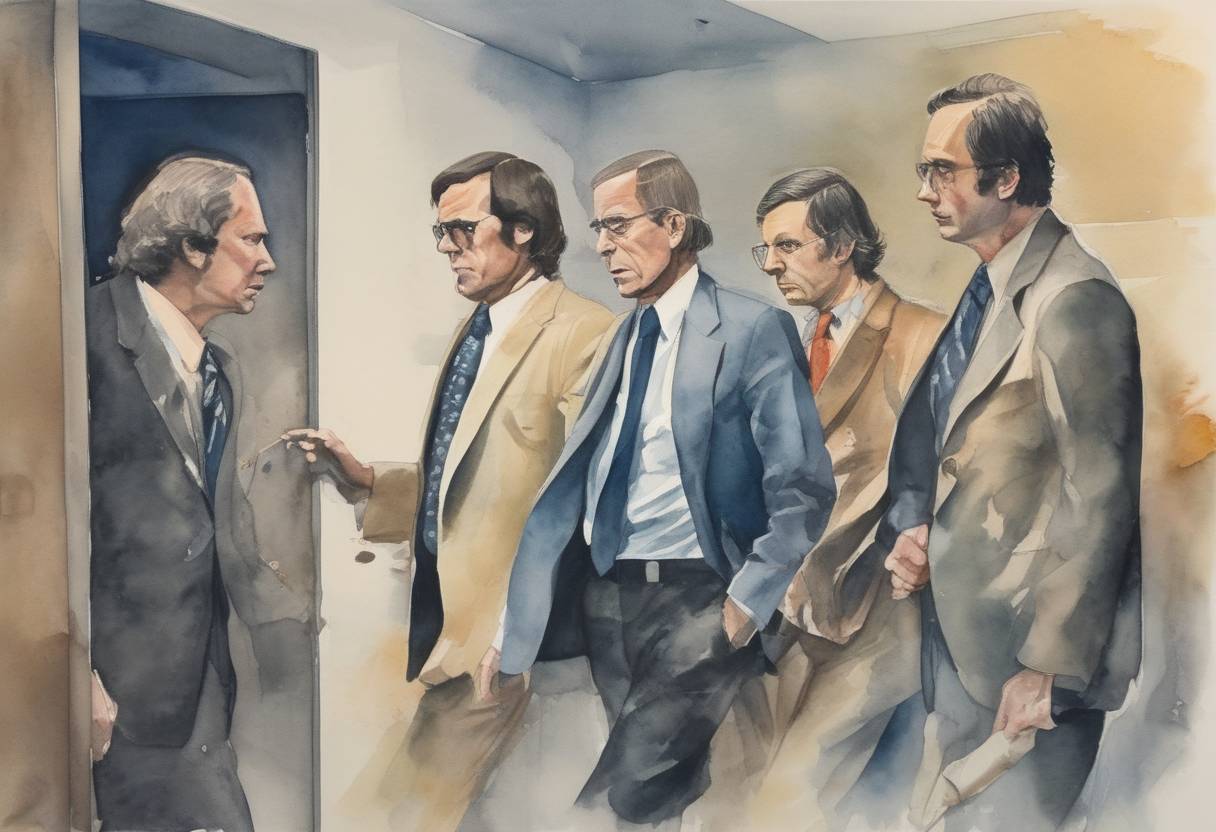
The Watergate Scandal: The Beginning
Date: June 17, 1972
On June 17, 1972, the Watergate scandal began with the arrest of five men for breaking into the Democratic National Committee (DNC) headquarters, located in the Watergate office complex in Washington, D.C. This event marked the start of a political scandal that would eventually lead to the resignation of President Richard Nixon.
Key Events Leading Up to the Break-In
- Political Climate: The early 1970s were a time of intense political rivalry in the United States. President Nixon, a Republican, was seeking re-election in 1972, and the Democratic Party was seen as a significant threat to his campaign.
- Committee to Re-Elect the President (CRP): Also known as CREEP, this organization was established to ensure Nixon’s re-election. Some members of this committee engaged in unethical and illegal activities to undermine the Democratic Party.
The Break-In
- The Arrest: In the early hours of June 17, 1972, five men were arrested inside the DNC headquarters. They were caught attempting to wiretap phones and steal documents.
- The Burglars: The men were later identified as E. Howard Hunt and G. Gordon Liddy, former members of the Nixon administration, and four Cuban Americans who had previously been involved in anti-Castro activities.
- Initial Reaction: At first, the break-in received little attention from the media and was considered a minor incident. However, two journalists from The Washington Post, Bob Woodward and Carl Bernstein, began investigating the story.
- Unraveling the Scandal: Through their investigation, Woodward and Bernstein uncovered a larger pattern of political espionage and sabotage conducted by the Nixon administration.
Broader Historical Significance
- Impact on American Politics: The Watergate scandal led to a loss of trust in political leaders and increased skepticism about government integrity among the American public.
- Legal and Political Consequences: The scandal resulted in the indictment of several Nixon administration officials and ultimately led to President Nixon’s resignation on August 8, 1974, making him the first U.S. president to resign from office.
- Reforms: In response to the scandal, Congress enacted several reforms aimed at increasing transparency and accountability in government, including amendments to the Freedom of Information Act and the establishment of the Federal Election Commission.
The Watergate scandal remains a pivotal moment in American history, illustrating the importance of a free press and the checks and balances inherent in the U.S. political system.