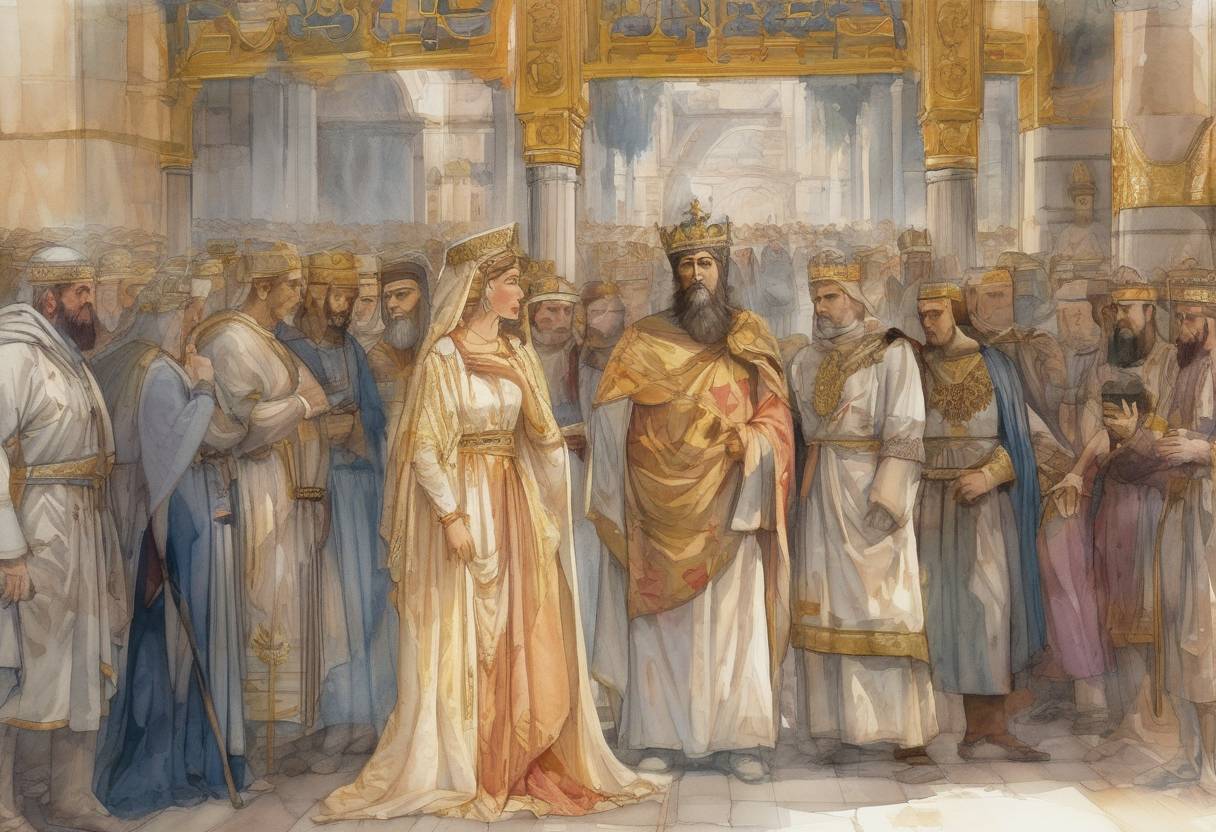
Deposition of Empress Irene and Ascension of Nikephoros I
On October 31, 802, a significant political shift occurred in the Byzantine Empire when Empress Irene was deposed, and Nikephoros I ascended to the throne. This event marked the end of Irene’s tumultuous reign and the beginning of a new era under Nikephoros.
Background
Empress Irene of Athens had ruled as the Byzantine Empress since 797, initially as a regent for her son, Constantine VI, and later as the sole ruler after orchestrating his deposition and blinding in 797. Her reign was notable for its religious and political complexities, particularly her efforts to restore the veneration of icons, which had been a contentious issue in the empire.
Despite her achievements, Irene’s rule was fraught with challenges. Her decision to depose and blind her son alienated many, and her policies often faced opposition from the aristocracy and military. Additionally, her attempts to negotiate a marriage alliance with Charlemagne, the Frankish king, were controversial and seen as a threat to Byzantine sovereignty.
The Deposition
By 802, dissatisfaction with Irene’s rule had reached a peak. The Byzantine treasury was depleted, and her administration was perceived as weak and ineffective. On October 31, 802, a palace coup led by high-ranking officials, including the Logothete of the Genikon (finance minister), Nikephoros, resulted in Irene’s deposition.
Nikephoros was proclaimed emperor, marking the end of Irene’s reign. She was subsequently exiled to the island of Lesbos, where she lived out the remainder of her life in relative obscurity, passing away in 803.
Ascension of Nikephoros I
Nikephoros I, a capable administrator and experienced politician, took the throne with the support of the military and bureaucratic elite. His reign was characterized by efforts to stabilize the empire’s finances and strengthen its military defenses. Nikephoros implemented several fiscal reforms, including tax increases and the reorganization of the empire’s financial system, to replenish the depleted treasury.
Historical Significance
The deposition of Irene and the rise of Nikephoros I had several important implications for the Byzantine Empire:
End of Iconoclasm Controversy: Irene’s support for the veneration of icons had helped resolve the iconoclasm controversy, a religious conflict that had divided the empire. Nikephoros continued to support the veneration of icons, maintaining religious stability.
Economic Reforms: Nikephoros’ fiscal policies aimed to restore the empire’s financial health, laying the groundwork for future economic stability.
Military Challenges: Nikephoros faced significant military challenges, particularly from the Abbasid Caliphate. His reign included several military campaigns aimed at defending the empire’s eastern borders.
Legacy: While Nikephoros’ reign was marked by internal reforms and external challenges, his ascension represented a shift towards a more pragmatic and financially focused administration.
The transition from Irene to Nikephoros I reflects the complex dynamics of Byzantine politics, where power struggles and shifting alliances often determined the course of the empire’s history.