The Battle of Maserfield: August 5, 642
642 · Oswestry, England
The Battle of Maserfield took place, where King Oswald of Northumbria was defeated and killed by the forces of Penda of Mercia.
November 24, 0642
The Battle of Maserfield takes place, where King Penda of Mercia defeats and kills King Oswald of Northumbria.
Maserfield, England | Kingdom of Mercia
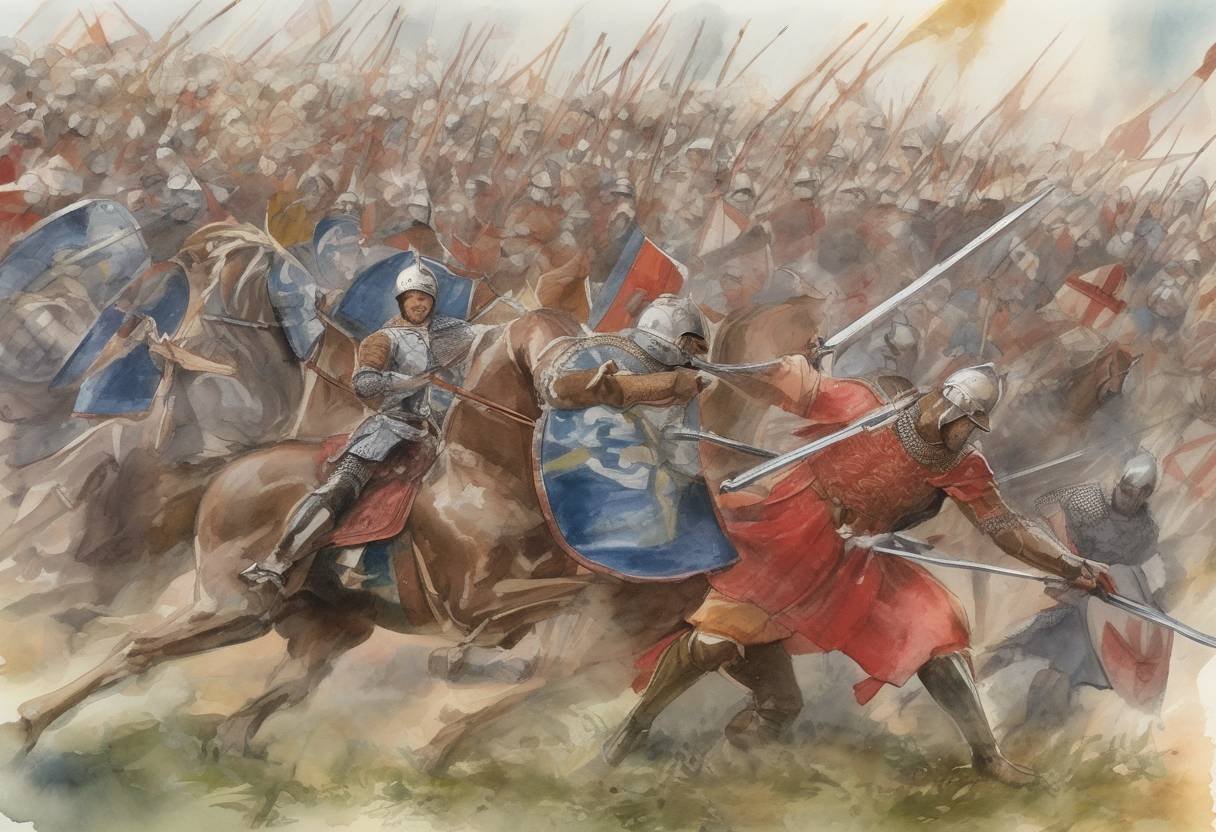
The early 7th century in Britain was a period marked by frequent conflicts among various Anglo-Saxon kingdoms. Northumbria, under King Oswald, had emerged as a dominant power following the Battle of Heavenfield in 633, where Oswald defeated Cadwallon ap Cadfan of Gwynedd. Oswald’s reign was characterized by his strong Christian faith and efforts to promote Christianity, including inviting missionaries like Aidan of Lindisfarne to his kingdom.
King Penda of Mercia, on the other hand, was a staunch pagan and a rival to Northumbrian supremacy. His reign was marked by a series of conflicts aimed at curbing the influence of neighboring kingdoms and expanding Mercian power.
The Battle of Maserfield was a significant confrontation between the forces of Northumbria and Mercia. The exact reasons for the battle are not entirely clear, but it is believed to have been part of Penda’s ongoing efforts to challenge Northumbrian dominance.
The Battle of Maserfield is a reflection of the complex interplay of power, religion, and politics in early medieval Britain. It highlights the volatility of the period and the shifting alliances and enmities among the Anglo-Saxon kingdoms. The battle’s outcome had lasting implications for the balance of power in the region and the spread of Christianity in Britain.
In summary, the Battle of Maserfield was a pivotal event in the history of Anglo-Saxon England, illustrating the fierce rivalries and religious dynamics of the time.
Source: en.wikipedia.org