The Siege of Paris: March 28, 845
845 · Paris, West Francia
Paris is sacked by Viking raiders, led by Ragnar Lodbrok, during the Siege of Paris.
November 25, 0885
The Siege of Paris begins as a Viking fleet, led by Sigfred and Sinric, arrives at the city, marking a significant event in the Viking invasions of France.
Paris, West Francia | Vikings
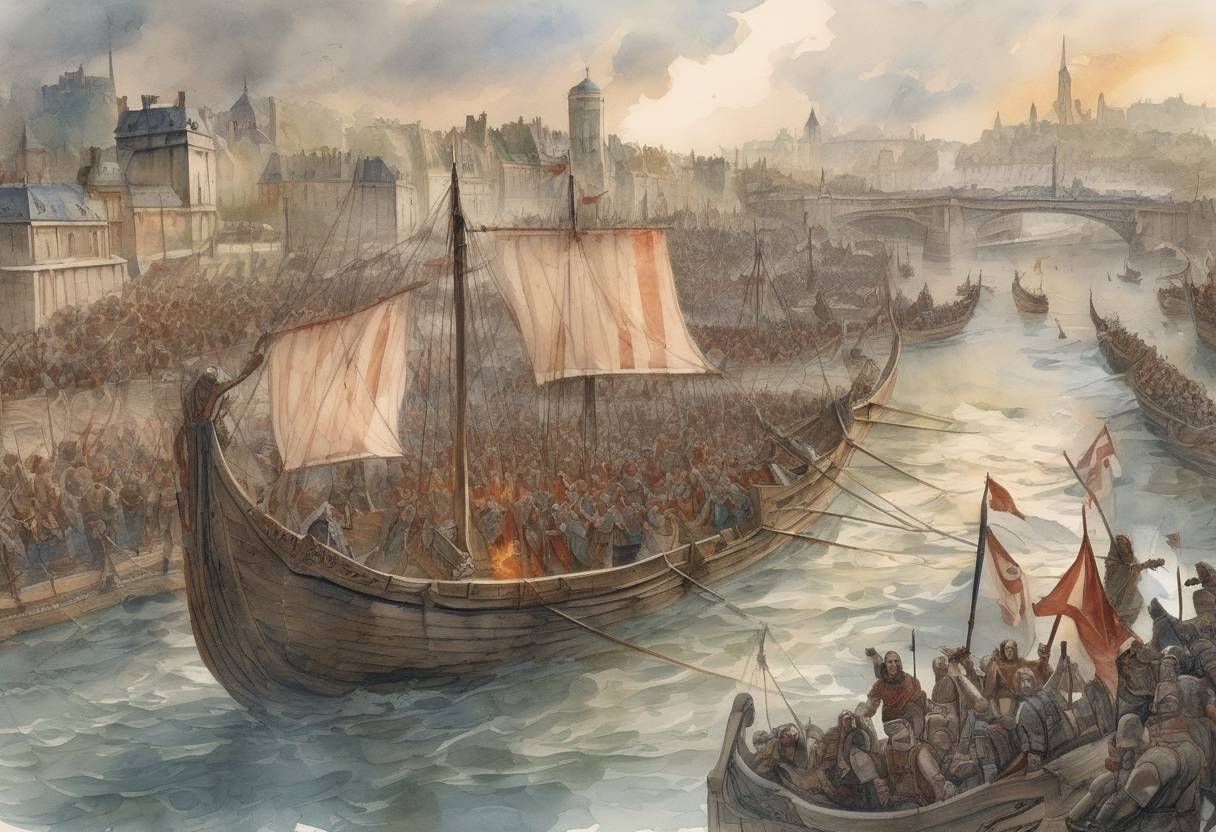
On November 25, 885, a significant event in the history of the Viking invasions of France unfolded as a formidable Viking fleet arrived at the gates of Paris. This marked the beginning of the Siege of Paris, a pivotal moment in the Viking incursions into the Frankish territories.
During the late 9th century, the Carolingian Empire, once a formidable power in Western Europe, was experiencing internal strife and fragmentation. This period of instability provided an opportunity for Viking raiders, who had been conducting raids across Europe, to intensify their incursions into Frankish lands. The Seine River, which flows through Paris, became a strategic route for these Norse warriors.
The siege was led by two prominent Viking leaders, Sigfred and Sinric. Sigfred was a well-known chieftain, while Sinric’s role was more diplomatic, as he often engaged in negotiations with the Frankish rulers. Their combined leadership brought a large fleet, estimated to consist of 700 ships and thousands of warriors, to the heart of the Frankish kingdom.
Upon their arrival, the Vikings demanded tribute from the city, a common practice during their raids. However, Odo, the Count of Paris, refused to capitulate. Instead, he prepared the city’s defenses, rallying the inhabitants to withstand the impending assault. The fortifications of Paris, including its strategic bridges and fortified islands, played a crucial role in the city’s defense.
The siege lasted for nearly a year, from November 885 to October 886. The Vikings launched several assaults on the city, but the defenders, under Odo’s leadership, managed to repel these attacks. The resilience of the Parisians became legendary, and Odo’s leadership was pivotal in maintaining morale and organizing the city’s defenses.
The siege ended when Charles the Fat, the Carolingian Emperor, arrived with a relief force. Rather than engaging in battle, Charles opted to pay the Vikings a substantial tribute to withdraw, a decision that was met with criticism and highlighted the empire’s weakened state.
The Siege of Paris was significant for several reasons:
Demonstration of Resilience: The successful defense of Paris showcased the city’s resilience and strategic importance, enhancing its status within the Frankish realm.
Rise of Odo: Odo’s leadership during the siege elevated his status, eventually leading to his election as King of West Francia in 888, marking a shift in power dynamics within the Carolingian Empire.
Viking Strategy: The siege exemplified the Vikings’ strategic shift from mere raiding to attempts at territorial control and extortion, reflecting their evolving tactics during this period.
Impact on the Carolingian Empire: The event underscored the vulnerabilities of the Carolingian Empire, contributing to its eventual fragmentation and the rise of regional powers.
The Siege of Paris remains a testament to the complex interactions between the Vikings and the Frankish kingdoms, illustrating the challenges and transformations of early medieval Europe.
Source: en.wikipedia.org