The Battle of Inkerman: November 5, 1854
1854 · Inkerman, Crimea
The Battle of Inkerman took place during the Crimean War, resulting in a victory for the British and French forces against Russia.
September 20, 1854
The Battle of Alma took place during the Crimean War, marking the first major engagement between the allied British, French, and Ottoman forces against the Russian Empire.
Alma River, Crimea | Allied Forces
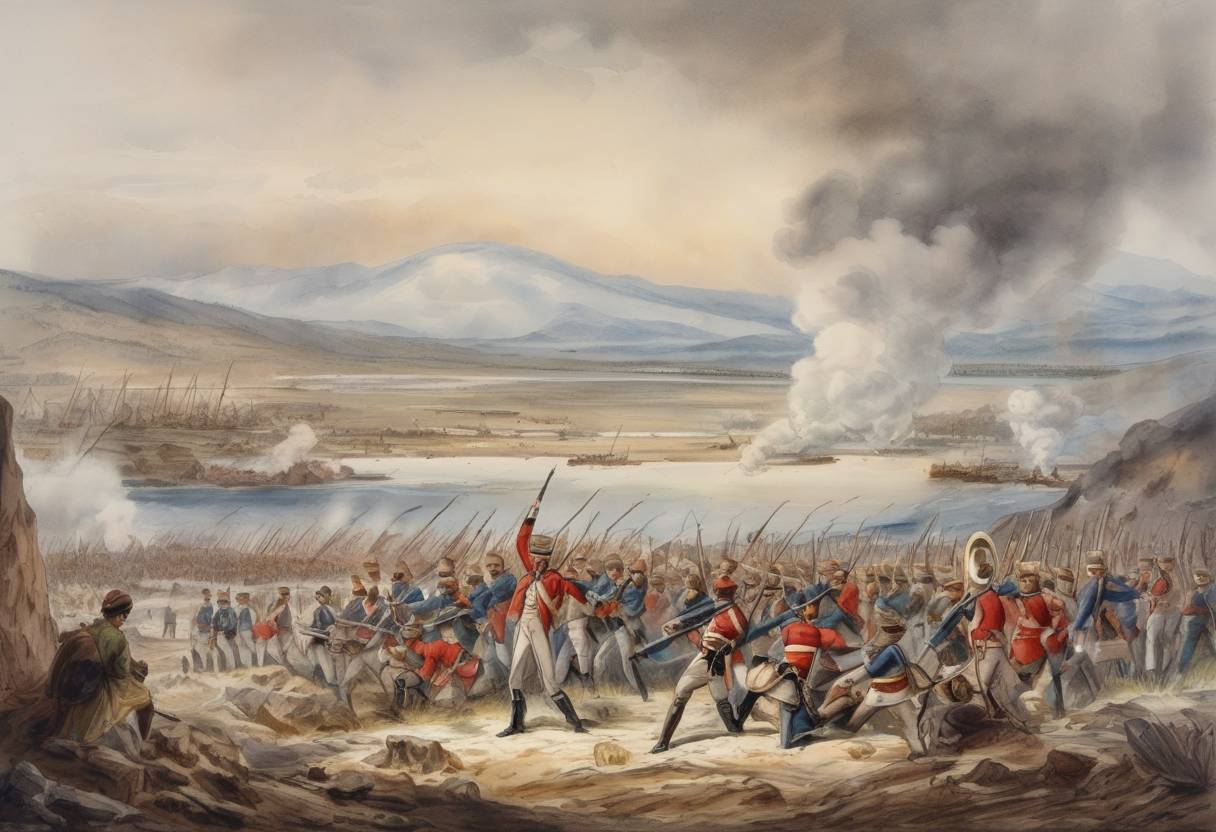
The Battle of Alma was a pivotal engagement during the Crimean War, marking the first major confrontation between the allied forces of Britain, France, and the Ottoman Empire against the Russian Empire. This battle took place on September 20, 1854, near the Alma River in the Crimean Peninsula.
The Crimean War (1853-1856) was primarily a conflict over the declining Ottoman Empire and the strategic interests of European powers in the region. Tensions escalated due to disputes over religious rights in the Holy Land and Russian expansionism. The war saw the Ottoman Empire, supported by Britain and France, opposing Russia’s ambitions.
The allies aimed to capture the Russian naval base at Sevastopol, a strategic objective to cripple Russian naval power in the Black Sea. The Battle of Alma was the first step in this campaign.
Allied Landing: The allied forces landed at Eupatoria on September 14, 1854, and began their march towards Sevastopol. The Russian forces, commanded by Prince Alexander Menshikov, took defensive positions along the Alma River.
Battle Formation: The Russian army, numbering around 33,000 troops, fortified their position on high ground with artillery support. The allies, consisting of approximately 60,000 troops, were led by French General François Canrobert and British General FitzRoy Somerset, 1st Baron Raglan.
French Assault: The battle commenced with a French assault on the Russian left flank. The French forces, using their superior Chassepot rifles, managed to push the Russians back, creating an opening for the British.
British Advance: The British troops attacked the Russian center, crossing the Alma River under heavy fire. Despite initial confusion and resistance, they succeeded in capturing the Great Redoubt, a key Russian defensive position.
Russian Retreat: The combined pressure from the French and British forces eventually forced the Russians to retreat. The allies secured a decisive victory, paving the way for their advance towards Sevastopol.
Strategic Victory: The Battle of Alma was a significant strategic victory for the allies, boosting their morale and demonstrating their ability to cooperate effectively against a common enemy.
Path to Sevastopol: The victory at Alma opened the path for the allied forces to advance towards Sevastopol, leading to a prolonged siege that became the focal point of the Crimean War.
Military Innovations: The battle highlighted the effectiveness of modern military tactics and technology, such as the use of rifled muskets and coordinated assaults.
Historical Impact: The Crimean War, including the Battle of Alma, exposed the weaknesses of the Russian military and contributed to subsequent reforms within the Russian Empire. It also marked a shift in European military alliances and strategies.
The Battle of Alma remains a significant event in military history, illustrating the complexities of coalition warfare and the impact of technological advancements on the battlefield.
Source: en.wikipedia.org