Launch of Voskhod 1: October 12, 1964
1964 · Baikonur, Kazakhstan
The Soviet Union launches Voskhod 1 into Earth orbit as the first spacecraft to carry a multi-person crew and to go without space suits.
August 26, 1978
Sigmund Jähn became the first German cosmonaut to fly in space, aboard Soyuz 31.
Baikonur, Kazakhstan | Soviet Space Program
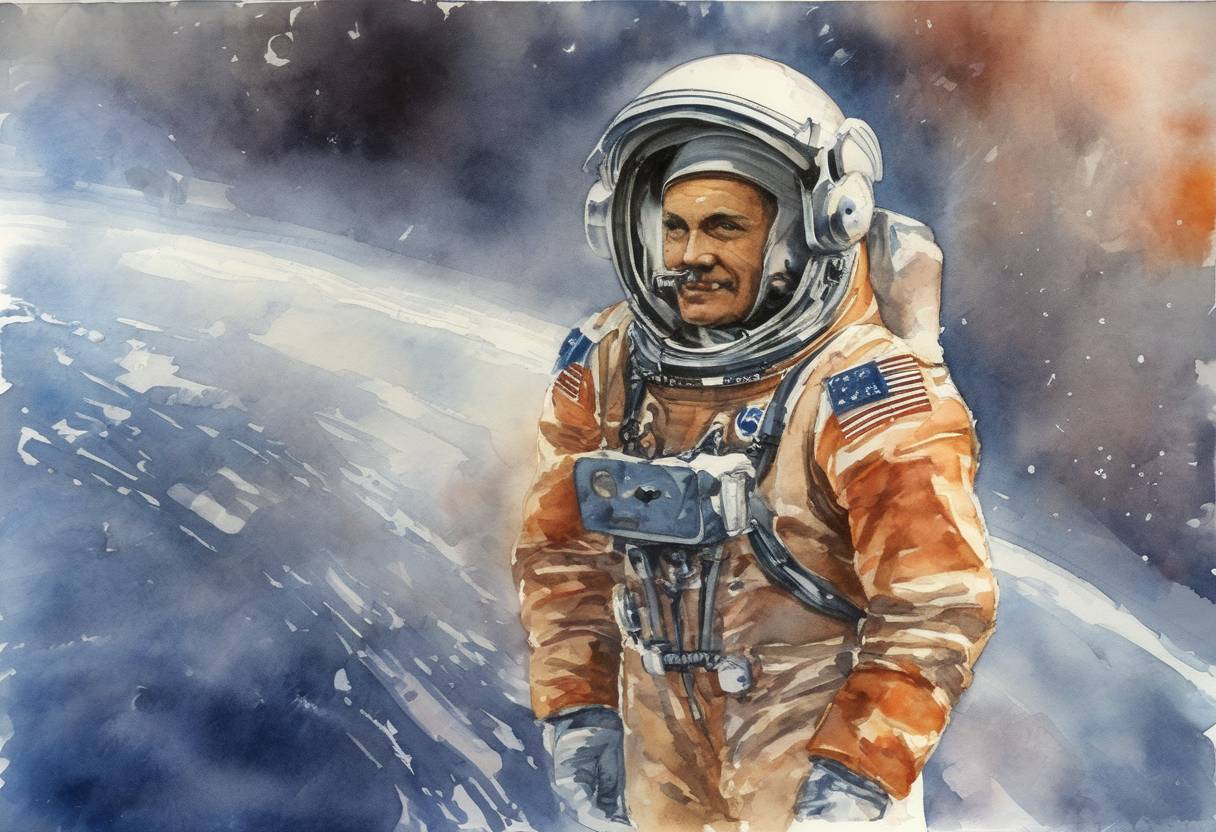
On August 26, 1978, Sigmund Jähn made history as the first German cosmonaut to fly in space. He embarked on this groundbreaking journey aboard the Soviet spacecraft Soyuz 31, marking a significant milestone in both German and space exploration history.
Sigmund Jähn was born on February 13, 1937, in Morgenröthe-Rautenkranz, a small village in Saxony, Germany. He pursued a career in the military and became a pilot in the East German Air Force. His selection as a cosmonaut was part of the Intercosmos program, a Soviet initiative to include cosmonauts from allied countries in space missions.
The mission was launched from the Baikonur Cosmodrome in Kazakhstan. Soyuz 31 was tasked with transporting its crew to the Soviet space station Salyut 6, where they would join the resident crew of Soyuz 29.
During the mission, Jähn and Bykovsky conducted a series of scientific experiments, focusing on materials science, Earth observation, and medical research. Jähn’s participation was particularly significant for the German Democratic Republic (East Germany), as it demonstrated the country’s technological and scientific capabilities on an international stage.
Sigmund Jähn’s successful mission had several important consequences:
Jähn’s legacy continues to inspire future generations of astronauts and space enthusiasts, highlighting the importance of international cooperation in space exploration. His mission remains a testament to the collaborative spirit of the Intercosmos program and the shared human quest to explore beyond our planet.
Source: en.wikipedia.org