The Death of King Edward the Elder and the Succession of Æthelstan
924 · Farndon, England
King Edward the Elder of England died, leading to the succession of his son Æthelstan, who would become the first King of a unified England.
September 29, 0936
King Athelstan of England dies, leading to the succession of his half-brother Edmund I. Athelstan's reign is noted for consolidating the kingdom of England and his influence over other British kingdoms.
Gloucester, England | Kingdom of England
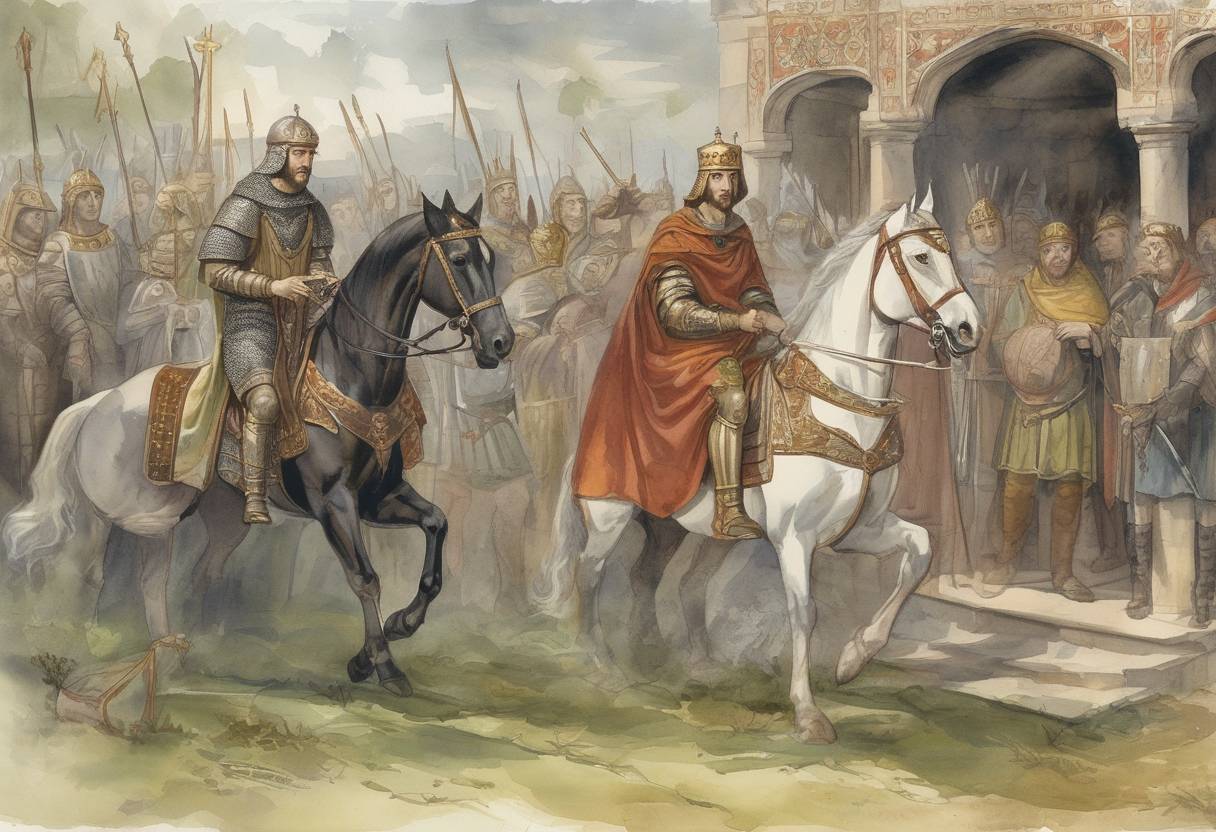
King Athelstan, often regarded as the first King of a unified England, was a pivotal figure in early medieval British history. Born around 894, Athelstan was the grandson of Alfred the Great and the son of King Edward the Elder. He ascended to the throne in 924 after the death of his father, initially ruling over Mercia and later gaining control of Wessex.
Athelstan’s reign, from 924 to 939, was marked by significant achievements in consolidating the various Anglo-Saxon kingdoms into a single entity. His most notable accomplishment was the unification of England, which he achieved through both military conquests and strategic alliances. Key events during his reign include:
Athelstan died on October 27, 939, in Gloucester. His death marked the end of a significant era in English history. He was succeeded by his half-brother, Edmund I, who was only 18 years old at the time. Edmund’s succession was relatively smooth, thanks to the strong foundation laid by Athelstan.
Edmund I, known as Edmund the Magnificent, continued his brother’s work in consolidating the kingdom. His reign, from 939 to 946, was characterized by:
Athelstan’s reign is often seen as a turning point in English history. His efforts in unifying the kingdom laid the groundwork for the future development of England as a powerful and cohesive state. His influence extended beyond England, impacting the political landscape of the British Isles and Europe.
In summary, the death of King Athelstan and the succession of Edmund I marked a significant transition in the early medieval period, with lasting implications for the history of England and its neighboring regions.
Source: en.wikipedia.org