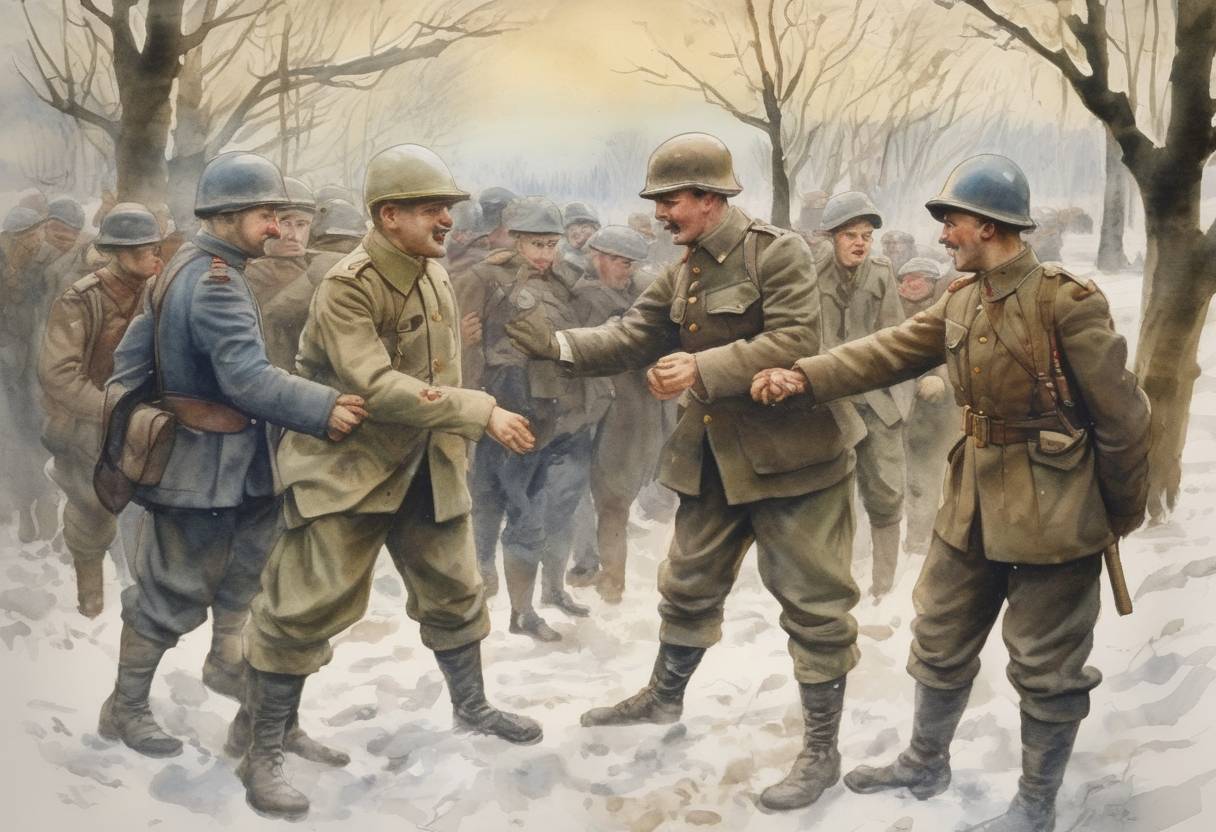
The Christmas Truce of 1914
The Christmas Truce of 1914 stands as one of the most remarkable episodes of World War I, highlighting a moment of humanity amidst the brutal conflict. This unofficial ceasefire occurred along the Western Front on December 24 and 25, 1914, involving soldiers from both the Allied and Central Powers.
Context and Lead-Up
- World War I Background: By December 1914, World War I had been raging for several months. The Western Front, stretching from the North Sea to the Swiss border, had become a grueling stalemate characterized by trench warfare.
- Conditions: Soldiers on both sides faced harsh conditions, including cold weather, muddy trenches, and the constant threat of enemy fire. Morale was low as the war, initially expected to be short, showed no signs of ending.
The Truce
- Initiation: The truce began on Christmas Eve, when German troops in certain sectors began decorating their trenches with candles and Christmas trees. They sang carols, which were met with responses from the British troops.
- Interaction: Gradually, soldiers from both sides ventured into no man’s land, the area between the opposing trenches. They exchanged greetings, small gifts such as food, tobacco, and souvenirs, and even participated in joint burial ceremonies for fallen soldiers.
- Football Matches: One of the most famous aspects of the truce was the impromptu football matches. While accounts vary, it is widely reported that soldiers played informal games, symbolizing a shared humanity beyond the conflict.
Aftermath and Significance
- Resumption of Hostilities: The truce was not universal and did not last beyond Christmas. Commanders on both sides soon ordered a return to fighting, and the war continued with its devastating toll.
- Legacy: The Christmas Truce is remembered as a poignant reminder of the potential for peace and camaraderie even in the darkest times. It demonstrated the shared humanity of soldiers on both sides and has been commemorated in various cultural works, including songs, films, and literature.
Broader Historical Impact
- Symbol of Hope: The truce has become a symbol of hope and the possibility of peace, often cited in discussions about the futility of war and the power of human connection.
- Historical Reflection: While the truce did not alter the course of the war, it remains a powerful example of how individuals can transcend enmity, even if only temporarily.
The Christmas Truce of 1914 continues to capture the imagination and serves as a testament to the enduring spirit of goodwill and peace.