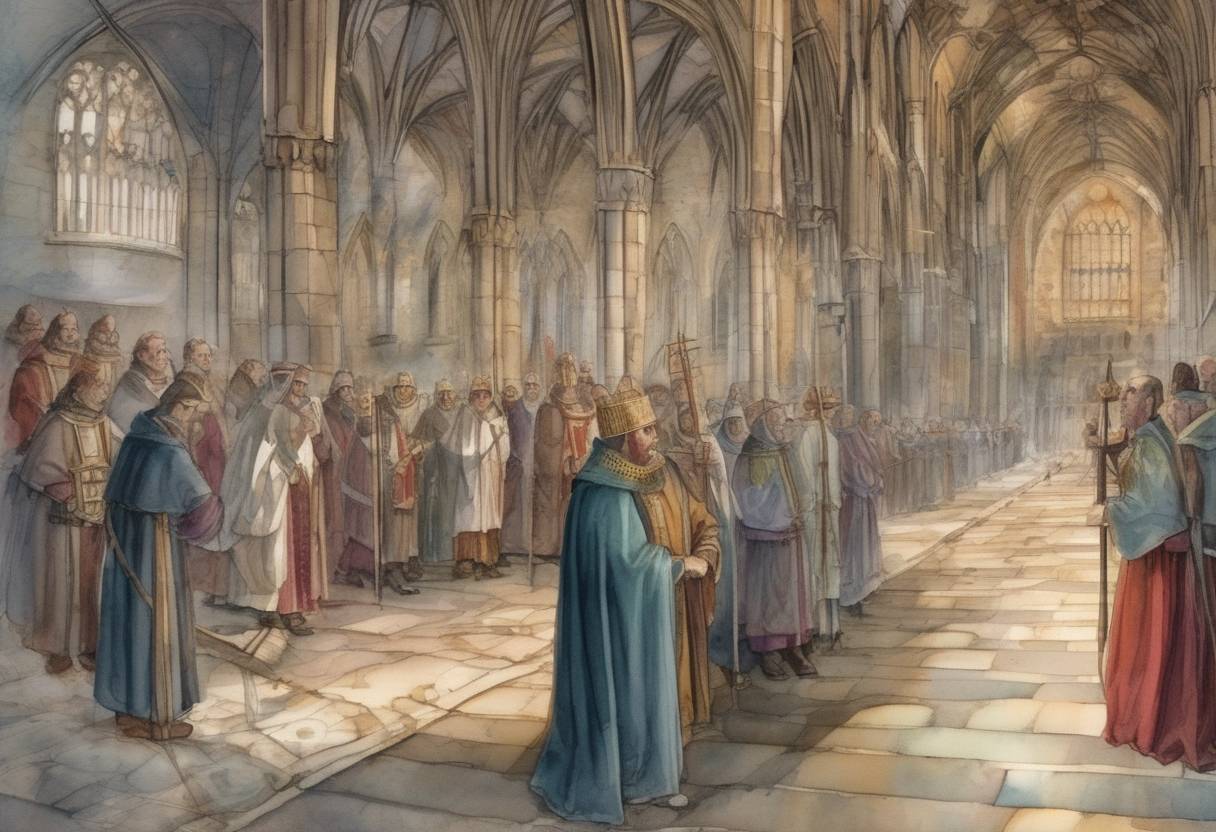
The Murder of Thomas Becket: December 29, 1170
On December 29, 1170, Thomas Becket, the Archbishop of Canterbury, was brutally murdered in Canterbury Cathedral by followers of King Henry II of England. This event was the culmination of a protracted and bitter conflict between Becket and the king over the rights and privileges of the Church, a struggle that had significant implications for the relationship between the monarchy and the Church in medieval England.
Background
Thomas Becket and Henry II
Thomas Becket was born around 1119 in London. He rose to prominence as a skilled administrator and became a close friend and confidant of King Henry II. In 1155, Becket was appointed Chancellor of England, a position that allowed him to demonstrate his administrative prowess and loyalty to the king.
In 1162, Henry II appointed Becket as the Archbishop of Canterbury, hoping that his trusted ally would help him exert greater control over the Church. However, Becket underwent a dramatic transformation upon taking holy orders, becoming a staunch defender of ecclesiastical independence.
The Conflict
The primary source of conflict between Becket and Henry II was the issue of “criminous clerks”—clergy who committed secular crimes. Henry sought to have these clerics tried in royal courts, while Becket insisted on the Church’s right to try them in ecclesiastical courts. This disagreement was part of a broader struggle over the extent of royal authority over the Church.
The conflict reached a critical point with the Constitutions of Clarendon in 1164, a set of legislative procedures aimed at restricting ecclesiastical privileges and curbing the power of Church courts. Becket initially agreed to the Constitutions but later repudiated them, leading to his temporary exile in France.
The Murder
Upon returning to England in 1170, Becket continued to resist royal encroachments on Church authority. His actions, including excommunicating bishops who supported Henry, further inflamed tensions.
According to historical accounts, King Henry II, frustrated by Becket’s defiance, is said to have uttered words interpreted by his followers as a wish for Becket’s removal. On December 29, 1170, four knights—Reginald FitzUrse, Hugh de Morville, William de Tracy, and Richard le Breton—took it upon themselves to confront Becket in Canterbury Cathedral. In a violent encounter, they murdered him at the altar.
Aftermath and Significance
The murder of Thomas Becket sent shockwaves throughout Christendom. Becket was quickly canonized as a martyr by Pope Alexander III in 1173, and his shrine in Canterbury became a major pilgrimage site.
For Henry II, the murder was a political disaster. He faced immense pressure from the Church and European monarchs, leading him to perform public penance in 1174. The event also marked a turning point in the struggle between the English crown and the Church, ultimately leading to a compromise that allowed for some Church autonomy while maintaining royal influence.
The legacy of Thomas Becket’s martyrdom endures as a symbol of the enduring conflict between secular and ecclesiastical power, and his story continues to be a poignant reminder of the complexities of medieval politics and religion.