The Berlin Airlift Officially Ends on September 30, 1949
1949 · Berlin, Germany
The Berlin Airlift officially ended after 15 months.
June 25, 1948
The Berlin Airlift began in response to the Soviet blockade of West Berlin.
Berlin, Germany | United States Air Force, Royal Air Force
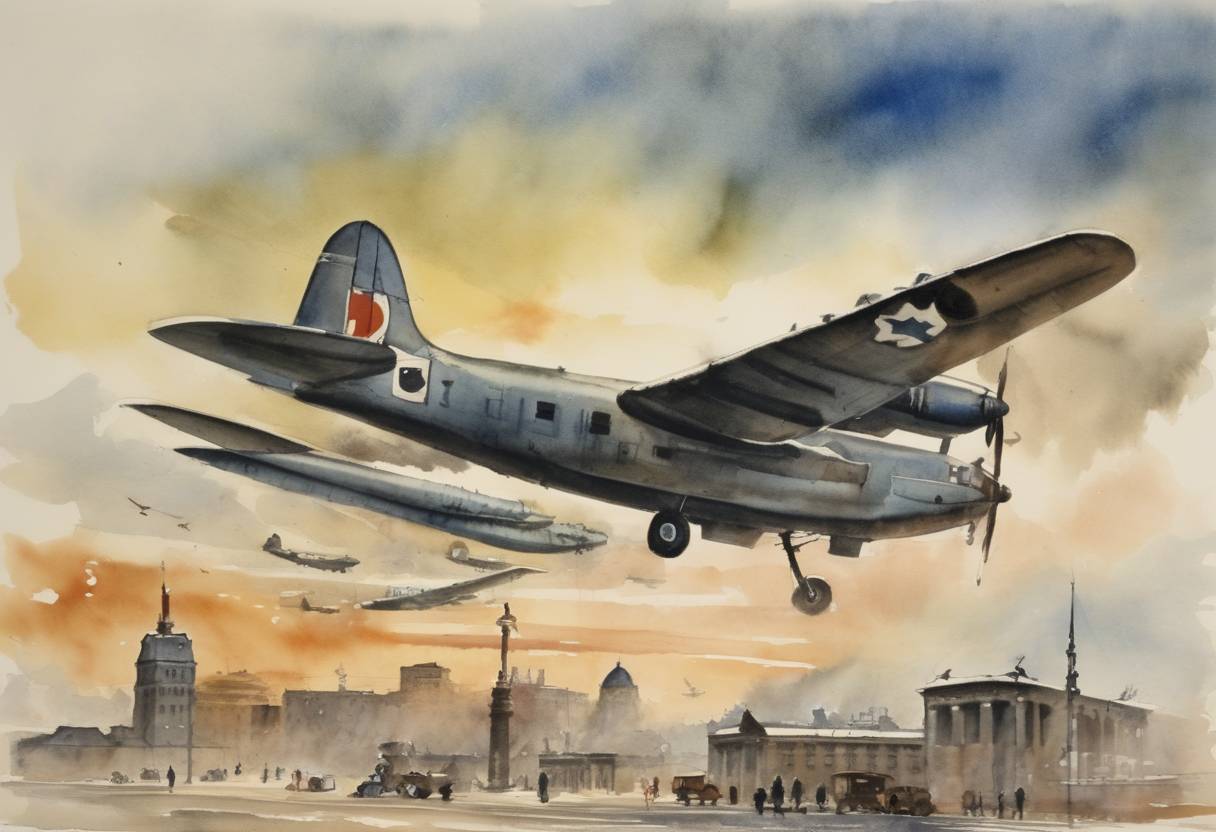
The Berlin Airlift was a pivotal operation initiated in response to the Soviet blockade of West Berlin, marking a significant event in the early stages of the Cold War. The blockade and subsequent airlift underscored the growing tensions between the Soviet Union and the Western Allies and symbolized the struggle for influence in post-World War II Europe.
After World War II, Germany was divided into four zones controlled by the Allied powers: the United States, the United Kingdom, France, and the Soviet Union. Berlin, though located within the Soviet-controlled zone, was also divided among the four powers. As the Cold War began to take shape, tensions heightened between the Soviet Union and the Western Allies over their differing visions for Germany’s future.
In early 1948, Western powers took steps to establish a separate West German state by introducing a new currency, the Deutsche Mark, in the western zones, aiming to stabilize the German economy. The Soviets viewed these actions as a threat to their control over Eastern Germany.
On June 24, 1948, in a bid to exert pressure on the Western Allies and assert control, the Soviet Union imposed a blockade on all ground routes to West Berlin, effectively cutting off all rail, road, and canal access. This blockade left over two million residents of West Berlin without access to food, fuel, and other essential supplies, raising the specter of starvation and hardship.
In response to the blockade, the United States, along with the United Kingdom and other Allied forces, initiated the Berlin Airlift on June 25, 1948. The operation aimed to supply West Berlin with vital necessities through air transport, overcoming the Soviet blockade without provoking a military confrontation. This massive logistical effort symbolized the commitment of the Western Allies to protect West Berlin and maintain their presence.
The Berlin Airlift, known as “Operation Vittles” by the U.S. and “Operation Plainfare” by the British, involved a vast fleet of aircraft continuously flying into West Berlin. Over the course of the operation, which lasted until September 1949, approximately 277,000 flights delivered more than 2.3 million tons of supplies, including food, coal, and medicine.
The success of the Berlin Airlift was a significant Cold War victory for the Western Allies, showcasing their resolve against Soviet pressure tactics. The operation not only supplied West Berlin with the necessities to survive the blockade but also cemented the divide between East and West, ultimately leading to the establishment of the Federal Republic of Germany (West Germany) and the German Democratic Republic (East Germany).
The Berlin Airlift also strengthened NATO, as it highlighted the importance of collaboration among Western nations to counter Soviet actions. It became a powerful symbol of resistance to Soviet expansionism and a testament to Allied ingenuity and determination during the early Cold War period.
Source: en.wikipedia.org