The Annulment of King Henry VIII and Catherine of Aragon's Marriage
1533 · London, England
The marriage of King Henry VIII of England and Catherine of Aragon was declared null and void.
March 7, 1530
King Henry VIII's divorce controversy escalated as English officials began to consider methods to declare his marriage to Catherine of Aragon invalid, leading to a significant clash with the Papacy.
London, England | Kingdom of England
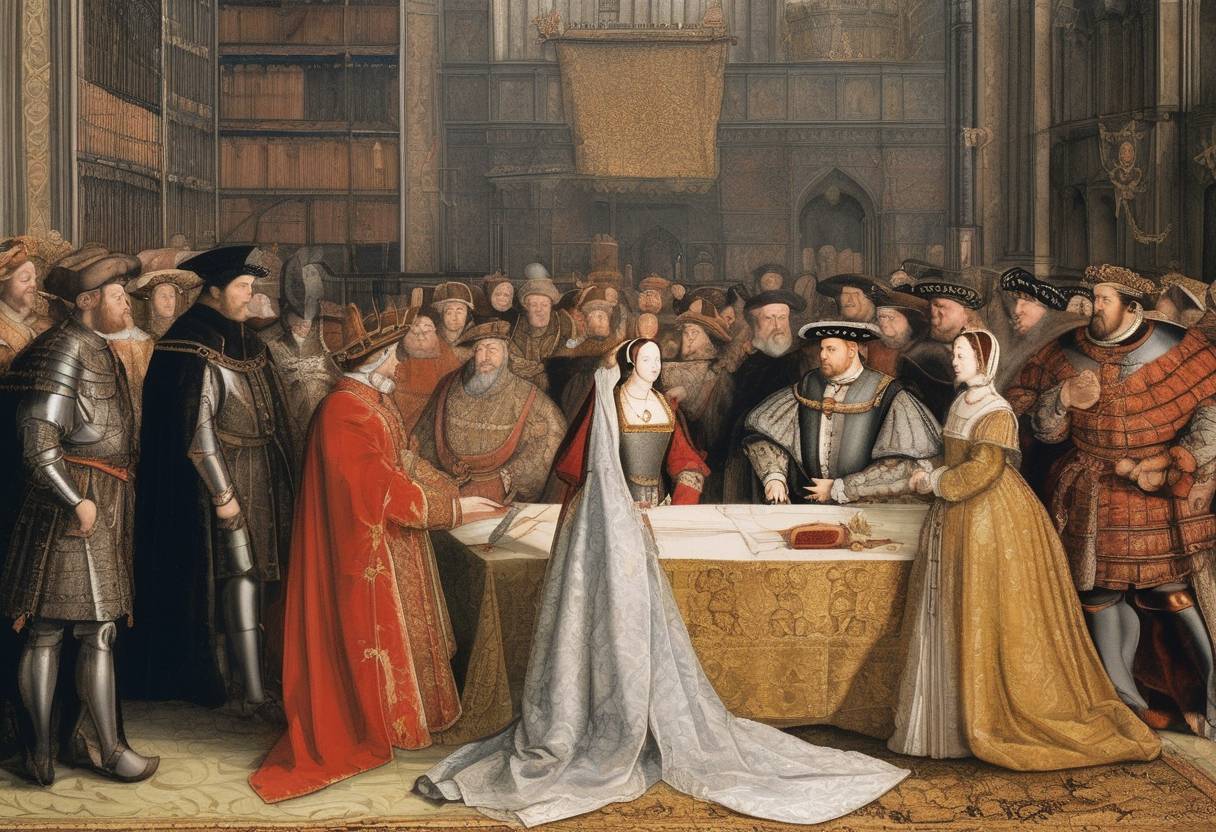
On March 7, 1530, the divorce controversy surrounding King Henry VIII entered a critical stage as English officials explored methods to invalidate his marriage to Catherine of Aragon. This period marked a deepening of tensions between the English crown and the Papacy, rooted in Henry’s desire for a male heir and the Pope’s refusal to annul his marriage.
King Henry VIII’s marriage to Catherine of Aragon, initially sanctioned by Pope Julius II, faced strain due to the couple’s inability to produce a surviving male heir. By the late 1520s, Henry had become enamored with Anne Boleyn and was determined to annul his marriage to Catherine, fueling a crisis that had far-reaching implications.
The crux of the March 7 escalation lay in the persistent refusal of Pope Clement VII to grant an annulment. The Pope, caught in the political machinations of European powers, including pressure from Catherine’s nephew, Emperor Charles V, was unwilling to contravene the original papal dispensation that had permitted Henry’s marriage to his brother’s widow.
By early 1530, English officials, under the guidance of Thomas Cromwell, began to examine canonical and legal strategies to undermine papal authority within England. On March 7, the discussion centered around parliamentary measures or ecclesiastical laws to overturn the marriage without papal intervention. This was a pivotal moment in the legal and theological arguments that took shape over the ensuing months.
This date signified a decisive move towards the English Reformation. The eventual outcome would see Henry VIII break from Rome, establishing the Church of England with the monarch as its Supreme Head. This action not only altered religious and political dynamics in England but also set a precedent for religious reformations across Europe.
The events of March 7, 1530, highlight a crucial juncture in English history where legal maneuvers against the Papacy set the stage for a significant shift in religious and governmental structures. The ensuing clash fundamentally redefined the monarchy’s role and the church’s influence in England.
Source: en.wikipedia.org