The Announcement of Daguerre's Photographic Process as a Gift to the World
1839 · Paris, France
The French government announces that Louis Daguerre's photographic process is a gift "free to the world."
January 2, 1839
French photo-pioneer Louis Daguerre took the first clear photograph of the Moon.
Paris, France | The French Academy of Sciences
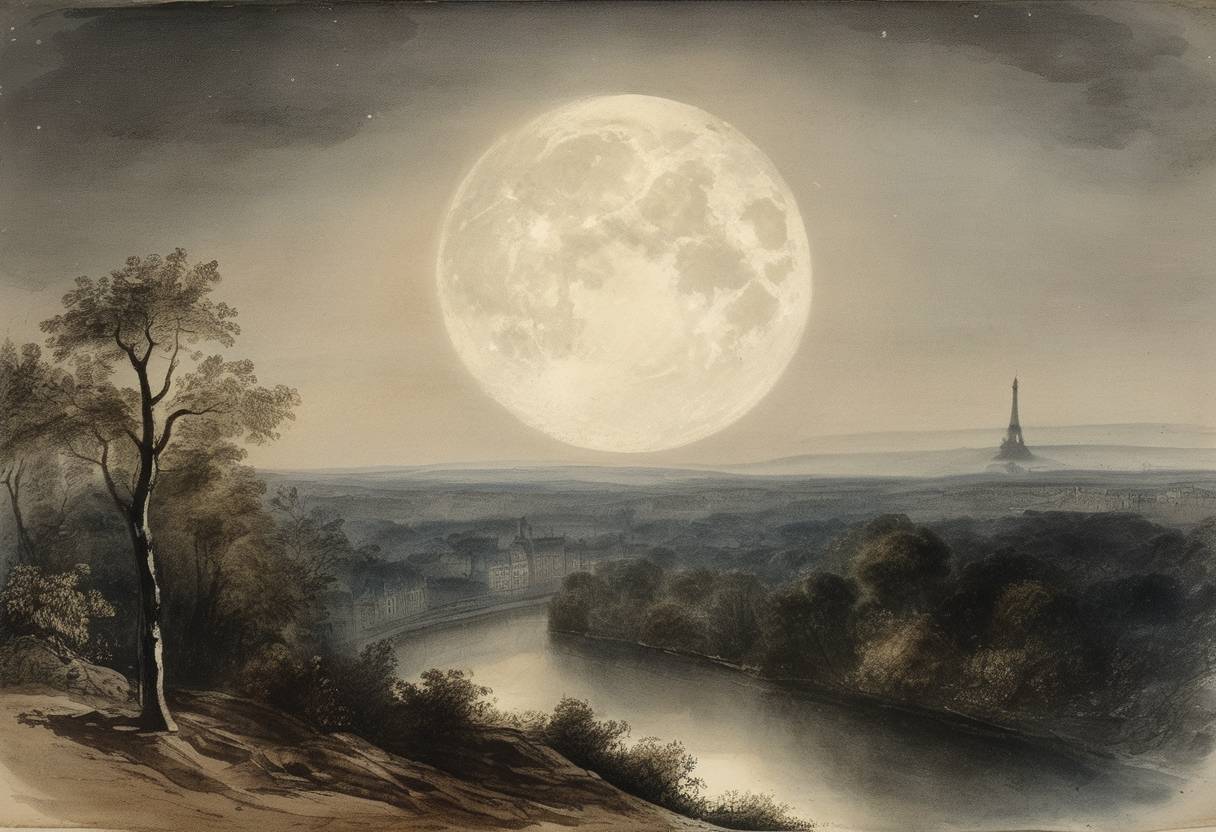
On January 2, 1839, Louis Daguerre achieved a significant milestone in photography and astronomical history by taking the first known clear photograph of the Moon. This event marked a crucial point in the early development of astrophotography and showcased Daguerre’s pioneering work in photographic processes.
Louis Daguerre, a French artist and photographer, is best known for inventing the daguerreotype, an early photographic process. Before Daguerre’s successful capture of the Moon, photographic technology was in its nascent stages, and clear images of celestial bodies were particularly challenging due to the limitations in exposure and sensitivity of photographic materials.
Daguerre’s invention involved a highly detailed and intricate process where a silver-coated copper plate was treated with iodine vapor to make it light-sensitive. After exposure in a camera and development with mercury vapor, the image was fixed using a solution of common salt. This technique allowed for the capture of fine details and set the stage for advancements in photography.
The successful photograph of the Moon on January 2, 1839, demonstrated the capacity of the daguerreotype process to capture landscapes beyond Earth. It provided insights into the potential of photography for astronomical observations, pushing the boundaries of scientific exploration. While this photograph itself might not have been as detailed as modern astrophotographs, it was a pioneering step toward using photography as a scientific tool.
Following this achievement, Daguerre continued to refine his photographic process, which gained widespread acclaim and dramatically influenced the fields of science, art, and communication. The French government acquired the rights to the daguerreotype, and Daguerre’s method was disseminated globally, igniting interest in photography and encouraging further exploration of this new medium in various disciplines.
Daguerre’s work laid the groundwork for future photographers and astronomers alike, eventually leading to more sophisticated techniques and equipment that have continued to expand humanity’s understanding of the universe.
Source: en.wikipedia.org