Patrick Henry's Famous Speech: "Give Me Liberty, or Give Me Death!"
1775 · Richmond, United States
Patrick Henry delivered his famous speech, 'Give me liberty, or give me death!' at the Second Virginia Convention.
May 29, 1765
Patrick Henry delivered his famous 'If this be treason, make the most of it!' speech against the British Stamp Act at the Virginia House of Burgesses.
Williamsburg, American Colonies | Virginia House of Burgesses
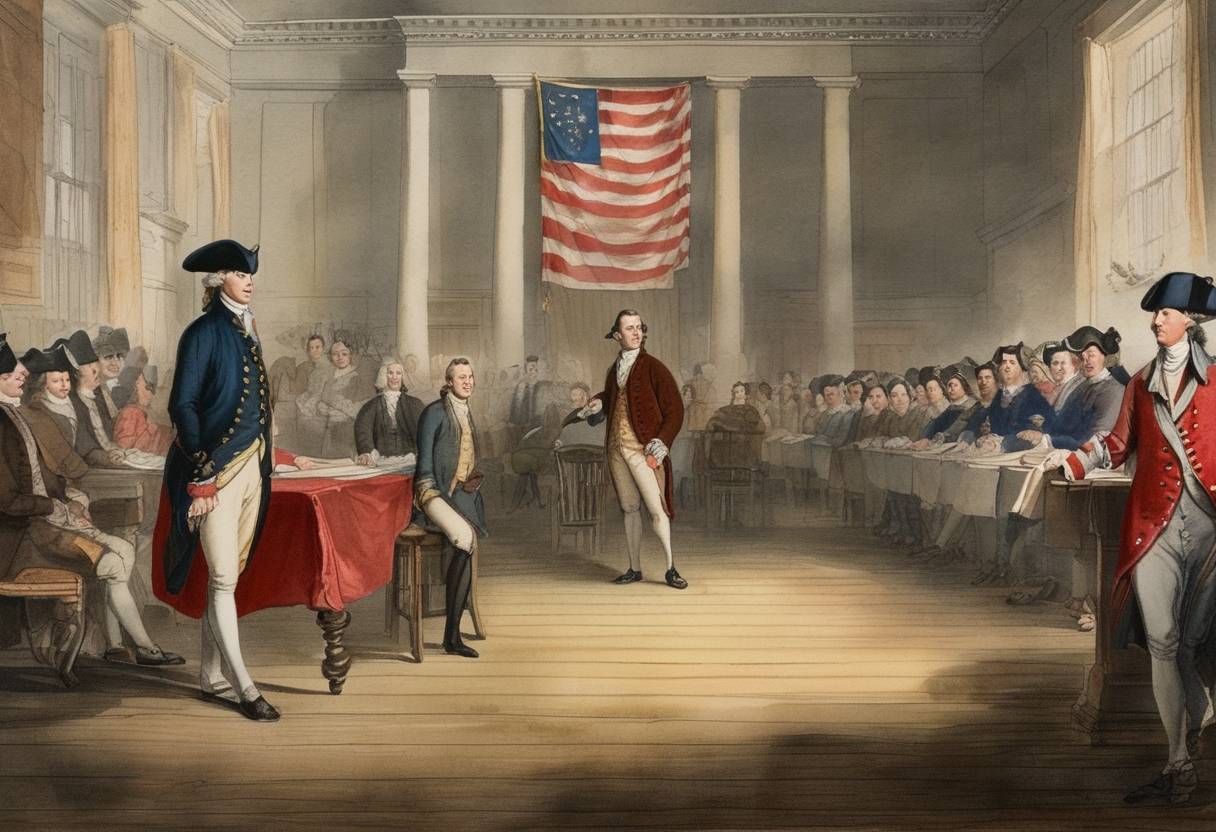
On May 29, 1765, Patrick Henry delivered a compelling speech against the British Stamp Act at the Virginia House of Burgesses in Williamsburg, Virginia. This speech is famous for Henry’s passionate declaration, “If this be treason, make the most of it!“—words that resonated through the colonies and exemplified the growing unrest among American colonists concerning British taxation policies.
The Stamp Act of 1765 was an attempt by the British Parliament to impose a direct tax on the colonies. It required that many documents, newspapers, and playing cards be produced on stamped paper produced in London, carrying an embossed revenue stamp. This act aimed to cover the costs of maintaining British troops in North America following the Seven Years’ War. Colonists were outraged, arguing that it violated their rights as Englishmen to be taxed without their consent—captured in the popular slogan, “No taxation without representation.”
On May 29, 1765, Henry introduced a set of resolutions opposing the Stamp Act. These resolutions asserted that only Virginia’s government could legally tax Virginians. During the intense debate following the introduction of these resolutions, Henry reportedly declared, “Caesar had his Brutus, Charles the First his Cromwell, and George the Third—may profit by their example. If this be treason, make the most of it.”
Patrick Henry’s bold stance resonated throughout the colonies, marking a significant step towards the American Revolution. The Virginia Resolutions that Henry championed contributed to the broader colonial response against the Stamp Act, including the formation of the Stamp Act Congress later in 1765. By March 1766, the widespread colonial resistance forced the British Parliament to repeal the Stamp Act, although it concurrently passed the Declaratory Act asserting its right to bind the colonies in all cases whatsoever.
Patrick Henry’s speech was pivotal in galvanizing colonial unity and resistance, setting the stage for the larger movement for American independence. His words and actions during this period firmly established him as a significant figure in the revolutionary fervor that swept through the American colonies in the subsequent decade.
Source: www.history.org