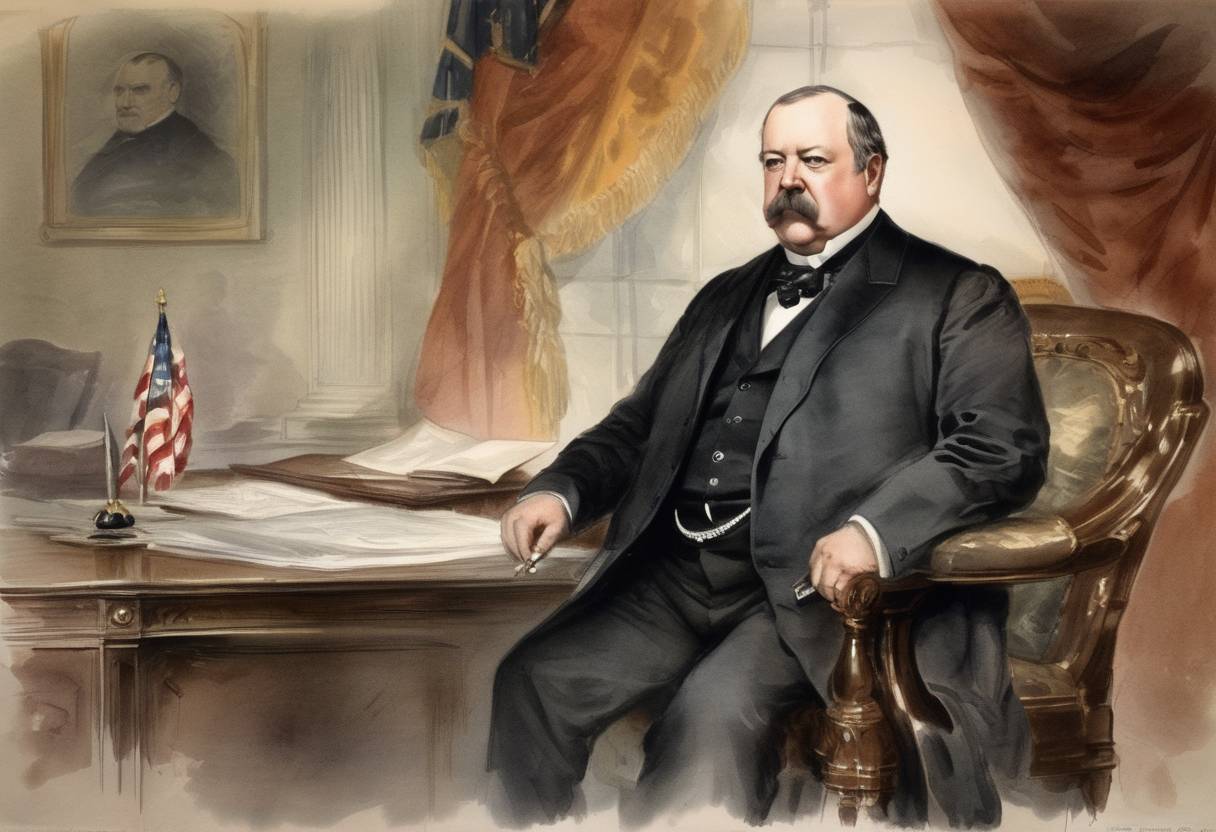
Grover Cleveland’s First Inauguration as the 22nd President of the United States
On March 4, 1885, Grover Cleveland was inaugurated as the 22nd President of the United States, marking the beginning of his first term in office. Cleveland, a Democrat, succeeded Republican President Chester A. Arthur and was the first Democratic president to be elected after the Civil War.
Context and Background
Grover Cleveland came to the presidency having served as the Governor of New York, where he gained a reputation for honesty, reform, and commitment to fighting political corruption. His presidential campaign focused on government reform and civil service improvements, appealing to a broad segment of the American populace eager for change after years of political patronage and scandal.
The Inauguration Day
The inauguration took place at the East Portico of the United States Capitol in Washington, D.C., a traditional setting that adds both grandeur and public accessibility to the event. Chief Justice Morrison R. Waite administered the presidential oath of office to Cleveland, who committed himself to abide by the principles of democracy and to guard the nation’s interests.
His inaugural address emphasized themes of duty, accountability, and the importance of public service, striking a tone of bipartisanship and appealing to a unified vision for the future of the country. Cleveland addressed the pressing issues of the day, including economic policy and governance reforms.
Significance
Grover Cleveland’s inauguration was significant for several reasons:
Democratic Resurgence: It marked the first time since 1856 that a Democrat had held the presidency, signaling a political shift in American politics post-Reconstruction.
Reform Agenda: Cleveland’s administration was known for its opposition to wasteful government spending and commitment to reform, setting a precedent for tackling corruption within the federal government.
Public Perception: Cleveland’s ascent to the presidency underscored the importance of integrity and moral standing, reflecting a public desire for trustworthy leadership in the wake of scandal-ridden administrations.
Aftermath
Cleveland’s first term in office was characterized by a focus on civil service reform, efforts towards tariff reduction, and maintaining a firm stance against expansive governmental roles and privileges. His commitment to reform would continue to influence American politics throughout his presidency and beyond, leaving a mark that contributed to his re-election in 1892, albeit non-consecutively, reaffirming his unique position in American history as the only president to serve non-consecutive terms.
Cleveland’s tenure also laid groundwork for future discourse on economic and social policy, highlighting tensions between industrial interests and labor, which would continue to shape the trajectory of American politics into the 20th century.