The Battle of Okinawa: April 1, 1945
1945 · Okinawa, Japan
The Battle of Okinawa began during World War II, one of the largest amphibious assaults in the Pacific Theater, lasting until June 22, 1945.
June 21, 1945
The Battle of Okinawa came to an end. This was one of the bloodiest battles in the Pacific during World War II, marking the final stages of the war in the Pacific against Japan.
Okinawa, Japan | United States Armed Forces
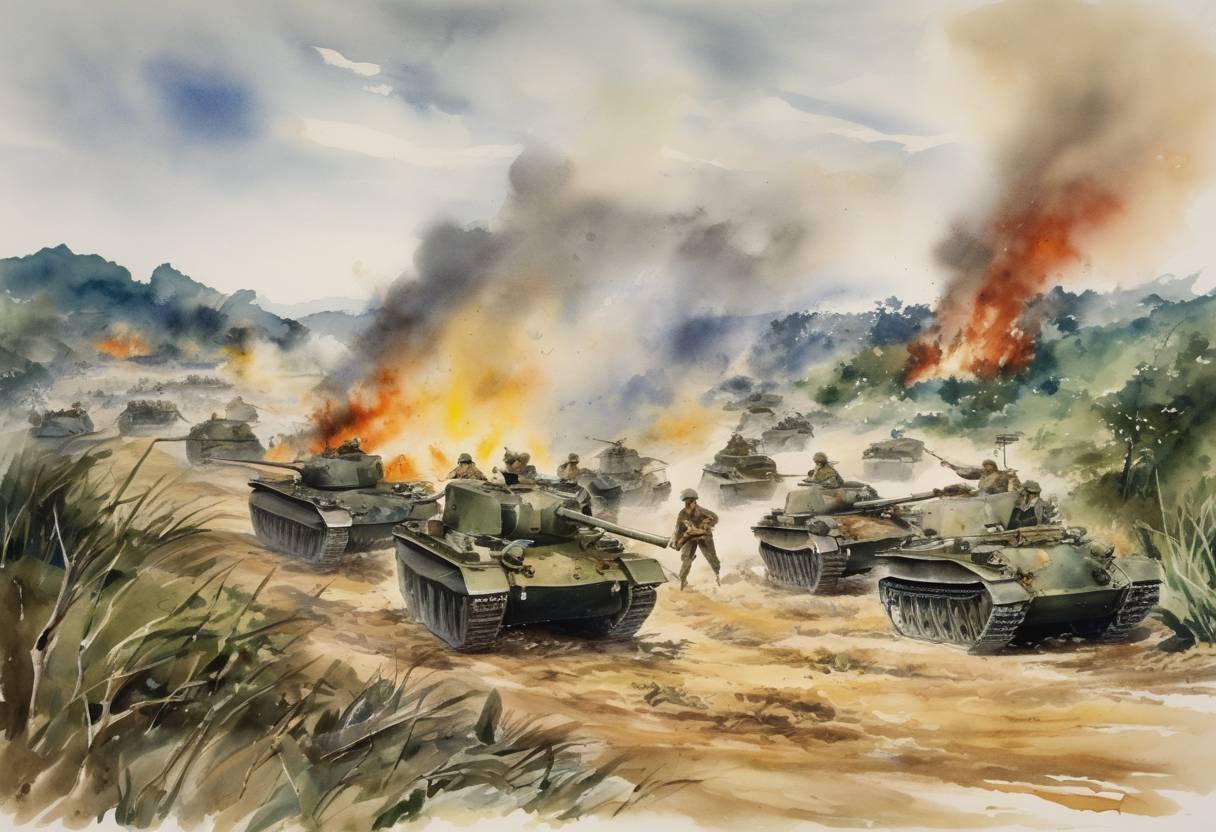
The conclusion of the Battle of Okinawa on June 21, 1945, marked a pivotal and brutal chapter in the Pacific Theatre of World War II. The battle, which commenced on April 1, 1945, was notorious for its intense combat and significant casualties, taking place on the Japanese island of Okinawa.
The Battle of Okinawa was a part of Operation Iceberg, an Allied plan to secure the largest of the Ryukyu Islands as a base for air operations to support the planned invasion of the Japanese mainland. The island’s strategic location made it a critical target for staging further military operations in Japan.
Initial Landings: On April 1, Marine and Army divisions landed on Okinawa, facing initial light resistance. The Japanese strategy involved a defensive approach, withdrawing to heavily fortified positions in the southern part of the island.
Battle Intensifies: Fighting intensified as American forces advanced southward, encountering fierce Japanese resistance in the form of entrenched positions, caves, and tunnel networks. Both sides suffered heavy casualties due to aggressive assaults and counterattacks.
Typhoon of Steel: The battle was nicknamed the “Typhoon of Steel” due to the relentless artillery bombardments and the sheer intensity of the combat, which included significant air and naval engagements.
Civilian Impact: The battle was characterized by high civilian casualties as the dense population of Okinawa became caught in the crossfire. The Japanese military often forced civilians to participate in defensive operations or commit mass suicides to avoid capture.
End of Organized Resistance: On June 21, 1945, organized Japanese resistance formally came to an end, although sporadic fighting continued for a short period afterward. General Mitsuru Ushijima, the Japanese commander, committed ritual suicide rather than surrender.
Casualties: The battle was one of the deadliest in the Pacific, with estimates of approximately 100,000 Japanese soldiers killed and more than 12,000 American soldiers losing their lives. Additionally, tens of thousands of Okinawan civilians perished during the battle.
The conclusion of the Battle of Okinawa signaled nearing the final stages of the Pacific War. This victory provided the United States with a critical strategic position and was pivotal in the decision to use atomic bombs on Hiroshima and Nagasaki to expedite Japan’s surrender, thus averting a potential costly and prolonged invasion of the Japanese mainland.
The battle highlighted the destructive potential of modern warfare and the high cost of island combat in the Pacific, serving as a grim reminder of the war’s human toll.
Source: www.history.com