The U.S. Post Office Issues Its First Commemorative Stamp - January 2, 1893
1893 · Washington D.C., United States
The U.S. Post Office issues its first commemorative stamp.
July 20, 1847
The United States issues the first postage stamps, featuring Benjamin Franklin and George Washington.
Washington D.C., United States | United States Postal Service
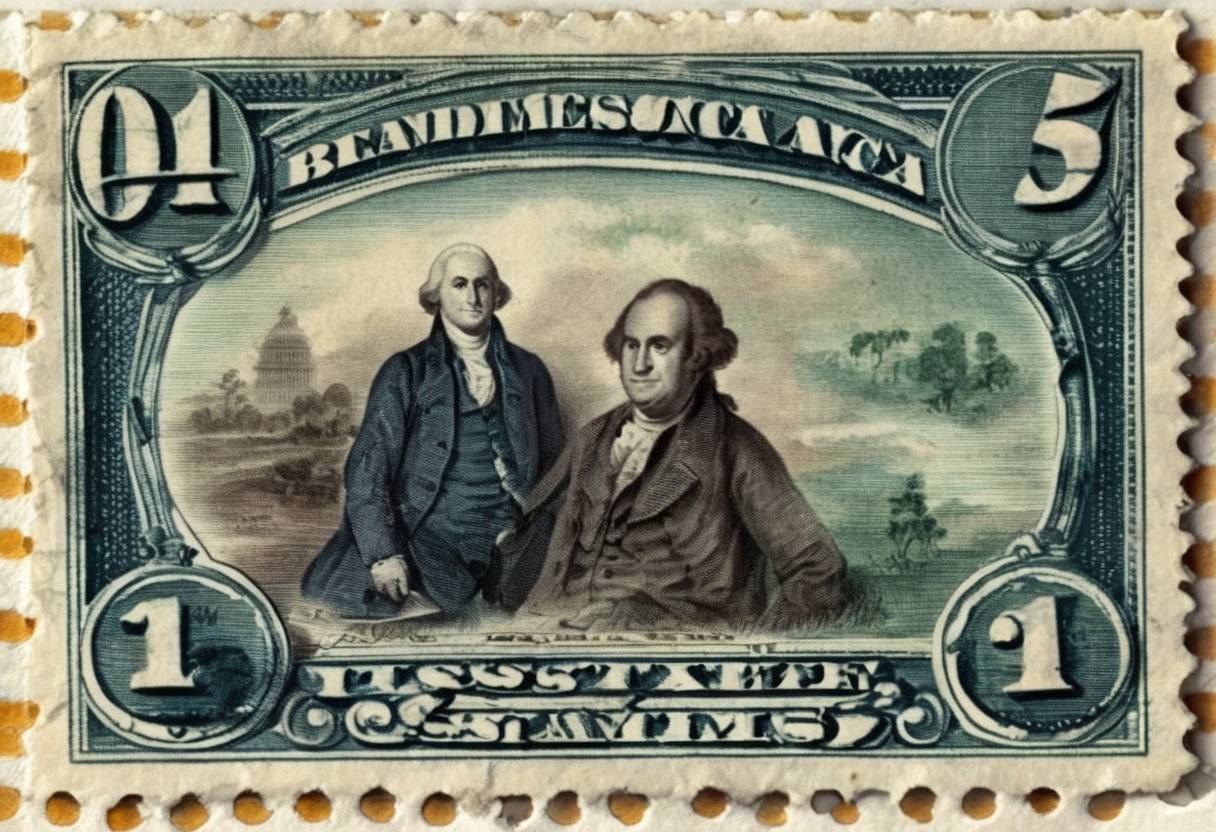
On July 20, 1847, the United States Postal Service issued its first postage stamps featuring images of prominent American figures Benjamin Franklin and George Washington. This significant development marked a pivotal moment in the history of the U.S. postal system, transitioning from a system based on hand-written marks or postmaster-specific stamps to standardized postage stamps.
Prior to 1847, postal services in the United States operated without uniform postage stamps. Instead, local postmasters often used their own unique creations or simply marked letters to indicate paid postage. This system was not only disjointed but also led to inconsistencies in postal charges and delivery.
The success of Britain’s Penny Black, the world’s first adhesive postage stamp issued in 1840, influenced the U.S. to adopt a similar standardized approach. Congress passed an act on March 3, 1845, significantly reducing postal rates, which laid the groundwork for the introduction of national postage stamps.
The stamps issued on July 20, 1847, came in two denominations:
The designs were crafted by engraver James P. Major, and the printing was executed by the New York-based company Rawdon, Wright, Hatch & Edson.
The introduction of these stamps was part of a broader modernization of the U.S. postal service, making the mailing process more efficient and accessible. Standardized postage rates were now based on weight and distance, simplifying calculations for both senders and postal workers.
Initially, the stamps were used in major cities like New York, Washington, D.C., and Boston, with usage spreading rapidly thereafter as the benefits became evident.
These initial stamps were functional yet symbolic, paving the way for the expansive philatelic culture that followed. As the United States expanded westward and communication needs grew, the adoption of postage stamps helped unify a nation spread across vast distances.
The issuance of these first stamps marked the beginning of a rich philatelic history in the United States. Today, they are recognized not only as practical tools of the postal service but as historical artifacts, representing early efforts at national cohesion and standardization. The images of Franklin and Washington on these first issues heralded the tradition of commemorating influential American figures and moments through philately.
Source: about.usps.com