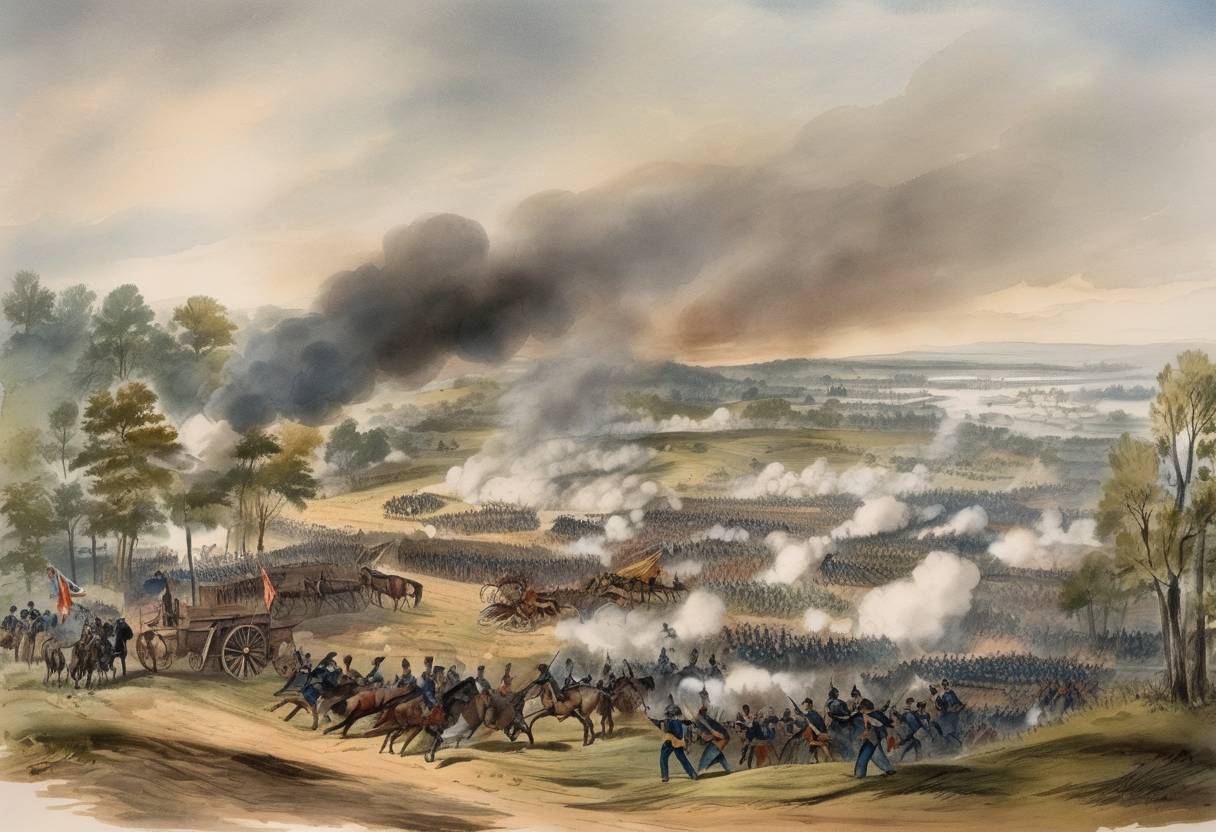
The Battle of Port Republic: June 9, 1862
The Battle of Port Republic, a significant conflict during the American Civil War, occurred on June 9, 1862. This battle was a pivotal moment in Confederate General Thomas “Stonewall” Jackson’s Shenandoah Valley Campaign, where he secured a decisive victory over Union forces, effectively putting an end to the Union campaign in the Shenandoah Valley.
Strategic Context
- Union Goals: The Union Army aimed to neutralize Confederate forces in the Shenandoah Valley to prevent them from reinforcing Richmond and to protect Washington, D.C., from potential threats.
- Confederate Strategy: General Jackson’s strategy was to conduct a swift and aggressive campaign through the valley to distract Union resources from their main offensives towards Richmond.
Prelude to the Battle
Leading up to the Battle of Port Republic, General Jackson had successfully conducted a series of maneuvers and engagements, including victories at the battles of Front Royal and Winchester. His movements were swift and strategic, designed to keep Union forces off balance.
- Union Command: The Union forces in the Valley were commanded by Major General John C. Frémont and Brigadier General James Shields. Their goal was to converge against Jackson’s forces.
- Confederate Leadership: General Jackson commanded the Confederate troops, demonstrating his renowned military acumen.
The Battle
- Location: The battle took place near Port Republic in Rockingham County, Virginia, located close to the South Fork Shenandoah River.
- Forces Engaged: Jackson’s forces consisted of approximately 6,000 men. The Union troops involved in this engagement, led by Brigadier General Erastus B. Tyler, numbered around 3,500 soldiers.
- Battle Developments: The battle commenced with intense fighting as Jackson launched an attack against strategic Union positions. The Confederates were initially met with strong resistance but eventually managed to break through the Union lines.
Key Moments
- Jackson’s forces implemented a decisive flanking maneuver that overwhelmed Union positions.
- The use of artillery and the aggressive advancement orchestrated by Jackson led to Union troops being pushed back across the battlefield.
Aftermath and Consequences
- Confederate Victory: Jackson’s victory at Port Republic, coupled with his win the previous day at the Battle of Cross Keys, ended the Union’s Shenandoah Valley Campaign of 1862. This Confederate victory greatly elevated Jackson’s reputation as a brilliant military strategist.
- Impact on the War: Jackson’s successful campaign diverted large numbers of Union troops away from the Peninsula Campaign aimed at capturing Richmond, contributing to the broader strategic objectives of the Confederates.
The Battle of Port Republic stands as a testament to Jackson’s tactical genius and his ability to effectively engage and defeat superior numbers, ensuring the Shenandoah Valley remained a significant logistical and strategic asset for the Confederate war effort.