Richard I Wounded at the Siege of Châlus-Chabrol
1199 · Châlus, France
Richard I (the Lionheart), King of England, was wounded by a crossbow bolt during the siege of the castle of Châlus-Chabrol in France.
April 5, 1199
Richard I of England, known as Richard the Lionheart, dies from an infection following an injury received during a siege, leading to his brother John ascending to the English throne.
Châlus, France | Kingdom of England
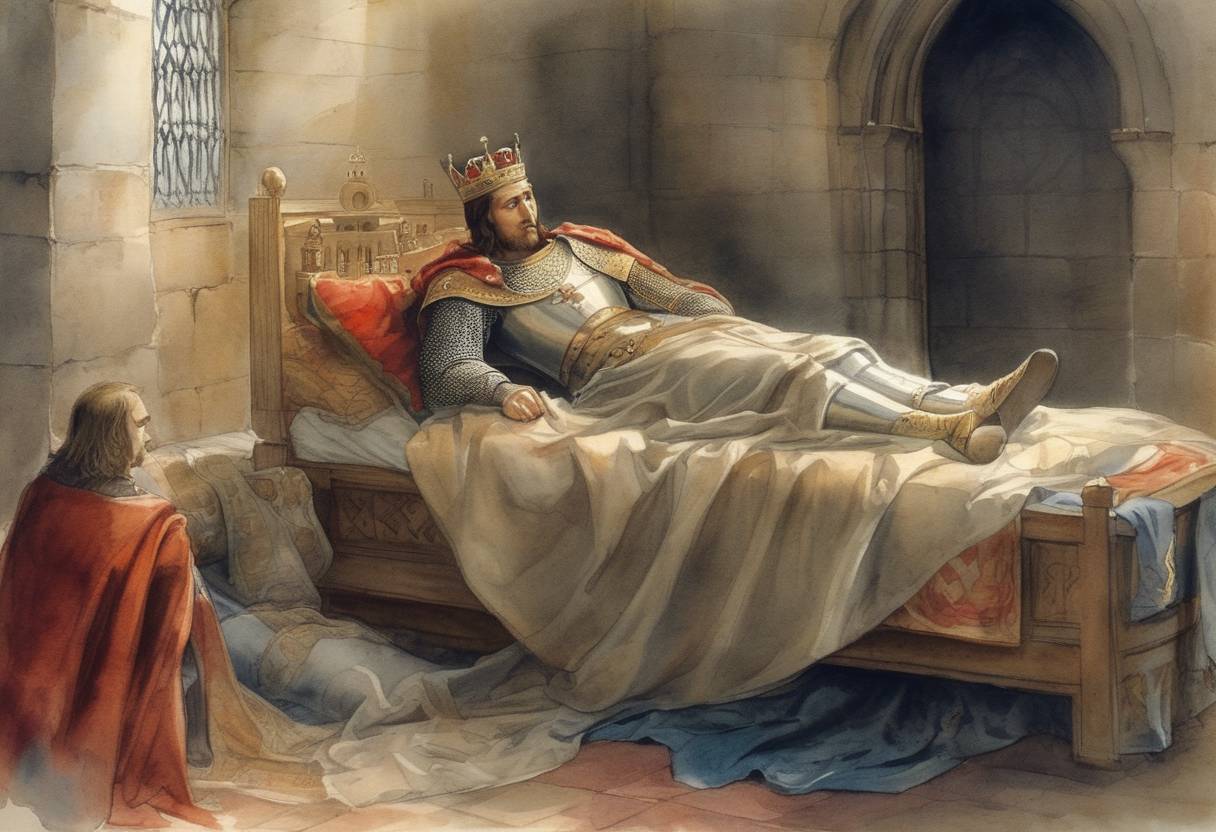
On April 5, 1199, Richard I of England, commonly known as Richard the Lionheart, succumbed to an infection resulting from an injury he sustained during the siege of the castle at Châlus-Chabrol in the Duchy of Aquitaine. His death led to significant political changes, most notably the accession of his brother John to the English throne.
Richard, renowned for his role in the Third Crusade, was a prominent military leader and a symbol of chivalry. As King of England from 1189, he spent much of his reign abroad, focusing on crusades and his territories in France rather than the governance of England itself. Known for his strategic brilliance and courage, Richard’s popularity earned him the moniker “Lionheart.”
The injury that led to Richard’s death occurred during a siege at Châlus-Chabrol, a minor castle in the Limousin region, then part of his Angevin Empire. In March 1199, while subduing rebellion in his French territories, Richard laid siege to this stronghold reportedly because of a treasure discovered by the local lord.
While inspecting the siege lines without wearing full armor, Richard was struck by a crossbow bolt in the shoulder. Although the wound seemed non-lethal initially, it became infected, and despite attempts at treatment, his condition worsened.
As Richard lay dying, he reportedly forgave the crossbowman who had shot him, a gesture reflecting his chivalric values. After eleven days of agony, Richard died on April 5, 1199. With no legitimate heirs, Richard had designated his younger brother, John, as his successor. John’s accession initiated a troubled reign contrasted by losses of territories in France and confrontations with his barons, culminating in the Magna Carta’s signing in 1215.
Richard’s death marked the end of an era of distinct military leadership for England. His reign significantly impacted English nationalism and the subsequent relationships between England and France. The transition to King John influenced the political landscape, leading to constitutional developments, including the Magna Carta, which laid foundational principles for modern democracy by asserting the rule of law and limiting royal authority.
Richard’s burial took place at Fontevraud Abbey in what is now France, near his parents, Henry II of England and Eleanor of Aquitaine, highlighting his deep ties to the Angevin territories. Despite his limited time spent in England and the controversies surrounding his rule, Richard the Lionheart remains a celebrated figure in medieval history for his martial prowess and enduring legacy in the cultural memory of the Middle Ages.
Source: www.britannica.com