1814 · Niagara Falls, Canada
The Battle of Lundy's Lane, one of the bloodiest battles of the War of 1812, was fought in present-day Niagara Falls, Ontario, resulting in a stalemate between American and British forces.
April 6, 1812
British forces under General Isaac Brock begin preparing defenses in Upper Canada, anticipating war with the United States, which would be declared later in June.
York, Canada | British Army
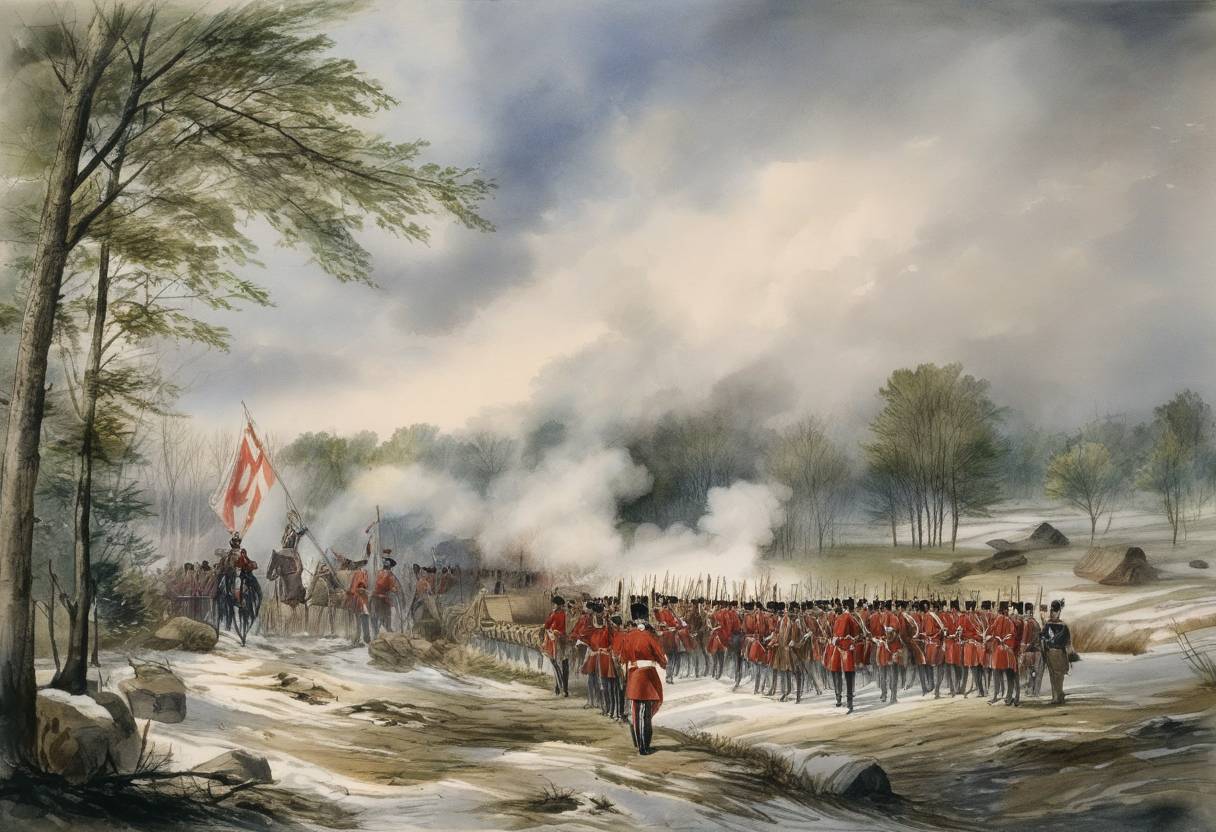
On April 6, 1812, British forces under Major General Isaac Brock began preparing defenses in Upper Canada, in anticipation of an imminent conflict with the United States. This period was marked by increasing tensions between Britain and the United States, largely due to trade restrictions imposed by Britain and the ongoing impressment of American sailors into the Royal Navy.
Anglo-American Tensions: The relationship between Britain and the United States had been strained for years, exacerbated by the British enforcement of the Orders in Council, which restricted American trade. The policy of impressment further fueled American resentment.
Rising Nationalism: Within the United States, a growing nationalistic fervor called for addressing grievances against British interference, leading many to push for war.
Strategic Significance of Upper Canada: Upper Canada (present-day Ontario) became a focal point for potential invasions, as it held significant strategic value being along the border with the United States and accessible through the Great Lakes.
Military Reinforcements: General Isaac Brock, the administrator and military leader in Upper Canada, began bolstering defenses to secure the region against American attacks. He focused on fortifying key positions and raising local militia.
Strengthening Fortifications: Efforts were concentrated on enhancing existing fortifications and constructing new defensive structures along important waterways and settlements.
Building Alliances: Brock prioritized diplomacy with Indigenous tribes, recognizing their potential role as allies in the event of an invasion. He sought to strengthen ties with leaders like Tecumseh, who would later become a crucial ally.
The actions taken on April 6, 1812, were pivotal in preparing Upper Canada for the impending conflict known as the War of 1812. Brock’s foresight and military acumen were instrumental in the defense of Canadian territories.
Impact on the War of 1812: These preparations laid the groundwork for successful defensive strategies employed by British and Canadian forces during the war, which officially began with the U.S. declaration of war on June 18, 1812.
Legacy of Isaac Brock: Remembered as a national hero in Canada, Brock’s leadership during the early stages of the conflict was vital in sustaining British resistance and maintaining control over Canadian territories.
This period marks a critical juncture in North American history, where the conflict would shape the political landscape and future relations between the United States, Britain, and the territories in Canada.
Source: www.thecanadianencyclopedia.ca