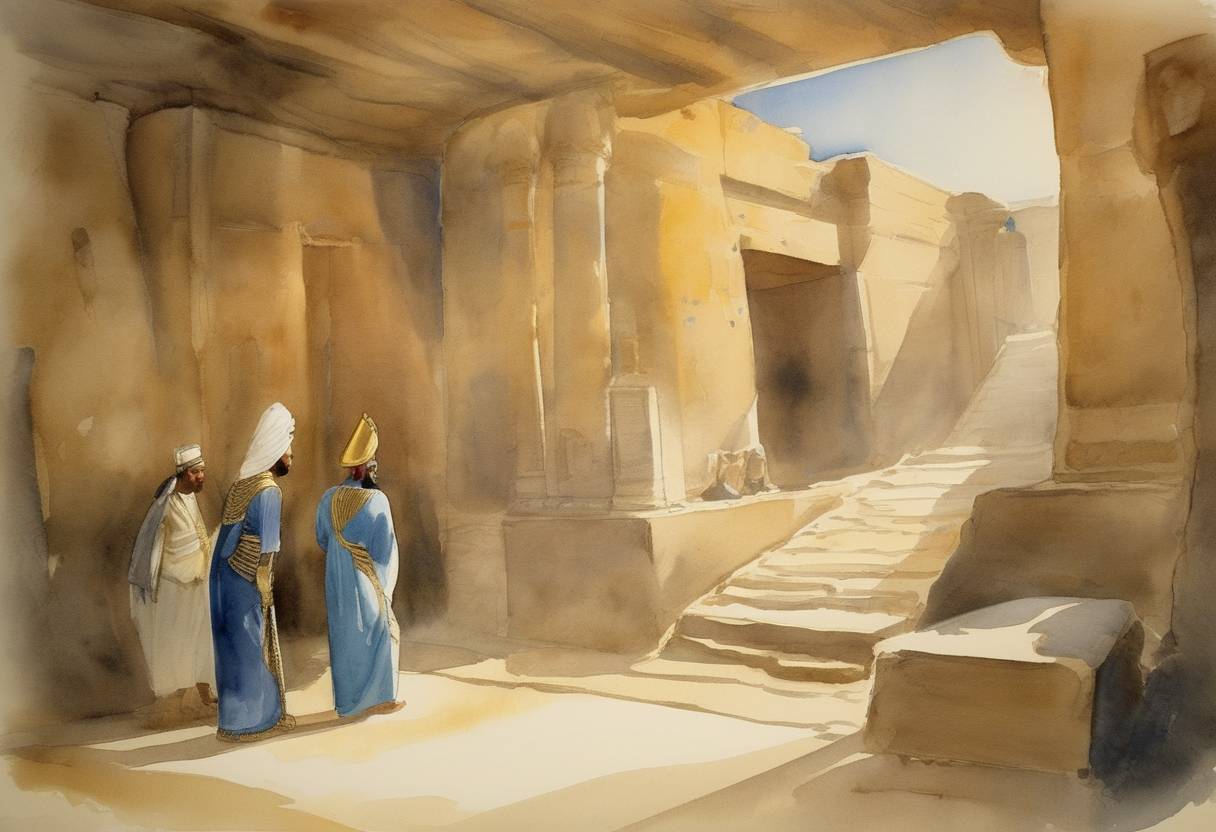
Discovery of King Tutankhamun’s Tomb - November 24, 1922
On November 24, 1922, British archaeologist Howard Carter and his team officially entered the tomb of Tutankhamun—KV62— in the Valley of the Kings, Egypt. The find captured international attention due to its remarkable preservation and the wealth of artifacts it contained, offering a unique glimpse into ancient Egyptian civilization.
Background
- Howard Carter: An accomplished British archaeologist, Carter had been working in Egypt for several years, initially arriving in the country in 1891. He became renowned for his methodical approach and dedication to Egyptology.
- George Herbert, 5th Earl of Carnarvon: A British aristocrat, he financed Carter’s excavations. In 1914, he secured the concession to excavate in the Valley of the Kings but was interrupted by the outbreak of World War I.
The Discovery
- Initial Find: On November 4, 1922, Carter’s team uncovered a step leading to the sealed entrance of the tomb during their systematic exploration.
- Opening the Tomb: By November 24, Carter had obtained official permission to explore further. Accompanied by Lord Carnarvon, his daughter Lady Evelyn Herbert, and others, Carter entered the tomb, revealing a corridor filled with debris and artifacts.
Contents of the Tomb
- Artifacts: The tomb contained over 5,000 items, including gold-covered chariots, thrones, jewelry, and statues. Most notably, it included the now-iconic gold mask of Tutankhamun, symbolizing the wealth and craftsmanship of the time.
- Coffin and Mummy: The innermost coffin, made of solid gold, housed the mummy of King Tutankhamun, a minor pharaoh of the 18th Dynasty who reigned from approximately 1332 to 1323 BCE.
Historical Significance
- Preservation: Unlike many other tombs that had been looted, Tutankhamun’s remained largely intact, providing extraordinary insight into the burial practices and material culture of ancient Egypt.
- Impact on Egyptology: This discovery sparked renewed public interest and scholarly attention in Egyptology and led to increased focus on the preservation of Egyptian heritage sites.
Aftermath
- Public Fascination: The discovery ignited a global fascination with ancient Egypt, often referred to as “Tutmania.” It elevated Carter as one of history’s most famous archaeologists.
- Continued Studies: The thorough documentation and study of the artifacts have allowed historians and archaeologists to make significant advancements in understanding the 18th Dynasty’s art, religion, and daily life.
The entry into Tutankhamun’s tomb on November 24, 1922, remains one of the most significant archaeological achievements of the 20th century, leaving a lasting legacy in the field of archaeology and beyond.