Liberation of Paris: August 25, 1944
1944 · Paris, France
Paris is liberated by the Allies during World War II.
January 4, 1944
World War II: Operation Carpetbagger, involving the dropping of supplies and agents for resistance groups in Europe, begins.
England, United Kingdom | Allied forces
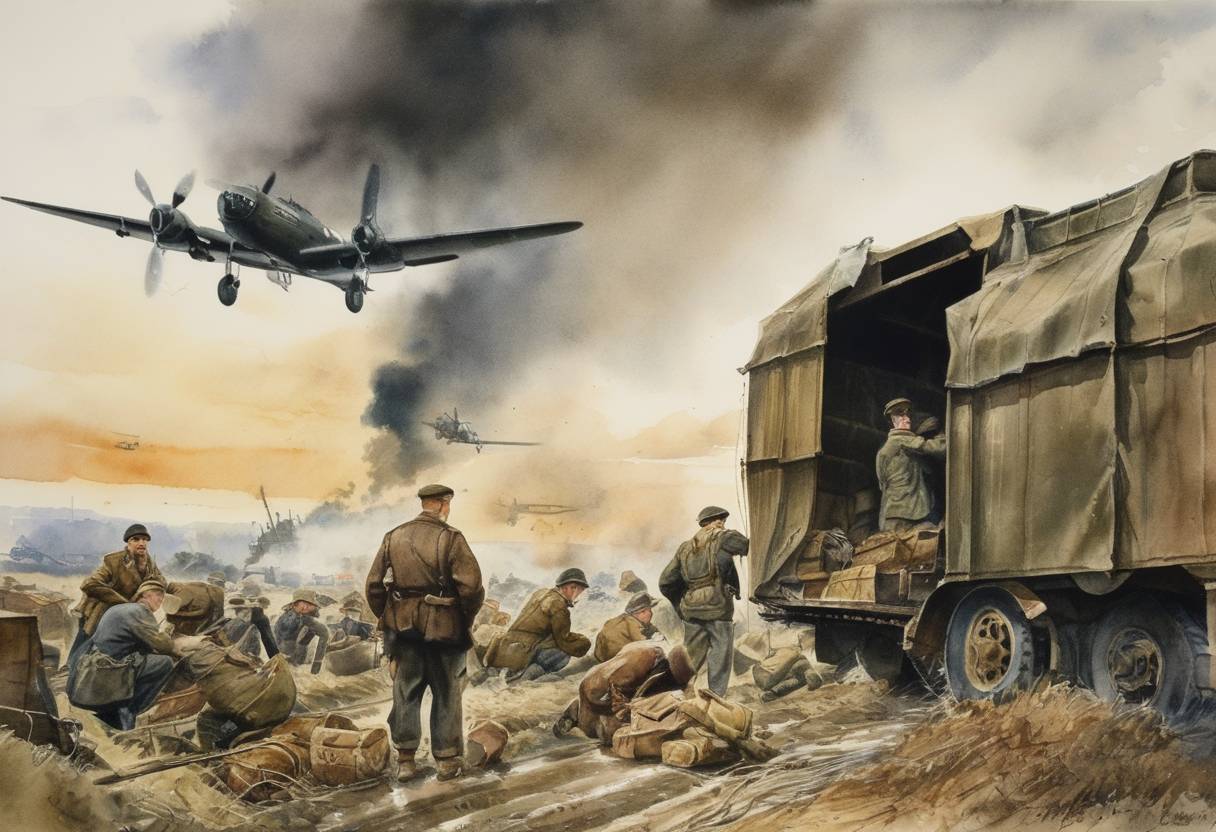
Operation Carpetbagger began on January 4, 1944, during the height of World War II. This operation was a crucial Allied effort aimed at delivering supplies and agents to support resistance groups across Nazi-occupied Europe.
As World War II progressed, the need to bolster resistance efforts against Nazi Germany grew more important for the Allies. Resistance groups played a vital role by sabotaging German operations, gathering intelligence, and providing support for the upcoming liberation of Europe. To facilitate these efforts, the U.S. Army Air Forces, in collaboration with the British Special Operations Executive (SOE) and the Office of Strategic Services (OSS), initiated Operation Carpetbagger.
The primary goal of Operation Carpetbagger was to airdrop supplies, including weapons, ammunition, medical kits, and other essential materials, to resistance groups operating behind enemy lines. Additionally, the operation involved deploying specially trained agents to assist and provide training to local resistance members.
The operation was executed using modified B-24 Liberator bombers, which were equipped for night flights and heavy loads. These aircraft were based out of RAF Harrington, a location specifically chosen for its strategic advantage and proximity to occupied territories.
The crews of Operation Carpetbagger faced significant challenges, such as navigating in darkness to avoid detection and enemy anti-aircraft fire. Nevertheless, they succeeded in delivering substantial assistance to the resistance networks in countries like France, Belgium, Norway, and Italy.
Operation Carpetbagger significantly enhanced the capabilities of European resistance movements. The supplies and personnel provided through this operation helped to disrupt German military efforts and paved the way for the success of the Allied invasion of Normandy on June 6, 1944.
The contribution of Operation Carpetbagger is remembered as a key component in the broader strategy to weaken Nazi control and ultimately led to the liberation of Europe from Axis forces.
Operation Carpetbagger stood out as a vital part of the Allied support to occupied Europe, showcasing the importance of coordination and support between the military and resistance groups. Its success highlighted the effectiveness of clandestine operations in warfare and remains a testament to the bravery and skill of those involved.
Source: en.wikipedia.org