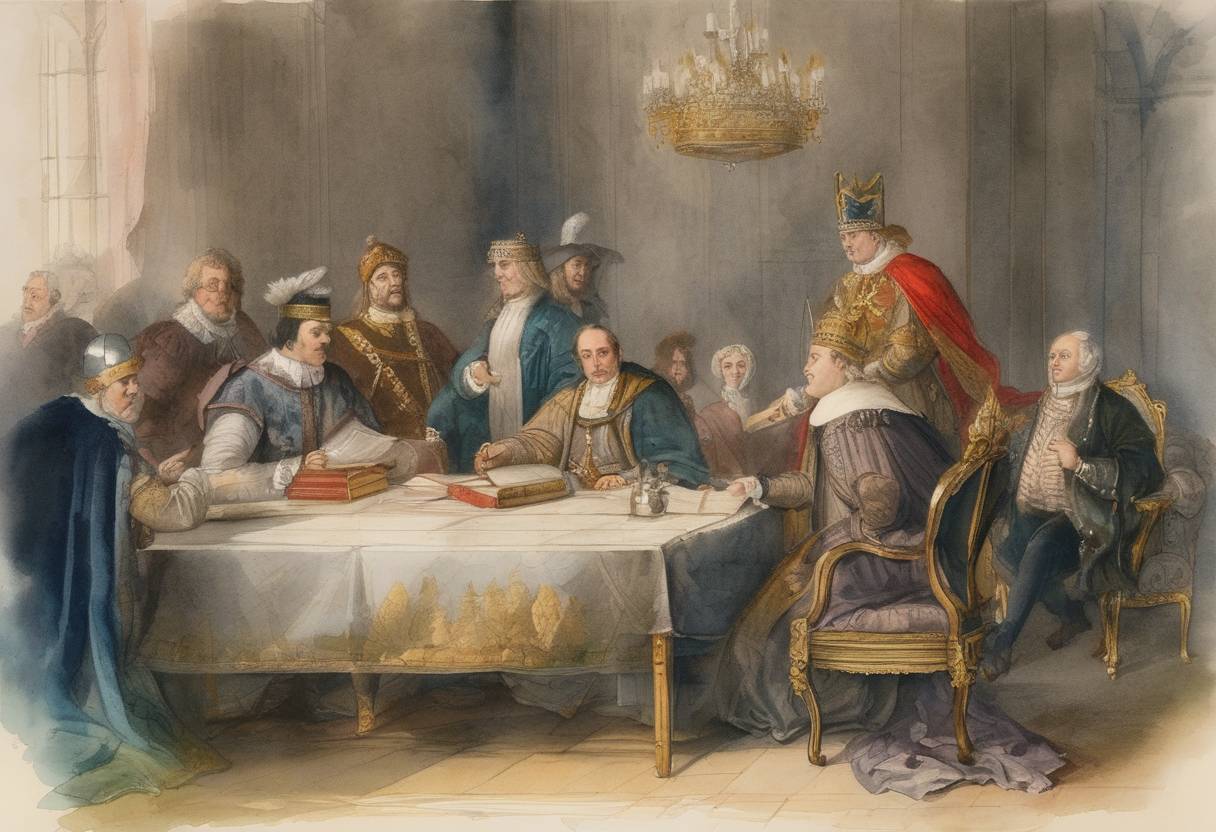
Treaty of Paris (1293)
On April 1, 1293, the Treaty of Paris was signed, marking the formal end to the Franco-British conflicts surrounding the region of Gascony. This treaty was significant as it sought to resolve ongoing disputes between the Kingdom of England, under King Edward I, and the Kingdom of France, ruled by King Philip IV.
Background
The tensions between England and France during this period were largely centered around territorial disputes and feudal rights. Gascony, located in the southwest of modern-day France, was an economically valuable and strategically important territory. It was originally part of the duchy obtained through Eleanor of Aquitaine’s marriage to Henry II of England in the 12th century. Gascony was under English suzerainty but fell under French sovereignty, leading to numerous conflicts.
Key Provisions
Restoration of Territories: The Treaty of Paris in 1293 aimed to restore the original possessions of Eleanor of Aquitaine to the English Crown. This included territories that were vital to English interests in France.
Judicial Appeals: An essential aspect of the agreement was the limitation placed on judicial appeals to the French court. This restriction was vital for King Edward I, aiming to curtail French legal influence over English-held territories and reinforce his autonomy within Gascony.
Significance
The treaty represented a significant diplomatic effort to stabilize the relationship between the two monarchies. By agreeing to return Eleanor’s possessions, the treaty temporarily alleviated tensions over territorial claims. However, it also set a precedent for complex feudal allegiances that would later contribute to the outbreak of the Hundred Years’ War in the 14th century.
Aftermath
Although the Treaty of Paris provided a temporary solution to Gascony’s disputed status, it did not resolve the fundamental issues of sovereignty and feudal rights that underpinned Anglo-French tensions. These unresolved issues meant that the peace established by the treaty was fragile and would eventually collapse, leading to renewed hostilities.
The Treaty of Paris in 1293 underscores the deeply intertwined nature of medieval European politics, where marriage, fealty, and territorial possession were critical elements of power and conflict.