Ayatollah Khomeini's Return to Iran - February 1, 1979
1979 · Tehran, Iran
Ayatollah Khomeini returns to Iran after 15 years in exile, marking the beginning of the Iranian Revolution.
February 24, 1989
Ayatollah Khomeini offers a $3 million bounty for the death of Salman Rushdie, whose novel 'The Satanic Verses' is perceived as blasphemous by the Islamic world.
Tehran, Iran | Islamic Republic of Iran
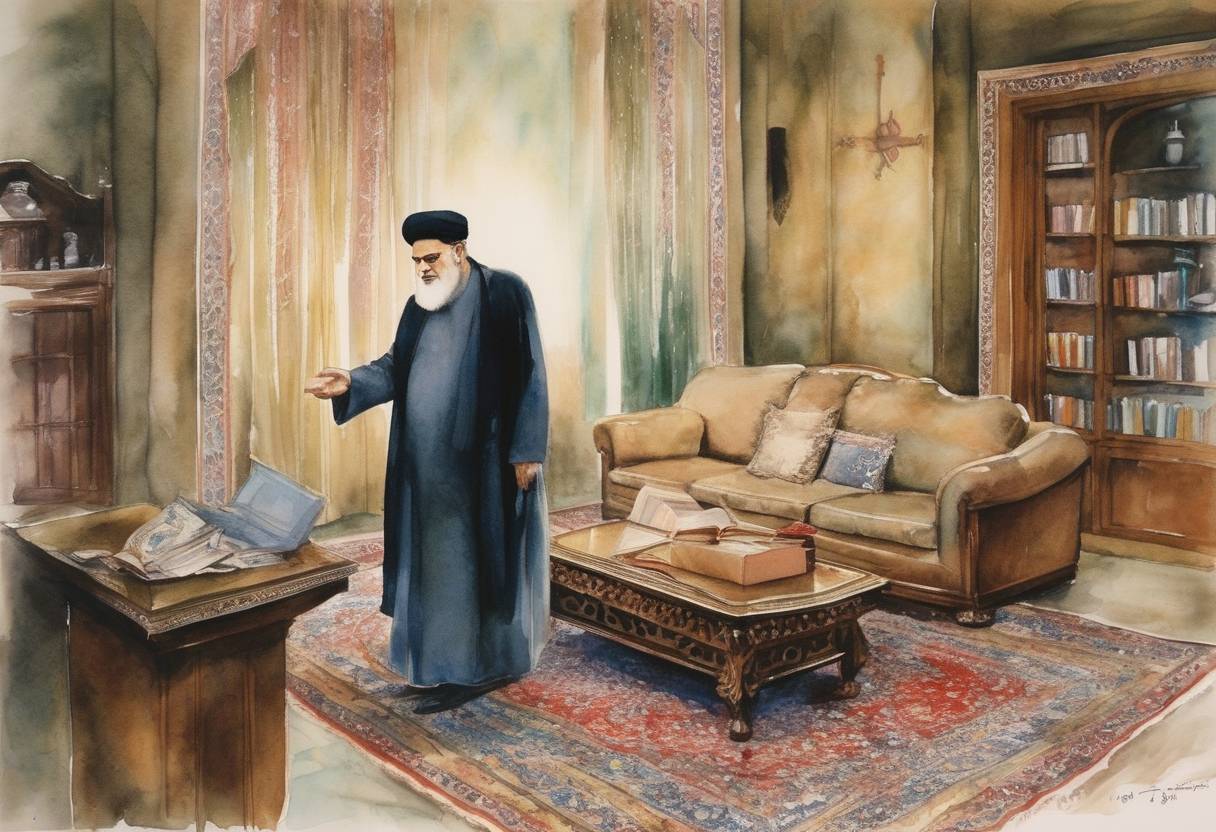
On February 24, 1989, Ayatollah Ruhollah Khomeini, the Supreme Leader of Iran, intensified his call for the death of British-Indian author Salman Rushdie by offering a $3 million bounty. This decree was in response to Rushdie’s novel, The Satanic Verses, published in 1988, which had incited widespread controversy and anger among certain Muslim communities around the world.
The Satanic Verses is a work of fiction that blends magic realism with a range of themes, including religious and cultural identity. However, certain sections of the novel were perceived by many in the Muslim world as blasphemous, particularly in their depiction of the Prophet Muhammad and the narrative around Islamic scripture known as the “Satanic Verses.”
The backlash included protests, book burnings, and bans in several countries with large Muslim populations. Ayatollah Khomeini, viewing the novel as an attack on Islam, issued a fatwa—a religious edict—on February 14, 1989, calling for Rushdie’s death. This declaration led to an international diplomatic crisis, compelling Rushdie to live under police protection.
Ten days after the original fatwa, on February 24, Khomeini raised the stakes by announcing the $3 million reward for Rushdie’s assassination. This act was not only an escalation of the threat against Rushdie but also served to demonstrate the seriousness with which the Iranian leadership approached the incident, prompting further deterioration in Iran’s relations with Western countries, particularly the United Kingdom.
The fatwa and subsequent bounty had far-reaching consequences. It plunged Rushdie into a life of secrecy and security, affecting his public appearances and literary career. The incident exemplified the tensions between freedom of expression and religious conviction, sparking important debate on these issues globally.
Despite Iran’s partial distancing from the fatwa in the years following Khomeini’s death in 1989, the decree has never been officially revoked, leaving a lingering cloud over Rushdie’s safety. The affair remains one of the most notorious literary controversies of the 20th century, underlining complex cultural and political intersections between the Islamic world and the West.
Source: www.nytimes.com