Discovery of the Venus de Milo
1820 · Milos, Greece
The Venus de Milo, an ancient Greek statue, was discovered on the island of Milos in the Aegean Sea.
February 28, 1874
Hellenistic bust of Hera of Cherchel is discovered, believed to be a work of the Lysippos school.
Cherchel, Algeria
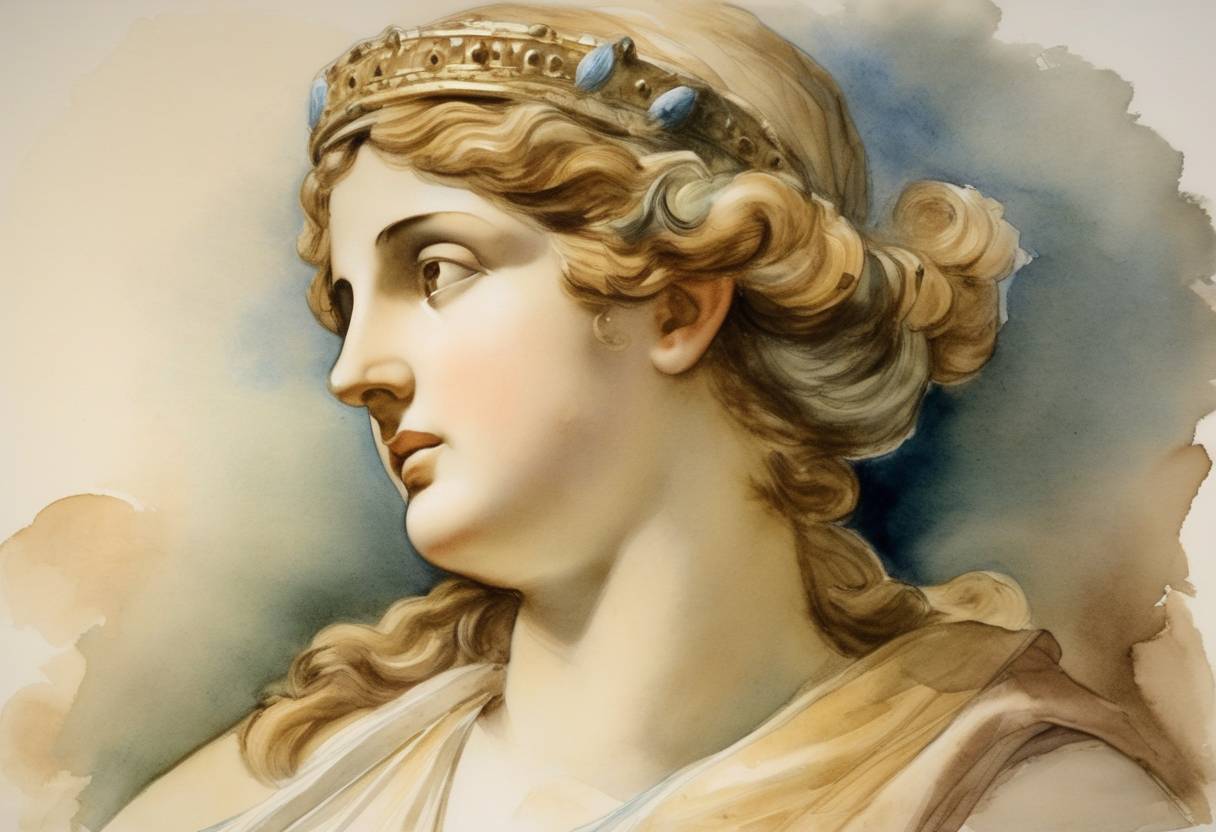
On February 28, 1874, a significant archaeological discovery was made with the uncovering of the Hellenistic bust of Hera of Cherchel. The bust was discovered in the region of Cherchel, in present-day Algeria, an area known in antiquity as the Roman city of Caesarea Mauretaniae. This artistic piece is believed to be a product of the Lysippos school, renowned for its influence on the development of sculptural art during the Hellenistic period.
The bust of Hera embodies the stylistic elements characteristic of the Hellenistic period, which spanned from the death of Alexander the Great in 323 BCE until the Roman conquest of Egypt in 30 BCE. This era was marked by the spread of Greek culture across the eastern Mediterranean and into Asia, significantly impacting art and sculpture.
The Lysippos school, named after the sculptor Lysippos from Sikyon, flourished during the 4th century BCE. Lysippos was one of the three great sculptors of the Classical Greek era, alongside Scopas and Praxiteles. His school was known for its focus on naturalism and dynamic figures, diverging from the more static and formal styles of earlier periods.
The bust of Hera holds significant historical and cultural value:
Artistic Influence: Representing the aesthetic transition towards more realistic and humanized forms, the bust reflects the cultural and philosophical shifts of the Hellenistic period, emphasizing expression and movement in sculpture.
Cultural Exchange: As a piece discovered in Cherchel, the bust illustrates the spread and adaptation of Greek art beyond the borders of Greece, signifying the cultural blending that characterized the Hellenistic world.
Religious Importance: Hera, the queen of the Olympian deities in Greek mythology, symbolizes marriage and family. Her depiction in art often aimed to convey regal and dignified beauty, marshalling an aura of authority and divinity.
The discovery of such a piece continues to influence our understanding of ancient art history, providing scholars with crucial insights into the techniques and iconography of Hellenistic sculpture. Furthermore, it serves as evidence of the extent of Greek cultural influence across the Mediterranean, showcasing the interconnectedness of ancient civilizations through the diffusion of artistic styles.
This finding also underscores the role of archaeological efforts in uncovering the remnants of ancient societies, contributing to a comprehensive understanding of their cultural and historical contexts. As a work associated with the esteemed Lysippos school, the bust of Hera of Cherchel remains an object of fascination and study within classical antiquity scholarship.
Source: en.wikipedia.org