Founding of the International Chess Federation (FIDE)
1922 · Paris, France
The International Chess Federation (FIDE) was founded in Paris, France, aiming to oversee the international governance and organization of competitive chess.
May 21, 1904
Federation Internationale de Football Association (FIFA), the international governing body of association football, futsal, and beach soccer, was founded in Paris, France.
Paris, France | FIFA
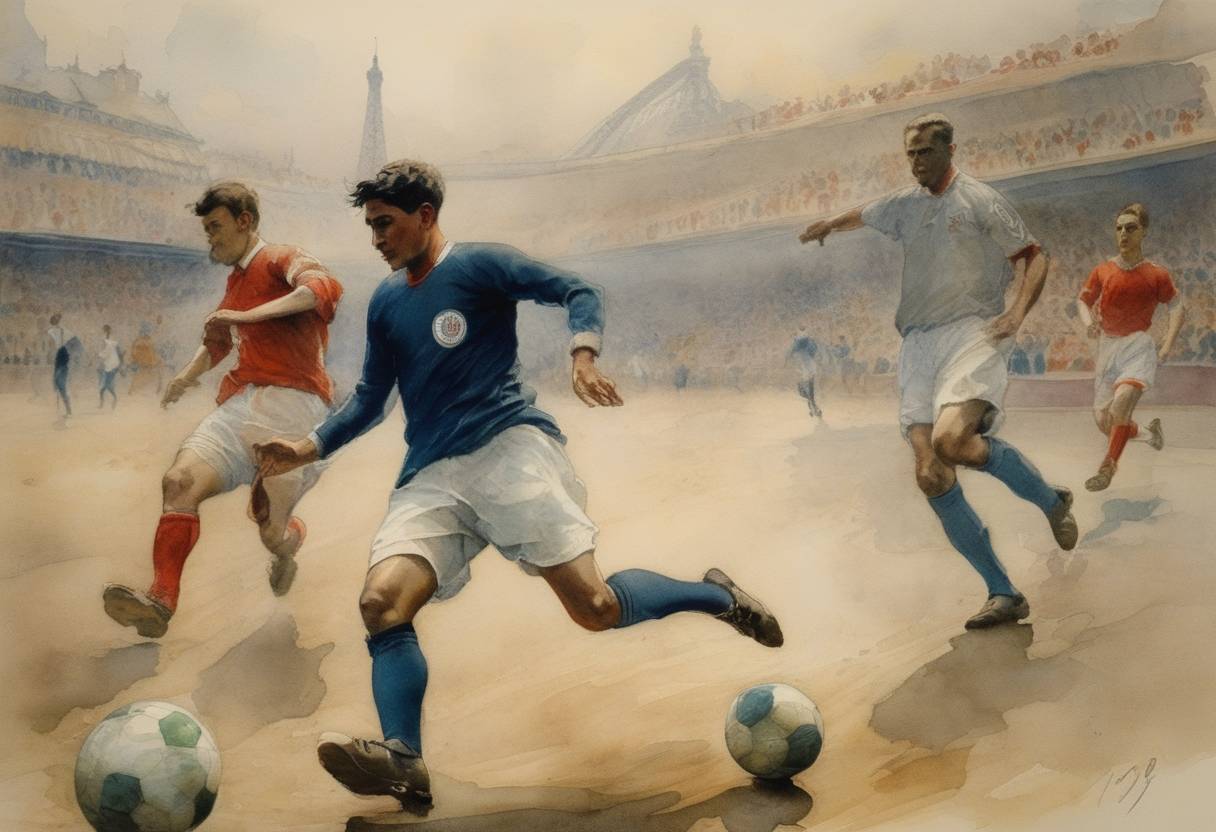
The Fédération Internationale de Football Association (FIFA) was founded on May 21, 1904, in Paris, France. This date marks a pivotal moment in the history of sports, particularly association football, as FIFA was established to oversee international competition among the national associations of Belgium, Denmark, France, the Netherlands, Spain, Sweden, and Switzerland.
In the early 20th century, the popularity of association football was rapidly growing across Europe, necessitating the creation of a governing body to oversee the sport’s development and standardize its rules on an international level. Prior to FIFA’s formation, there were no formal organized structures to facilitate international matches or govern the sport globally, resulting in a lack of uniformity in how the game was played and governed.
France’s Role: French journalist Robert Guérin, who would become FIFA’s first president, played a crucial role in the foundation. As the secretary of the football section of the Union des Sociétés Françaises de Sports Athlétiques (USFSA), Guérin was instrumental in initiating discussions aimed at forming a central organization.
Inaugural Meeting: Representatives from the seven founding member nations gathered in Paris at the headquarters of the USFSA. These delegates signed the founding act and established the organization with the mission to promote association football internationally.
The initial members were national associations from:
Additionally, Germany announced its intention to join, although they were not present at the founding meeting.
FIFA’s original goals included:
Global Expansion: Since its inception, FIFA has evolved tremendously. From its seven founding members, it has grown to include over 200 member associations across the globe.
World Cup: One of FIFA’s most noteworthy contributions to the sport is the establishment of the FIFA World Cup, which began in 1930. It became one of the most widely viewed and followed sporting events in the world.
Development of the Game: FIFA’s influence extends beyond organizing tournaments. It plays a key role in the development of the game, including youth programs, infrastructure development, and the promotion of fair play.
As an international governing body, FIFA’s impact on football has been profound, helping transform it into the world’s most popular sport, known for its power to unite people across continents.
Source: www.fifa.com