Recognition of Baltic Independence by the Soviet Union on September 6, 1991
1991 · Moscow, Soviet Union
The Soviet Union recognizes the independence of the Baltic states: Estonia, Latvia, and Lithuania.
July 12, 1920
The Soviet–Lithuanian Peace Treaty was signed, which recognized Lithuanian independence from Soviet Russia.
Moscow, Russia | Soviet Union and Lithuania
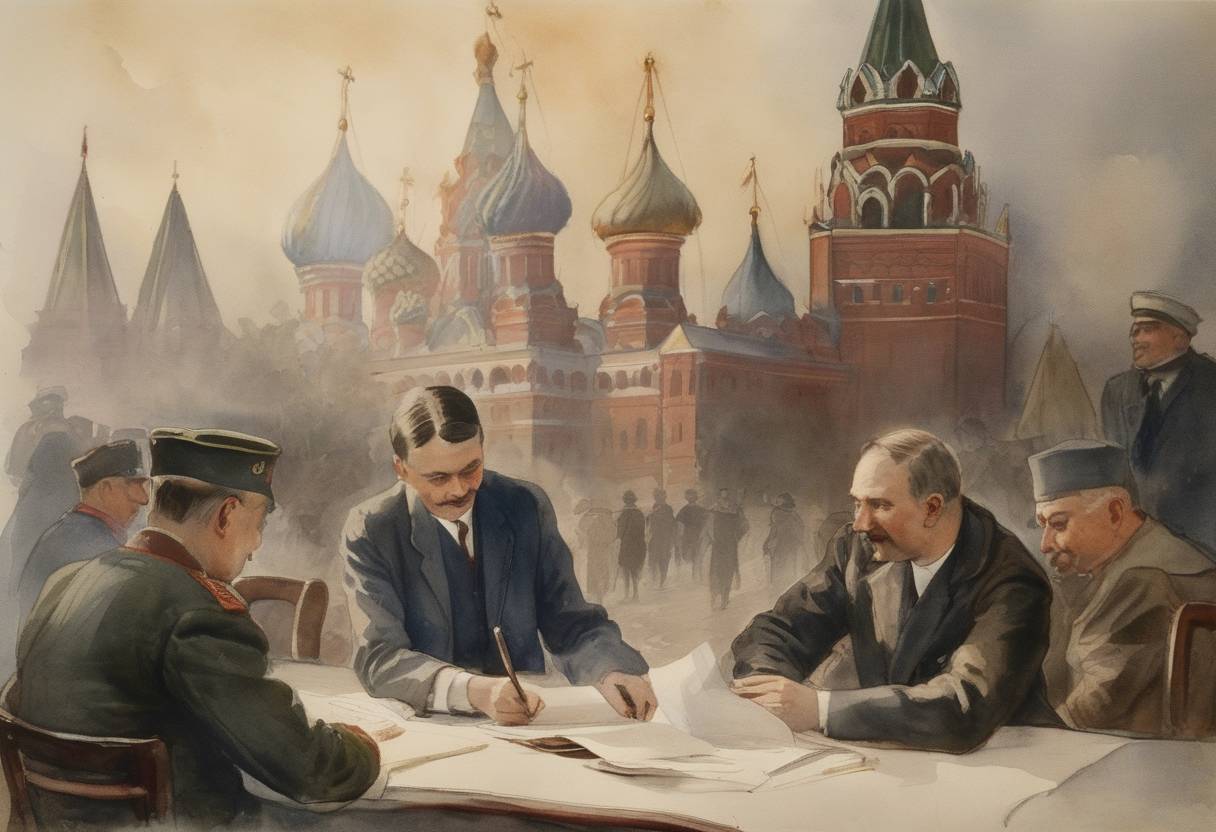
On July 12, 1920, the Soviet–Lithuanian Peace Treaty was signed, marking a pivotal moment in Lithuanian history. This treaty recognized Lithuanian independence from Soviet Russia, following a period of intense geopolitical struggle and negotiation.
In the aftermath of World War I and the Russian Revolution, the collapse of the Russian Empire created a power vacuum in Eastern Europe. Lithuania, which had declared independence on February 16, 1918, sought to maintain its sovereignty amidst surrounding hostilities, including from Poland and Soviet Russia.
The Treaty of Brest-Litovsk, signed in March 1918, allowed German forces to occupy much of Eastern Europe, including Lithuania. However, the subsequent German defeat in November 1918 and the Russian Civil War created an opportunity for Lithuania to seek international recognition and assert its independence.
The Soviet–Lithuanian Peace Treaty contained several key provisions:
The signing of the treaty was a crucial step for Lithuania in consolidating its independence during a turbulent period. It provided a diplomatic foundation for Lithuania to gain international recognition and establish itself as a legitimate, autonomous nation-state.
However, the Treaty of Riga in 1921 between Poland and Soviet Russia altered the regional balance of power and introduced new challenges for Lithuania, particularly concerning its tense relationship with Poland over the Vilnius region.
The Soviet–Lithuanian Peace Treaty remains a significant milestone, illustrating both the fluid political dynamics of post-World War I Eastern Europe and the resilience of newly-formed nations seeking self-determination amidst great power conflicts.
Source: en.wikipedia.org