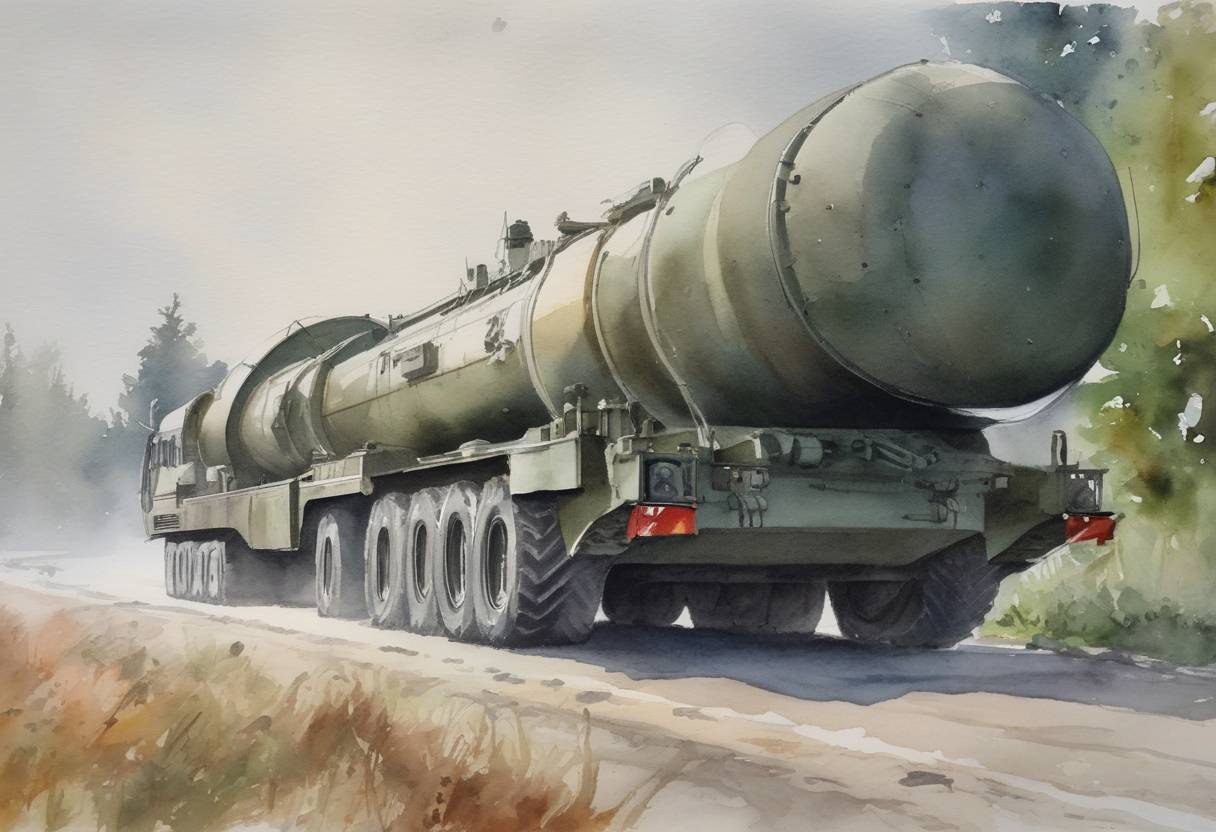
The United States Withdrawal from the INF Treaty on August 2, 2019
On August 2, 2019, the United States officially exited the Intermediate-Range Nuclear Forces (INF) Treaty. This pivotal arms control agreement had initially been signed between the United States and the Soviet Union on December 8, 1987, by U.S. President Ronald Reagan and Soviet General Secretary Mikhail Gorbachev. The treaty was instrumental in reducing the superpowers’ arsenals and easing Cold War tensions, leading to the elimination of an entire class of nuclear and conventional ground-launched ballistic and cruise missiles with ranges between 500 and 5,500 kilometers.
Background of the INF Treaty
The decision to establish the INF Treaty was part of a broader effort during the 1980s to control nuclear arms amid heightened Cold War military tensions. The treaty marked a milestone as it led to the destruction of 2,692 missiles by 1991, fostering a legacy of stabilization and mutual trust between two leading global powers.
Events Leading Up to the Withdrawal
Since the early 2000s, both the United States and NATO accused Russia of violating the INF Treaty. They alleged that Russia had developed and deployed a missile system, the 9M729, that contravened the range restrictions set by the treaty. Russia consistently denied these allegations, arguing that the system’s range did not breach the treaty’s limitations.
U.S. frustration reached a peak in 2019 when it declared intentions to suspend its obligations under the treaty. The United States’ final decision to withdraw came after prolonged disputes, a failed attempt for negotiations, and mutual accusations of non-compliance.
The official withdrawal raised concerns over a potential arms race, as it effectively allowed the U.S. and Russia to develop previously banned missile systems. It also highlighted the frailty of existing arms control agreements and the need for modernization to address technological advancements and new military capabilities not accounted for in the original treaty.
NATO expressed support for the U.S. decision, while Russia stated it would begin rebuilding its arsenal if the U.S. pursued new weapons development. The withdrawal marked a significant shift in international arms control dynamics, with broader implications for global stability and security frameworks. Both countries have since signaled the importance of renegotiating or establishing new arms control agreements to address emerging geopolitical and technological challenges.