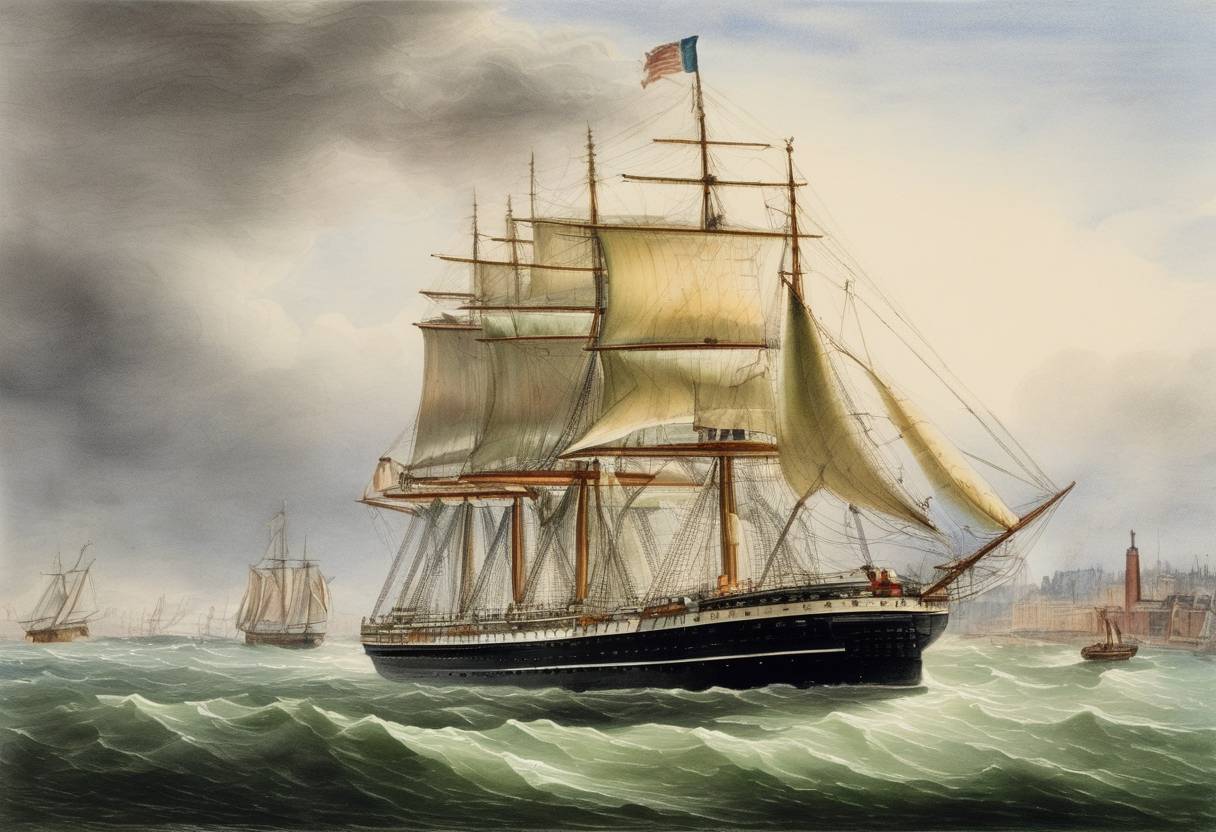
The Sirius: The First Steamship to Cross the Atlantic
On April 22, 1838, the SS Sirius made maritime history by successfully completing the first transatlantic crossing by a steamship. This groundbreaking journey began in Cork, Ireland, and concluded in New York City, marking a significant milestone in the evolution of naval engineering and transoceanic travel.
Background
Prior to the advent of steamships, ocean voyages heavily relied on sailing vessels, which were at the mercy of wind conditions. This posed challenges in terms of speed and reliability. The idea of a steam-powered vessel capable of consistent traverse across vast oceans promised revolutionary advancements in global trade and communication.
The Sirius was built by Menzies & Sons of Leith in 1837 for the British & American Steam Navigation Company. The ship was originally designed to serve between London and Cork but was later appropriated for the transatlantic crossing to demonstrate the feasibility of steam-powered ocean travel.
The Journey
Departing on April 4, 1838, the Sirius embarked on its historic voyage with 40 passengers on board. The ship was commanded by Captain Richard Roberts and carried enough coal to fuel successive stoking over the lengthy journey. To maintain power during the crossing, measures such as reducing speed and even using additional combustibles including furniture for fuel were employed as coal supplies dwindled.
Despite these challenges, the Sirius persevered, accomplishing the transatlantic journey in a remarkable 18 days. Her arrival in New York City was met with great acclaim, establishing steam navigation as viable and rising to prominence with eager anticipation among engineers and shipping companies.
Aftermath and Significance
The success of the Sirius not only demonstrated the capacity of steamships for long-haul ocean travel but also heralded the beginning of a new era in which oceans could be crossed more quickly and predictably. This transformation facilitated deeper global connections, accelerated international commerce, and paved the way for future advancements in maritime technology.
Following closely on the heels of the Sirius, the British ship the Great Western made a similar crossing shortly afterward, arriving in New York just a day later, solidifying the promise of steamship travel. Together, these voyages marked the decline of fully-rigged, wind-dependent ships for ocean crossings and signaled the dawn of the age of steam-powered progress on the seas.