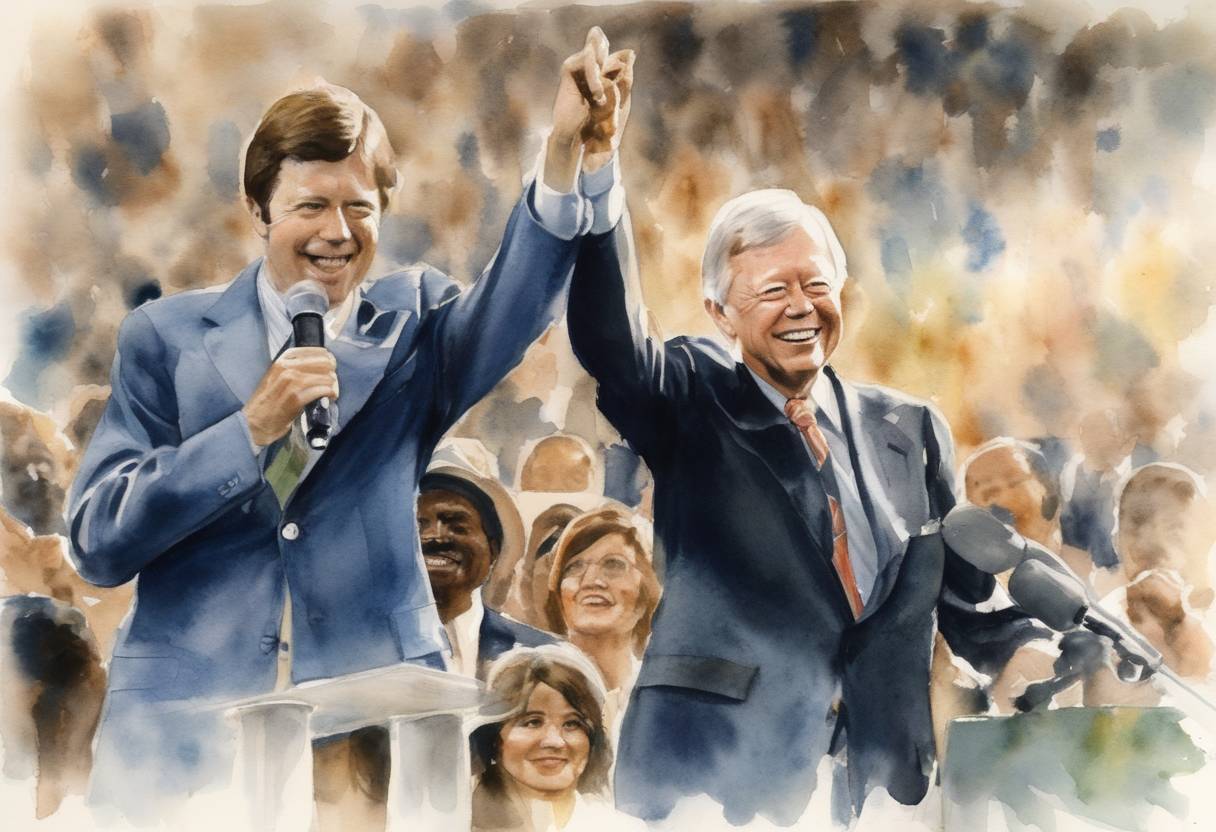
Jimmy Carter Wins Democratic Presidential Nomination - July 14, 1976
On July 14, 1976, Jimmy Carter secured the Democratic presidential nomination during the Democratic National Convention held at Madison Square Garden in New York City. This event marked a pivotal point in American political history, as Carter’s nomination signified a shift toward reform and fresh leadership in the Democratic Party following the Watergate scandal and the tumultuous political landscape of the early 1970s.
Background
Jimmy Carter, a relatively unknown figure on the national stage before his presidential campaign, was the former Governor of Georgia. With a focus on honesty and integrity, Carter’s campaign resonated with a public disillusioned by political misconduct and seeking change. His grassroots strategy and outsider status appealed to various demographics across the United States.
The Democratic National Convention
The convention was a critical gathering for the Democratic Party, bringing together delegates from across the country to nominate their presidential candidate. Carter entered the convention with a significant lead in delegates earned during the primary season. However, he still faced some opposition from other Democratic contenders, such as Representative Morris Udall, Senator Henry “Scoop” Jackson, and former Alabama Governor George Wallace.
Throughout the convention, Carter’s campaign emphasized unity and the need to address pressing issues such as the economy, civil rights, and government transparency. His selection as the nominee was a clear message of the Democratic Party’s intention to distance itself from the controversies that had plagued previous administrations.
Nomination Process
On July 14, the formal nomination process took place. Jimmy Carter was officially nominated by acclamation after securing a commanding majority of the delegate votes well before the convention. His nomination was seen as a testament to his successful campaign strategy and ability to connect with the American electorate.
Aftermath and Significance
Jimmy Carter’s nomination set the stage for the 1976 presidential election, where he would face the incumbent President Gerald Ford. Capitalizing on the desire for political change, Carter campaigned as a Washington outsider determined to restore trust in the presidency. He later won the election, becoming the 39th President of the United States.
Carter’s victory in the Democratic nomination highlighted the Democratic Party’s shift towards embracing candidates who represented a break from traditional political ranks. His presidency, marked by a focus on human rights and energy policy, began a new chapter in American politics.