The Siege of Jerusalem: October 2, 1187
1187 · Jerusalem, Kingdom of Jerusalem
The Siege of Jerusalem ended with the city being captured by Saladin, the Sultan of Egypt and Syria, marking a significant event in the Crusades.
February 16, 1164
King Amalric I of Jerusalem launched an expedition into Egypt with the intention of capturing Cairo. This marked part of the ongoing power struggle during the Crusades between the Christian and Muslim forces.
Cairo, Egypt | Kingdom of Jerusalem
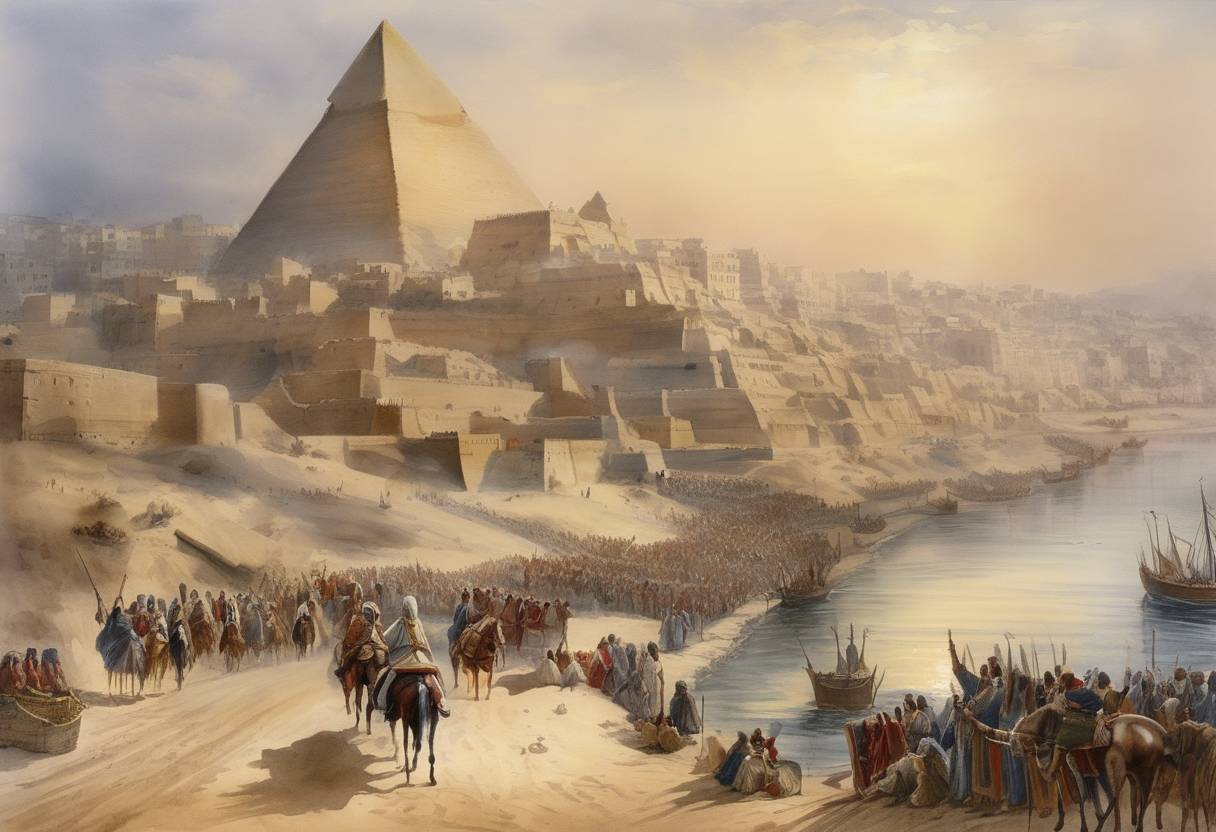
On February 16, 1164, King Amalric I of Jerusalem initiated a military expedition into Egypt, a significant action within the broader context of the Crusades, where Christian and Muslim powers fiercely vied for control over the Holy Land and surrounding territories. This strategic move was part of Amalric’s wider ambitions to control Egypt, an economically and strategically vital region.
Amalric I ascended to the throne of Jerusalem in 1163, inheriting a tenuous realm caught between the powerful Muslim forces of the Fatimid Caliphate in Egypt and the Zengid Dynasty in Syria. His interest in Egypt was not solely militaristic but also motivated by the prospects of economic gain and stabilizing his kingdom. Control over Egypt would offer significant advantages, including access to its wealth and a powerful position against Muslim advances from the north.
The February 1164 campaign was part of a series of incursions by Christian forces into Egyptian territory. Amalric’s initial forays had been largely unsuccessful due to the divided political situation in Egypt and strong local resistance. In this particular campaign, King Amalric intended to exploit the internal strife within the Fatimid administration weakened by power struggles and external threats.
Amalric’s forces advanced into Egyptian land, with the aim of capturing Cairo, the heart of the Fatimid Caliphate. This operation was not only aimed at territorial conquest but also intended to establish a vassal regime favorable to the Kingdom of Jerusalem, thus indirectly controlling Egyptian resources and diminishing Muslim influence.
The expedition of February 1164, like many others undertaken during this period, ended without achieving its primary goal. Amalric’s forces faced logistical challenges, strong military opposition, and difficulties in maintaining prolonged campaigns so far from their base. Additionally, the political landscape in Egypt proved too complex and resilient for a straightforward conquest.
Although this particular expedition did not result in the capture of Cairo, it marked a significant phase in the ongoing Crusader attempts to challenge and destabilize Muslim power in the region. These efforts eventually culminated in a series of treaties and shifting alliances, which temporarily realigned territorial control but did not bring about a long-term solution to the conflict.
The repeated ventures into Egypt underscored the strategic importance of the region during the Crusades era and highlighted Amalric I’s persistent efforts to expand and secure his kingdom’s borders. This period of the Crusader-Muslim conflict was characterized by frequent clashes, complex diplomacy, and the shifting allegiances that were emblematic of the medieval political landscape.
Amalric I’s campaigns, despite their limited immediate success, represent a crucial chapter in the broader historical narrative of the Crusades, signifying the enduring struggle for dominance between the Christian and Muslim factions during the 12th century.
Source: en.wikipedia.org