Valentin Trujillo's Brief Presidency in Bolivia
1966 · La Paz, Bolivia
In an emblematic moment of protest, military officer Valentin Trujillo served as acting president of Bolivia but was ousted by a coup one day later.
July 3, 1844
The final day of an uprising in La Paz, Bolivia, known as the 'Revolution of July 3rd,' leading to the end of President José Ballivián's coup, which had started in 1839.
La Paz, Bolivia | Bolivian revolutionary forces
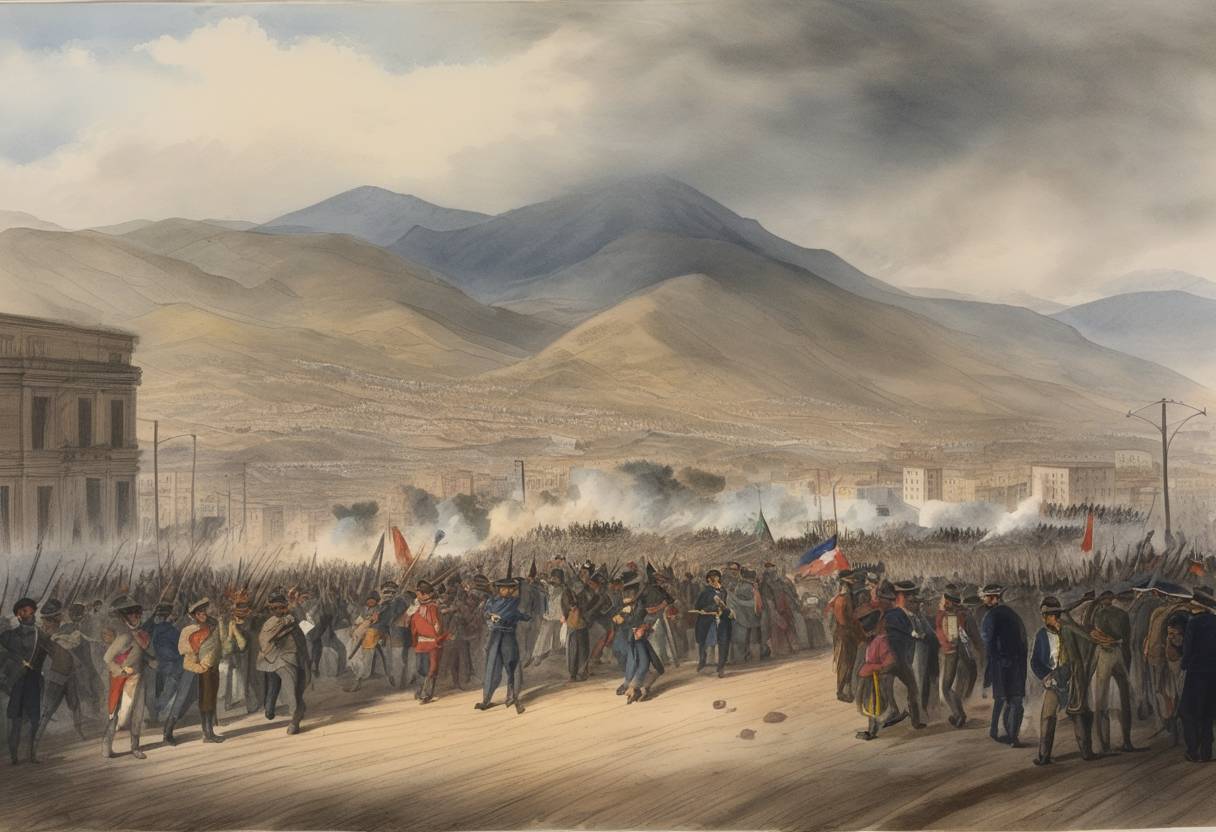
On July 3, 1844, a pivotal moment unfolded in La Paz, Bolivia, marking the culmination of the ‘Revolution of July 3rd.’ This event was significant as it signaled the end of Jose Ballivián’s control, a result of a coup initiated in 1839. Ballivián, initially a military officer, had ascended to the presidency through a coup against President Andrés de Santa Cruz, a period marked by his attempts to stabilize and develop the nation through reforms and modernization efforts.
Ballivián’s tenure was marked by both advancements, such as the establishment of the first Bolivian Constitution, and significant internal dissent due to his authoritative style and the imposition of martial law. Tensions escalated periodically due to his rigorous policies and centralist approach, which were unpopular among regional elites and local factions.
On this final day, the revolutionary forces in La Paz reached a decisive moment against Ballivián’s regime. Local dissatisfaction, particularly in highland areas like La Paz, had intensified due to perceived economic inequities and the concentration of power in the hands of a few. Revolutionary leaders capitalized on this discontent, organizing local militias and gaining support from both civilians and disaffected members of the Bolivian military.
The revolutionaries managed to secure key positions in the city through tactical maneuvers and widespread popular support. As hostilities peaked, the ability of Ballivián’s forces to maintain control faltered rapidly. This final assault resulted in a victorious capture of significant governmental centers, leading to the effective deposition of Ballivián.
Following the events of July 3, Ballivián went into exile, ultimately leading to profound political changes. His departure paved the way for the ascension of José Miguel de Velasco to the presidency. Velasco’s rise marked a shift toward political restructuring aimed at addressing the grievances that had fueled the uprising.
The Revolution of July 3rd holds a storied place in Bolivia’s history as an essential expression of popular will and regional autonomy. It highlighted issues of centralist governance and set precedents for future political dialogues about power distribution within the country. The events of this day are a reminder of the dynamic nature of Bolivian political life in the 19th century and the enduring struggle for a more inclusive governance system.
Source: www.britannica.com