Roe v. Wade Decision - January 22, 1973
1973 · Washington, D.C., United States
The U.S. Supreme Court delivers its decision in Roe v. Wade, legalizing abortion nationwide.
May 3, 2022
The leaked draft opinion in the United States suggesting the potential overturning of Roe v. Wade sparked widespread protests across the country.
Washington, D.C., United States | The Supreme Court of the United States
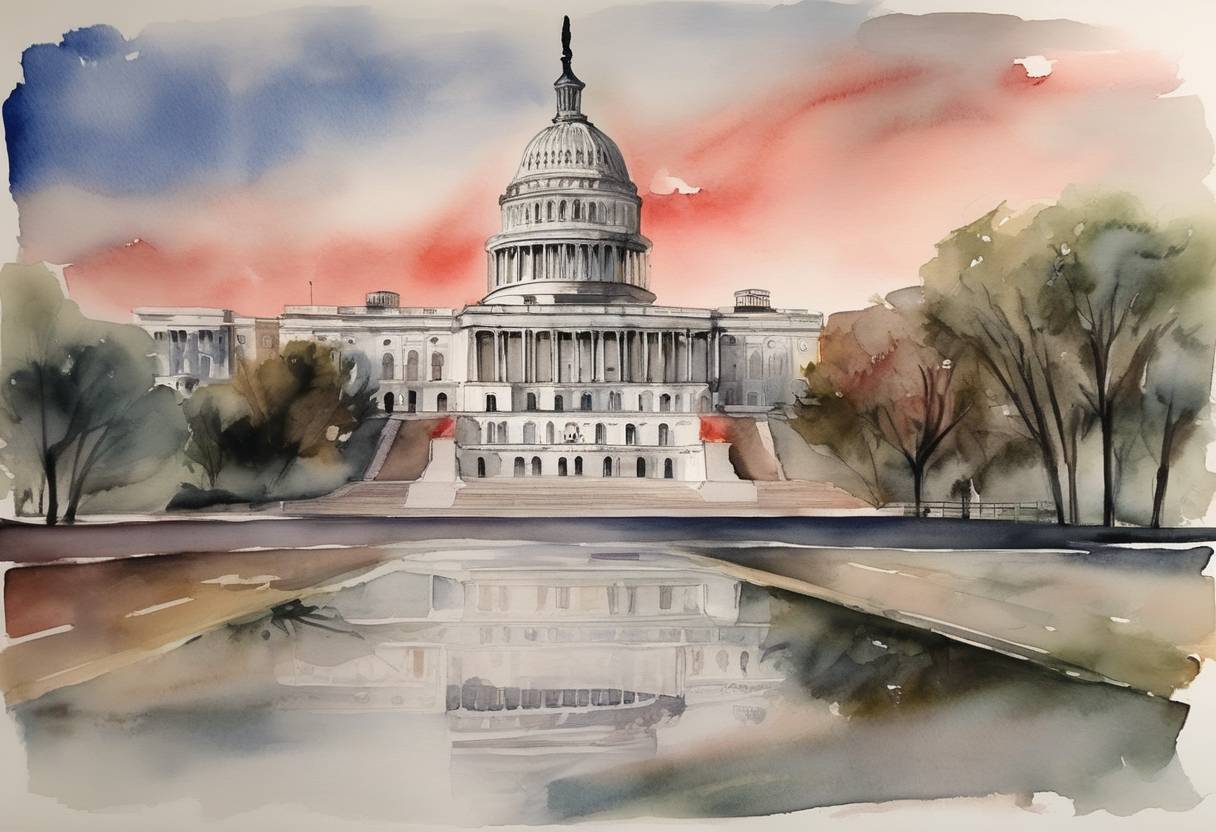
On May 3, 2022, a historic event unfolded in the United States when a draft opinion from the Supreme Court was leaked to the public. This draft suggested the potential overturning of the landmark 1973 decision in Roe v. Wade, which had established a woman’s legal right to an abortion. The draft, pertaining to the case Dobbs v. Jackson Women’s Health Organization, indicated a significant shift in the Court’s stance on reproductive rights.
Roe v. Wade has been a cornerstone of reproductive rights in the United States for decades, establishing a constitutional right to privacy that protected a woman’s choice to have an abortion. Over the years, this ruling faced numerous challenges and debates, often mirrored by the country’s deeply divided public opinion on the matter.
The case in question, Dobbs v. Jackson Women’s Health Organization, centered around a Mississippi law banning most abortions after 15 weeks of pregnancy, significantly earlier than the standards set by Roe v. Wade. This case was seen as a direct challenge to the existing federal protections on abortion.
The leak of the draft opinion, authored by Justice Samuel Alito, revealed a proposed judgment that Roe v. Wade should be overturned. Alito’s draft argued that the Constitution made no explicit reference to abortion rights and labeled the Roe v. Wade decision as “egregiously wrong.”
The draft’s release was unprecedented in modern Supreme Court history. Leaks of such magnitude are exceptionally rare, and the revelation triggered both shock and a fervent reaction across the nation.
The potential implications of the draft opinion mobilized widespread protests on May 3, with Americans from diverse backgrounds rallying in cities and towns across the country. Many gathered to express both opposition to and support for the potential reversal of Roe v. Wade. Demonstrations took place in front of the Supreme Court building in Washington, D.C., and in major cities like New York, Los Angeles, Chicago, and others. These protests were characterized by a deeply emotional and passionate atmosphere, highlighting the polarizing nature of the abortion debate in America.
This event underscored the Supreme Court’s critical role in shaping national policy and its capacity to influence significant socio-political issues. If the Court were to indeed overturn Roe v. Wade, it would represent a monumental shift in American law, likely resulting in abortion rights being determined by individual states. Such a change could lead to a patchwork of differing laws across the country, affecting millions of Americans’ access to abortion services.
The event on May 3, 2022, serves as a pivotal moment in the ongoing discourse on women’s rights, privacy, and the judicial process in the United States. The leak not only intensified public discourse but also heightened scrutiny on the court’s proceedings and the potential ramifications of its decisions.
Source: www.nytimes.com