The Second Diet of Speyer and the Origin of the Term 'Protestant'
1529 · Speyer, Holy Roman Empire
The Second Diet of Speyer ends, resulting in a protest by Lutheran princes and the origin of the term 'Protestant.'
July 16, 1548
The setting of the Peace of Augsburg in Germany allowing for the coexistence of Catholicism and Lutheranism in the Holy Roman Empire.
Augsburg, Holy Roman Empire (modern-day Germany) | Holy Roman Empire
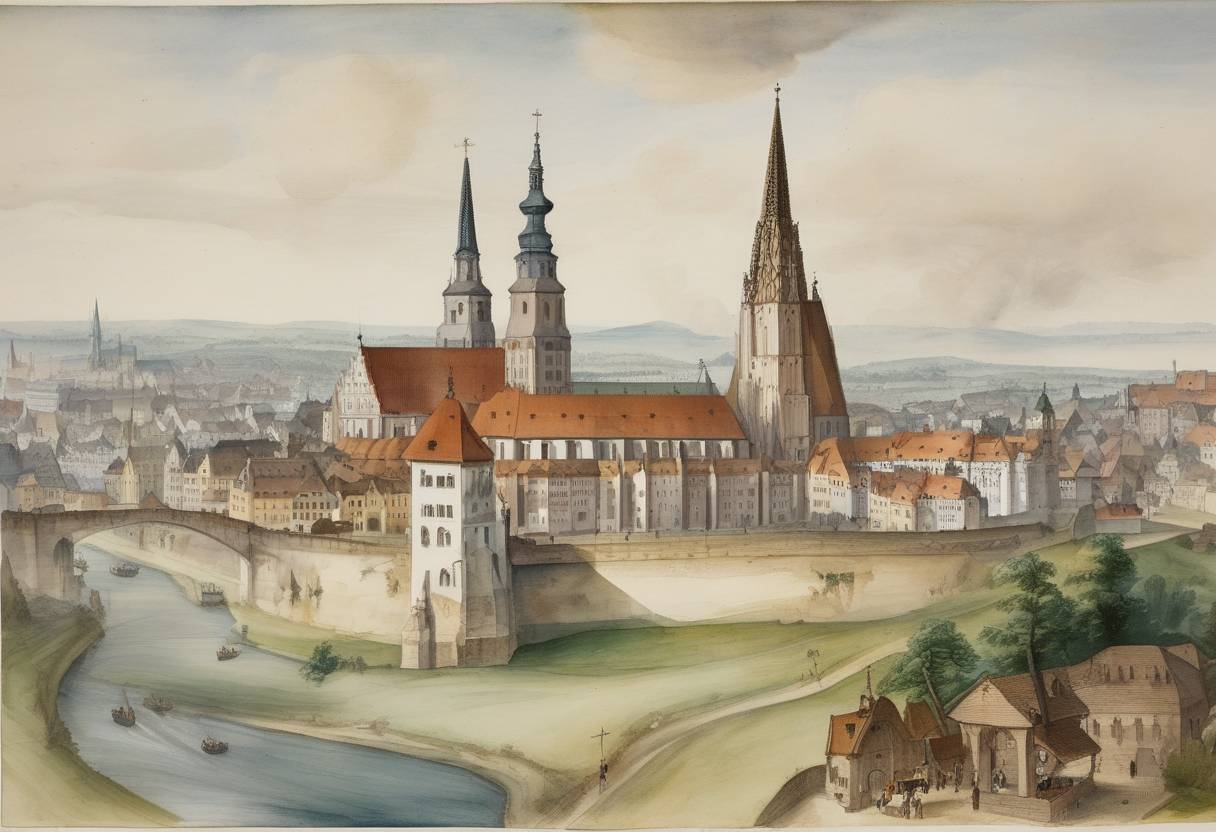
The Peace of Augsburg was not established on July 16, 1548. The Peace of Augsburg applied later and was officially signed on September 25, 1555. However, understanding the context of the events leading up to it can clarify the historical developments around this significant treaty.
The Peace of Augsburg was a critical treaty in the Holy Roman Empire designed to resolve religious conflicts between Catholic and Lutheran territories following the Reformation period. Prior to this, the Holy Roman Empire faced severe fragmentation due to religious disputes as Martin Luther’s Reformation began in 1517, which led many principalities and cities to adopt Lutheranism.
On July 16, 1548, within this historical trajectory, the Augsburg Interim was enacted. This was an imperial decree issued by Charles V, Holy Roman Emperor, at the Diet of Augsburg. The interim aimed to temporarily settle religious discord by allowing certain Lutheran practices until a more permanent solution could be agreed upon by a council. The decree, however, was met with widespread dissent, especially from Lutheran territories that opposed any compromises that seemed to favor Catholic doctrines.
The Augsburg Interim did not achieve its intended peace and instead heightened tensions, as it was seen as a temporary and unsatisfactory solution by both Catholics and Protestants. The conflicts continued until the eventual establishment of the Peace of Augsburg in 1555, which allowed each ruler of the Holy Roman Empire to choose the religion (either Catholicism or Lutheranism) of their own state, a principle known as “cuius regio, eius religio.”
The Peace of Augsburg was pivotal as it marked the first legal recognition of the coexistence of Lutheranism and Catholicism, although it excluded other emerging Protestant denominations like Calvinism. Its emphasis on regional sovereignty over religious matters set a precedent for the future political landscape of Europe, laying early groundwork for the modern concept of state self-determination.
By understanding the Augsburg Interim and the eventual Peace of Augsburg, one gains insight into the complex religious transformations of the 16th century and the longstanding impacts on European political and religious dynamics.
Source: www.britannica.com