Hungary’s Withdrawal from the Warsaw Pact
On October 28, 1956, during the Hungarian Revolution, the Government of Hungary made a significant announcement, declaring its intention to withdraw from the Warsaw Pact. At this critical juncture in Cold War history, the Hungarian people were in open revolt against the Soviet-imposed policies that characterized much of Eastern Europe at the time.
Context and Build-up
The Hungarian Revolution of 1956 began on October 23, with mass protests in Budapest, calling for greater political freedom and the withdrawal of Soviet troops. This uprising was fueled by a combination of nationalism, a desire for political reform, and resentment towards the repressive regime led by Mátyás Rákosi and later, Ernő Gerő. The initial protests quickly escalated into a nationwide revolt.
Withdrawal from the Warsaw Pact
Amidst the turmoil, the revolutionary spirit gained momentum and on October 28, Imre Nagy, who had been re-appointed as Prime Minister, made attempts to negotiate a political solution and implemented a series of reforms. It was during this wave of reform that Nagy announced Hungary’s decision to withdraw from the Warsaw Pact, the Soviet-led military alliance that played a crucial role in maintaining Soviet dominance over Eastern Europe.
Significance
Nagy’s declaration was a direct challenge to Soviet authority and exemplified the widespread desire for autonomy and neutrality. The intent was to steer Hungary towards a more independent and non-aligned position, akin to Austria’s neutral stance.
Aftermath
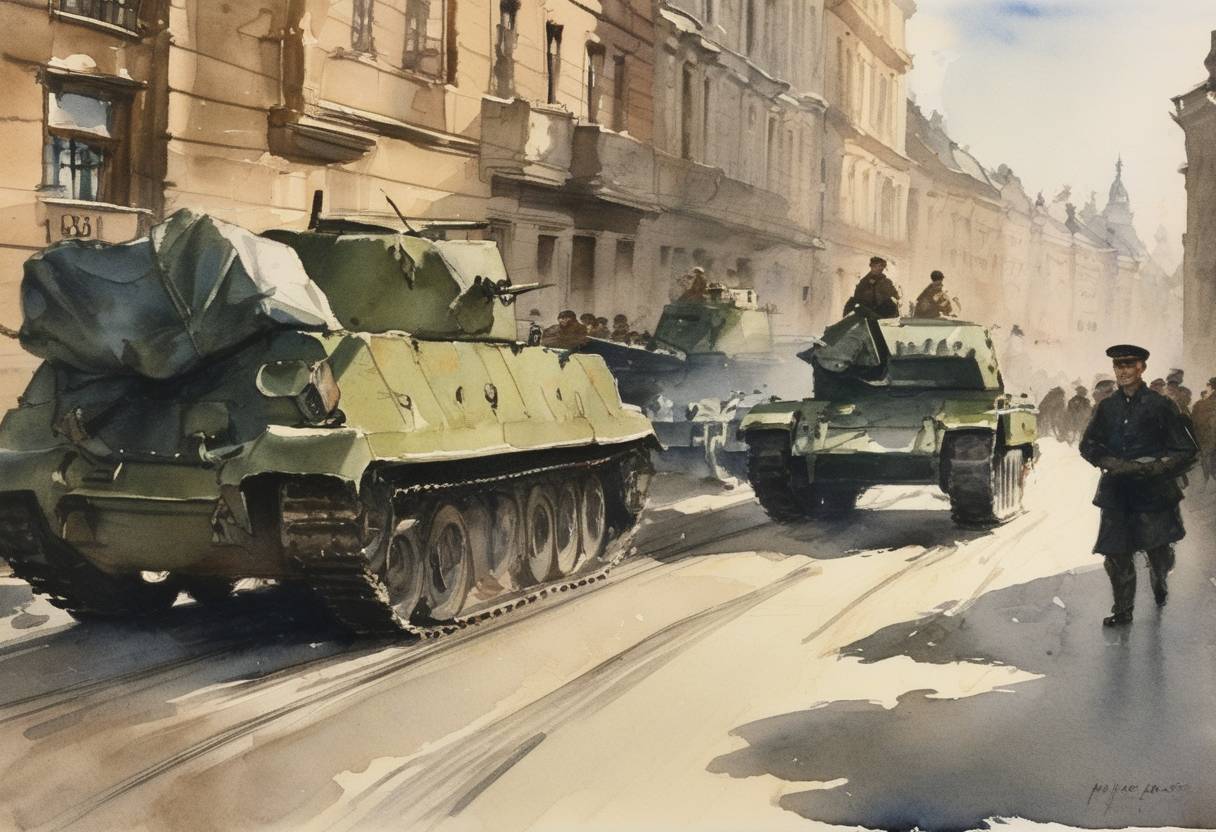
The decision to withdraw from the Warsaw Pact marked a high point of the Hungarian Revolution. However, this move, coupled with Hungary’s appeal to the United Nations for recognition of its neutrality, prompted a harsh response from the Soviet Union. By November 4, 1956, Soviet forces had intervened militarily, quashing the revolution and re-establishing control over Hungary with a hardline government led by János Kádár.
The events of October 28, 1956, and the subsequent Soviet intervention had profound repercussions. The crackdown was a stark reminder of the limits of Soviet tolerance for dissent within its sphere of influence during the Cold War era and highlighted the tensions between nationalist movements and superpower geopolitical interests.