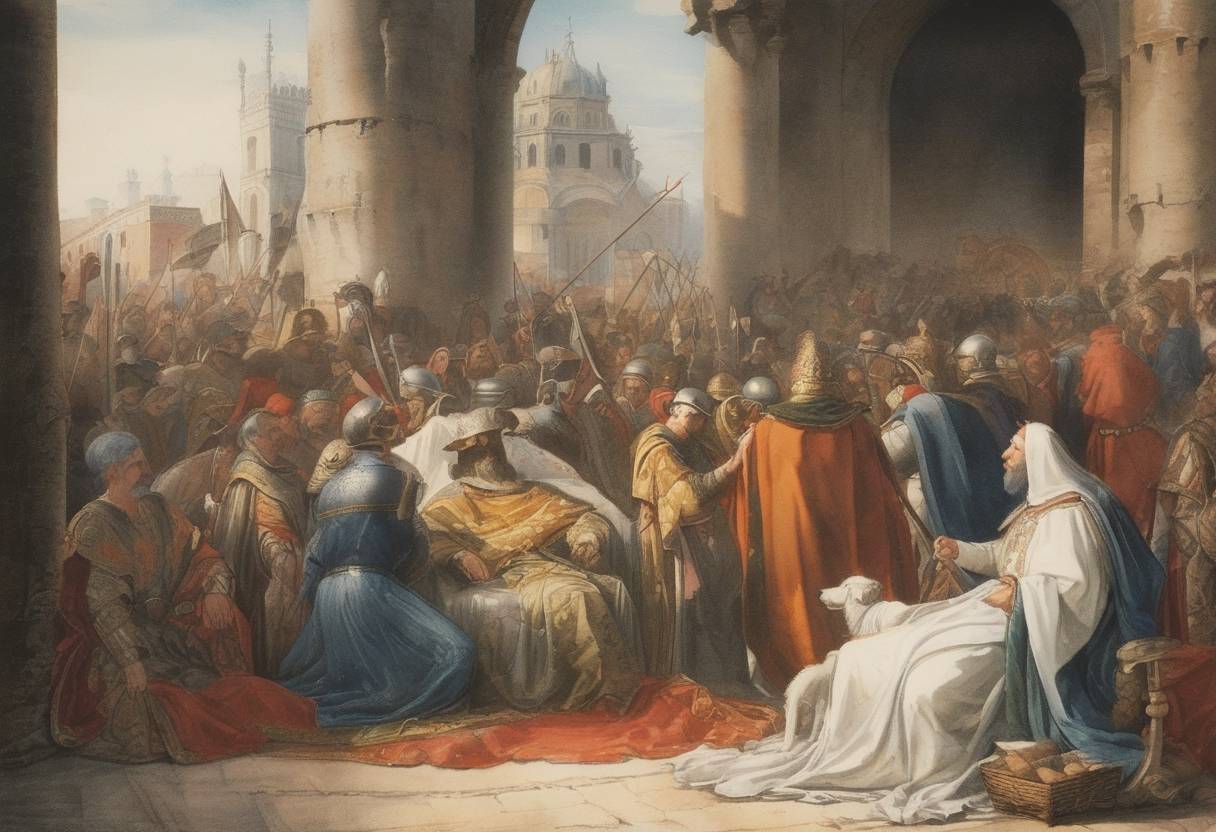
The Death of Ser Ludovico II Ordelaffi on October 31, 1354
On October 31, 1354, Ludovico II Ordelaffi, an influential Italian condottiero and the lord of Forlì, passed away, resulting in a significant shift in the local power dynamics of the region. Ordelaffi’s leadership was pivotal during a turbulent period in Italian history marked by complex alliances and conflicts among city-states and regional powers.
Background and Rule
Ludovico II Ordelaffi hailed from the powerful Ordelaffi family, which had established dominance over Forlì, a key city in the Emilia-Romagna region. The Ordelaffi family had a tradition of military leadership and political maneuvering, often acting as condottieri—mercenary leaders who wielded significant influence during the era.
Ludovico II became the lord of Forlì following his family’s long-standing control over the city. Under his rule, Forlì maintained its stature as a stronghold, actively participating in the regional politics of the Papal States and other neighboring territories. His strength as a military leader and diplomat allowed him to navigate the complexities of Italian politics effectively.
Context of the Era
The 14th century was a time of significant instability across Italy due to ongoing conflicts between the Guelfs and Ghibellines and the struggle for power between the Papacy and the Holy Roman Empire. City-states and principalities often found themselves embroiled in battles for control, requiring adept leadership to maintain autonomy and influence.
Consequences of Ordelaffi’s Death
The death of Ludovico II Ordelaffi marked a pivotal moment for Forlì. As a key figure in maintaining the city’s independence and power, his passing introduced a period of uncertainty. The transition of power was never straightforward in such volatile settings, often leading to internal conflicts or power struggles among various factions within a ruling family or between competing entities.
Impact on Forlì
With Ordelaffi’s absence, Forlì faced the challenge of maintaining its autonomy and influence amidst the changing political landscape. The leadership void threatened the stability of the region, making it susceptible to surrounding powers eager to expand their control. The ensuing years required strategic alliances and sometimes conflict to preserve the city’s status.
Broader Historical Significance
The shifts in power dynamics that followed Ordelaffi’s death reflected broader patterns in 14th-century Italy, where leadership changes often led to rapid political re-alignments. Forlì, like many other Italian cities, had to continuously adapt to the ever-changing tapestry of alliances and rivalries that characterized the Italian peninsula during this era.
In conclusion, the death of Ser Ludovico II Ordelaffi on October 31, 1354, was a key moment in the history of Forlì that illustrated the fragile nature of power and the intricate interplay of military and political leadership during the Middle Ages in Italy.