The Eighth Crusade and the Death of King Louis IX
1270 · Tunis, Tunisia
The Eighth Crusade, led by King Louis IX of France, ends with his death from dysentery in Tunis.
June 8, 1405
King Charles VI of France issued a royal grant to Bruges, promoting trade privileges that would help the city become an important European trading hub.
Bruges, Burgundy | French monarchy
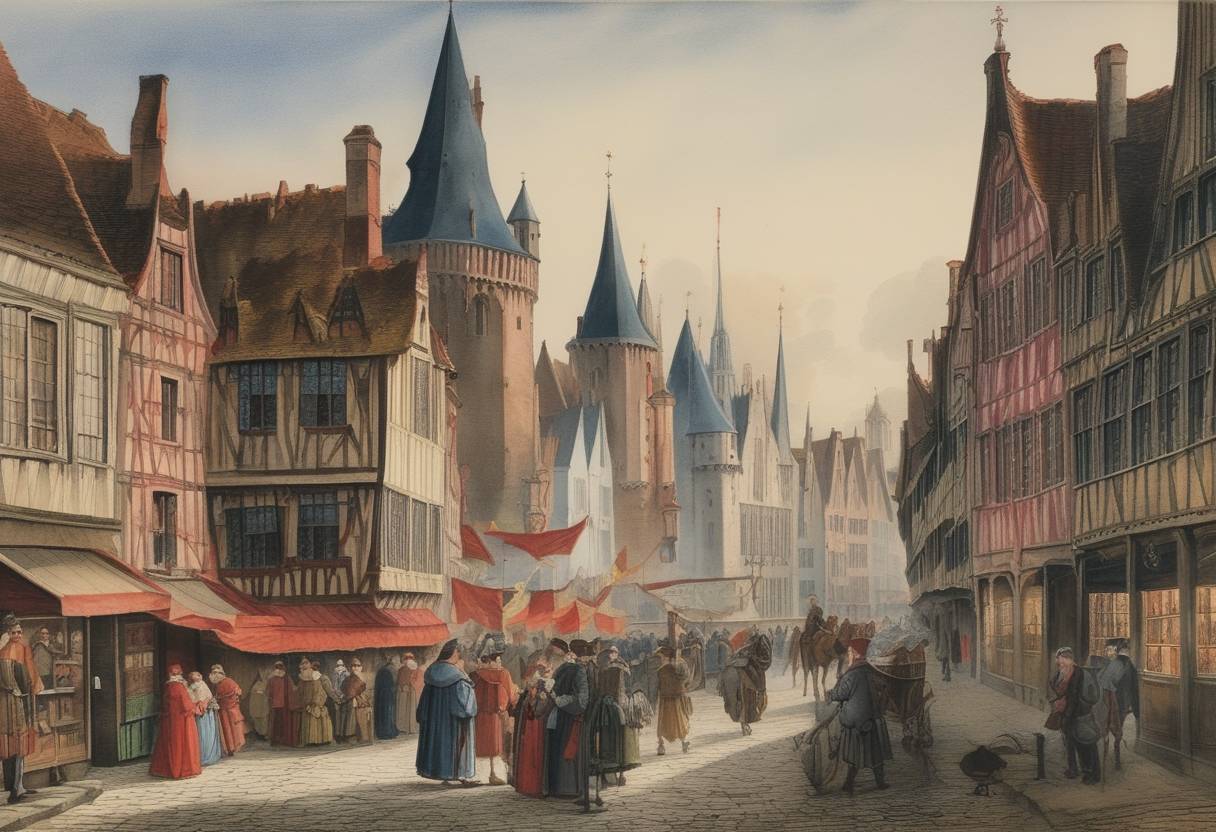
On June 8, 1405, King Charles VI of France issued a significant royal grant that provided trade privileges to the city of Bruges. This act was a pivotal moment contributing to Bruges’ emergence as a major commercial center in medieval Europe.
During the late Middle Ages, Bruges, located in the County of Flanders, was strategically positioned to serve as a trading nexus between the Mediterranean and Northern Europe. The city had already been benefiting from trade routes connecting England, France, and the Hanseatic League.
The issuance of trade privileges by King Charles VI had long-lasting impacts on the economic landscape of Europe. Bruges enjoyed its status as a major trading hub for centuries, influencing economic policies across European cities. The event underscores the importance of trade policies in shaping urban growth and development during the medieval period.
This grant is a testament to how strategic economic decisions by monarchs could foster prosperity and dynamism within their realms, setting a precedent for future economic expansions and partnerships throughout Europe.