Bill Clinton's Re-Election on November 5, 1996
1996 · Washington, D.C., United States
Bill Clinton was re-elected as President of the United States, defeating Republican challenger Bob Dole.
December 8, 1993
The North American Free Trade Agreement (NAFTA) was signed into law by U.S. President Bill Clinton, set to eliminate trade barriers between the U.S., Canada, and Mexico.
Washington, D.C., United States | North American Free Trade Agreement
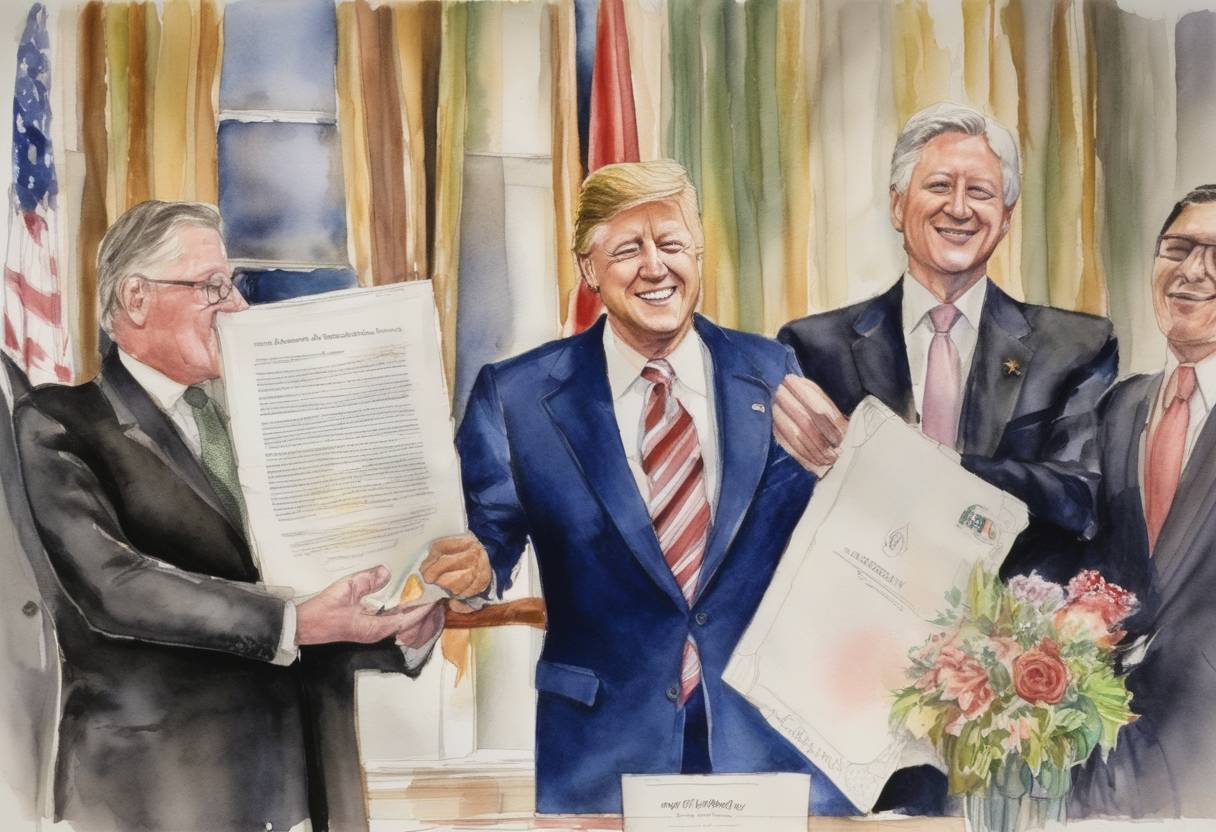
On December 8, 1993, U.S. President Bill Clinton signed into law the North American Free Trade Agreement (NAFTA). This landmark trade deal aimed to establish a trilateral trade bloc in North America by eliminating trade barriers between the United States, Canada, and Mexico.
The origins of NAFTA trace back to the 1980s when trade dynamics between these nations were increasingly significant. The agreement followed the U.S.-Canada Free Trade Agreement of 1988, expanding economic integration to include Mexico. Initial negotiations began under President George H. W. Bush and were later completed by President Clinton, who incorporated specific labor and environmental provisions into the final agreement.
NAFTA went into effect on January 1, 1994, fundamentally transforming North American trade relations. It remained in force until 2020 when it was replaced by the United States-Mexico-Canada Agreement (USMCA), which updated several of the original terms to adapt to the 21st-century trade landscape.
NAFTA’s signing represented a significant moment in economic history, reflecting a growing trend towards globalization and interdependence in international trade.
Source: www.britannica.com